
YJ-18 anti-ship cruise missile
Overview
The YJ-18 is the PLA Navy's primary surface-fleet and submarine anti-ship cruise missile, and the weapon that gives China's modern destroyers their offensive bite. Conceptually similar to Russia's Kalibr/Klub family, it combines the two virtues that usually trade off against each other: long range and a high-speed terminal attack. The missile cruises subsonically for most of its flight to maximise range — assessed at roughly 290 km and possibly more — then, in the final tens of kilometres, a separating supersonic sprint stage accelerates to around Mach 2.5–3 for the terminal run-in, drastically cutting the defender's reaction time. Launched from the Mk-41-equivalent universal vertical launch systems on Type 052D and Type 055 destroyers (and in encapsulated form from submarines), it lets a single Chinese surface action group threaten opposing ships from well beyond their own anti-ship reach. For an analyst, the YJ-18 is the reason the PLA Navy's surface combatants are credible blue-water threats rather than coastal defenders. It out-ranges the legacy U.S. Harpoon and competes with newer Western weapons, and its VLS basing means a Type 055 can carry a large mixed magazine of anti-ship, land-attack and air-defence rounds — a flexibility that mirrors the U.S. Navy's own move toward multi-mission VLS loadouts.
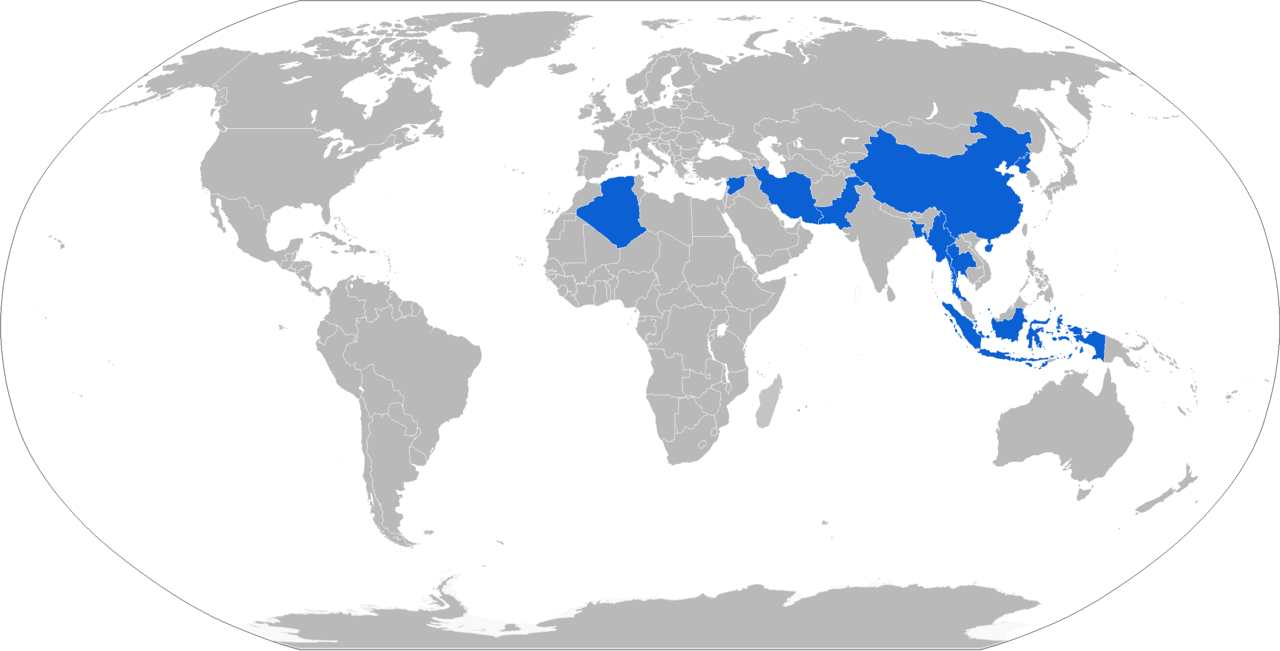
Deployment Map
Home ports from known hull assignments. Operating areas reflect typical AORs — individual deployments will vary.
Timeline
Specifications
Doctrine & Employment
Role
Fleet anti-ship cruise missile giving PLAN surface ships and submarines long-range offensive reach.
Design Philosophy
Range and terminal speed together — the Kalibr concept, navalised for China.
Employment
Subsonic cruise for range, supersonic terminal sprint to defeat point defences; fired from universal VLS.
Threat Context
Makes modern PLAN combatants credible blue-water surface threats.
How to Compare
Read against Russia's Kalibr, the U.S. Harpoon and China's own YJ-12.
Operational Patterns
Typical Deployment
Fleet anti-ship engagements from destroyer VLS and submarine tubes beyond the enemy's anti-ship range.
Typical Task Group
Type 055/052D surface action groups; Type 093 submarines.
Readiness
Standard fit on modern PLAN combatants.
Key Operating Areas
Peer Comparison Matrix
Both pair subsonic cruise with a supersonic terminal sprint stage; the YJ-18 is China's equivalent.
Video angle: Kalibr's Chinese cousin.
Harpoon is subsonic and shorter-ranged; the YJ-18 substantially out-ranges it.
Video angle: Why the US Navy is racing past Harpoon.
YJ-12 is supersonic throughout but shorter-ranged; YJ-18 cruises subsonic for reach.
Video angle: China's two anti-ship cruise missiles.
Combat History
No combat use; routinely exercised by PLAN surface and submarine forces.
Capability assessed from deployments and exercises.
Known Vulnerabilities
Mid-course targeting
Long-range shots need over-the-horizon targeting data.
Context: Defender EW and decoys can disrupt the terminal seeker.
Mitigation: Networked satellite and aircraft cueing.
Terminal interception window
The supersonic sprint is short but detectable once it separates.
Context: Fast networked CIWS/SAMs can still engage.
Mitigation: Saturation salvos.
Variants
| Variant | Designation | Years | Count | Status | Key Changes |
|---|---|---|---|---|---|
| YJ-18 (surface) | — | 2015– | — | active | VLS-launched fleet anti-ship missile |
| YJ-18A/B/C | — | incremental | — | active | Submarine-launched and land-attack derivatives |
Modernization Programmes
Magazine integration
Integrated into the universal VLS of Type 052D and Type 055 for mixed anti-ship/land-attack/air-defence loadouts.
Impact: Gives PLAN surface groups flexible, deep offensive magazines.
Images




Frequently Asked
When was the first YJ-18 anti-ship cruise missile commissioned?
The first YJ-18 anti-ship cruise missile entered service in 2015.
Who builds the YJ-18 anti-ship cruise missile?
The YJ-18 anti-ship cruise missile is built by China Aerospace Science and Industry Corp. (CASIC).
What variants of the YJ-18 anti-ship cruise missile exist?
Known variants include: YJ-18 (surface), YJ-18A/B/C.
Curated Research
recommended
Naval analysis
reference
Range and basing
Watch YJ-18 anti-ship cruise missile in Action
Iron Command produces in-depth comparison and analysis videos for military equipment.
Watch on YouTube