
Xian Y-20 strategic airlifter
Compare with
Overview
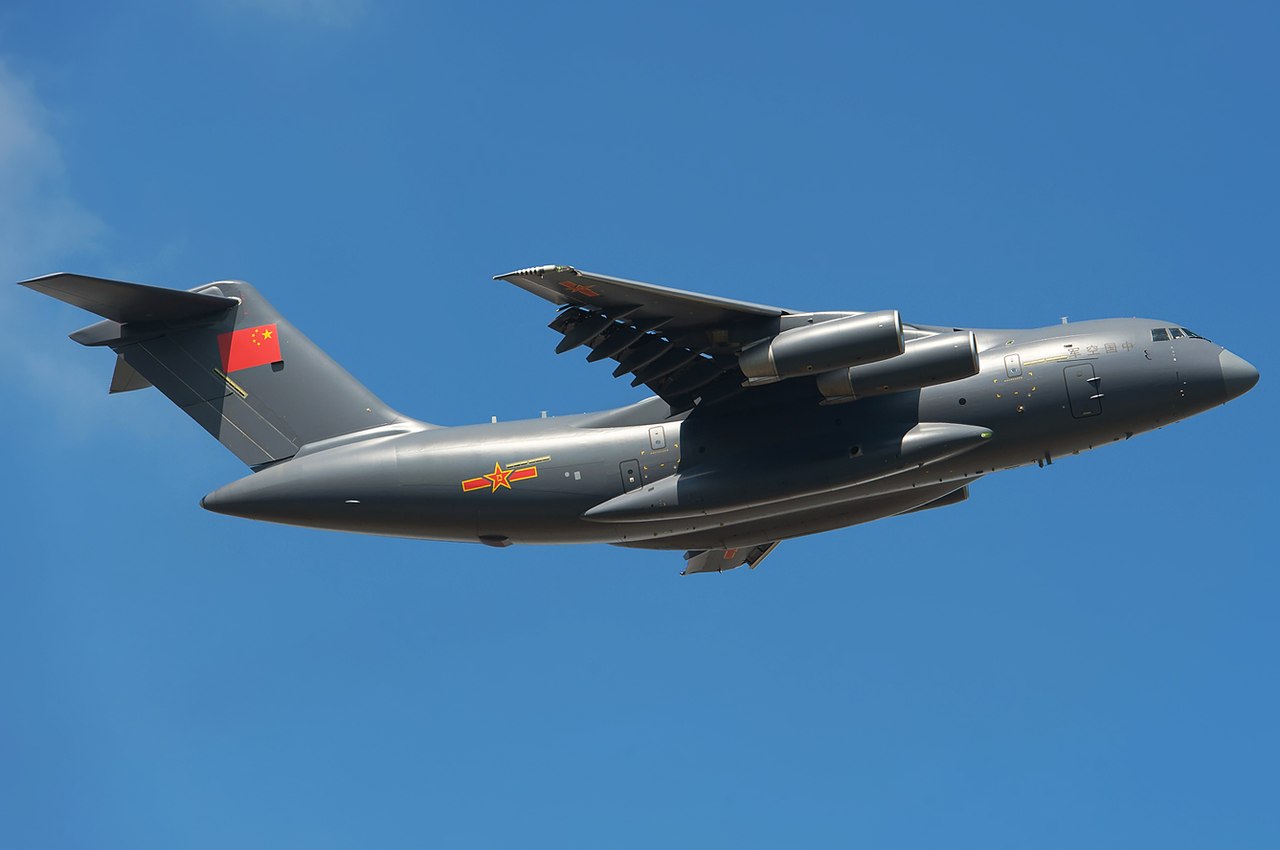
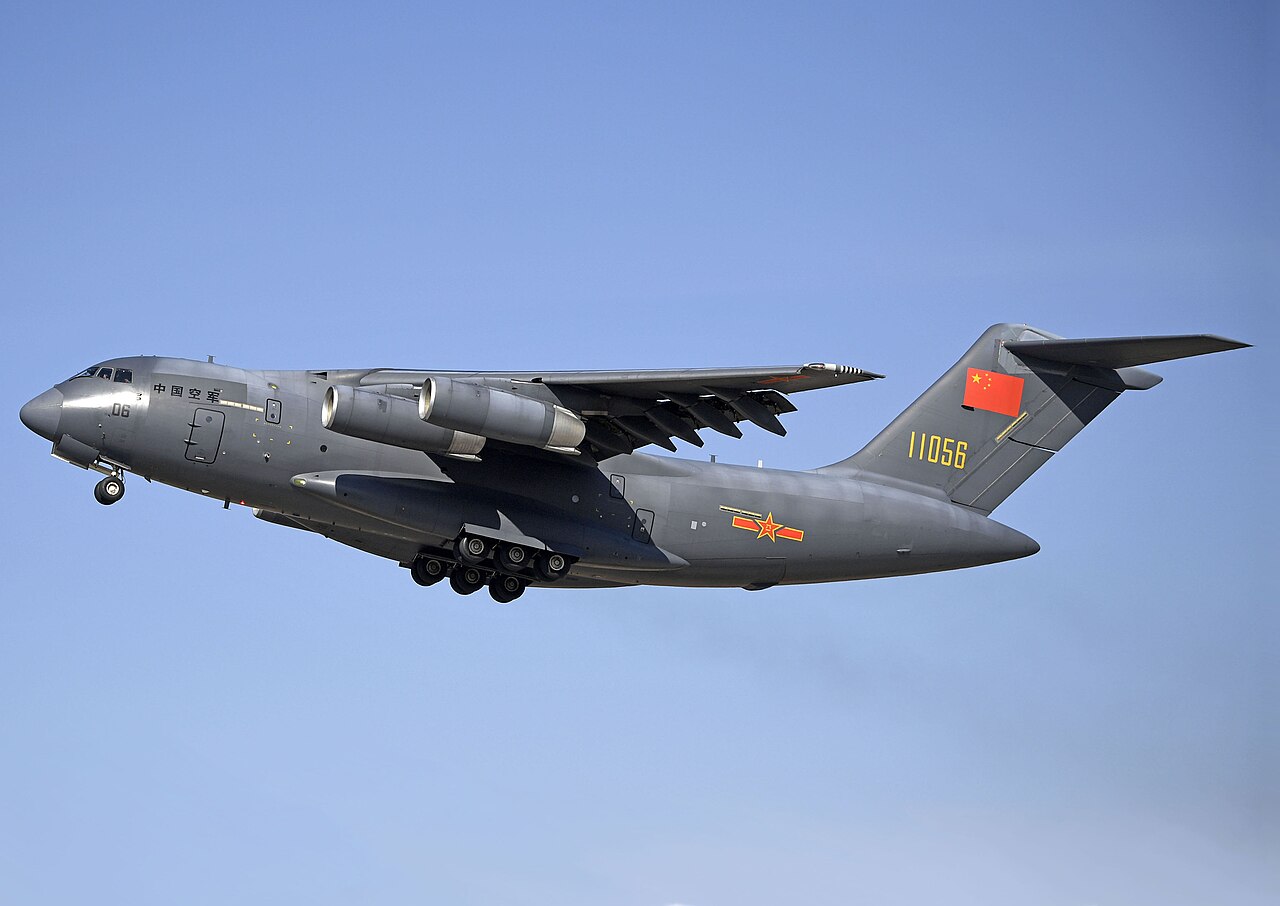
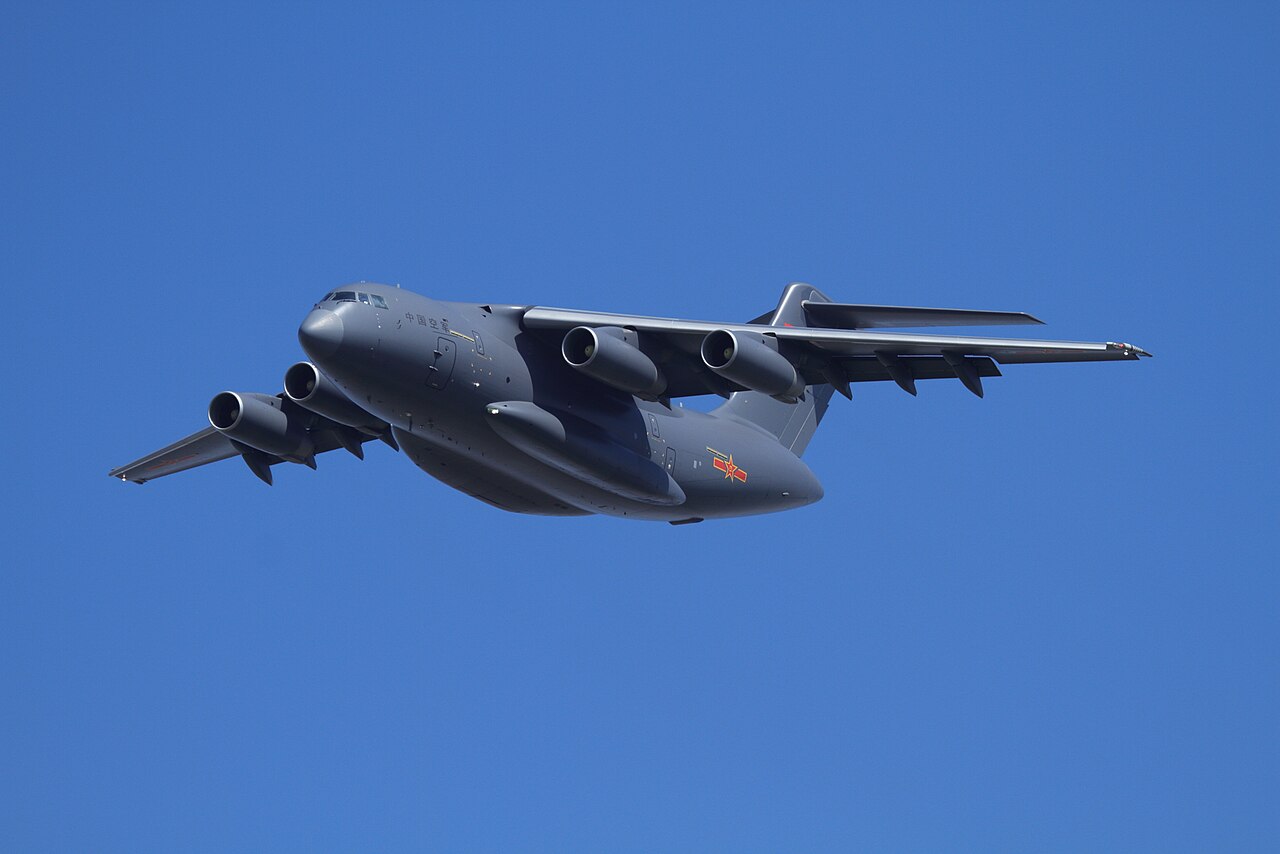
The Xian Y-20 ("Kunpeng") is China's strategic airlifter — the heavy transport that gives the People's Liberation Army the ability to move armour, troops and supplies across continental distances, and the platform that underpins China's growing capacity to project power far from its borders. First flown in 2013 and in service from 2016, it ended China's reliance on a handful of imported Russian Il-76s for true strategic lift. With a maximum payload of roughly 66 tonnes, the Y-20 can carry main battle tanks and outsized cargo, and its large fleet is expanding rapidly. Early aircraft used Russian D-30 engines, but re-engining with the domestic WS-20 high-bypass turbofan has improved range and payload and removed a foreign dependency. Crucially, the airframe has spawned the YY-20 aerial-refuelling tanker, which extends the range of China's fighters and bombers — a force-multiplier for operations over the Pacific. For an analyst, the Y-20 is strategic enabling capability rather than a weapon. Airlift and aerial refuelling determine how far and how fast a military can fight; a large Y-20/YY-20 fleet lets China sustain forces on its periphery, support disaster relief and influence operations abroad, and refuel the J-20s and H-6s that hold the Western Pacific at risk. It is, quietly, one of the more strategically consequential aircraft China has fielded.
Deployment Map
Home ports from known hull assignments. Operating areas reflect typical AORs — individual deployments will vary.
Timeline
Specifications
Doctrine & Employment
Role
Strategic airlifter (and aerial-refuelling tanker) enabling PLA power projection and combat reach.
Design Philosophy
Indigenous heavy lift to end reliance on imported transports and extend air reach.
Employment
Moves armour and supplies over continental distances; the YY-20 refuels fighters and bombers.
Threat Context
Underpins China's ability to sustain forces on its periphery and refuel aircraft over the Pacific.
How to Compare
Read against the C-17, the Il-76 it replaced and Western tankers.
Operational Patterns
Typical Deployment
Strategic airlift of forces and materiel; aerial refuelling of fighters and bombers (YY-20).
Typical Task Group
Supports rapid deployment and extends combat-aircraft range.
Readiness
Fleet expanding rapidly.
Key Operating Areas
Peer Comparison Matrix
The C-17 is the Western strategic-airlift benchmark; the Y-20 is China's broadly comparable equivalent.
Video angle: China's C-17 — how the Y-20 compares.
China relied on imported Il-76s before the Y-20; the Y-20 is larger and more capable.
Video angle: China's leap in strategic airlift.
The YY-20 tanker variant parallels Western tankers in extending air reach.
Video angle: The tankers that decide how far air forces can fight.
Combat History
Used for COVID-era logistics, disaster relief and overseas deliveries, and increasingly for military lift exercises.
Demonstrated growing strategic-lift and influence-projection capacity.
Known Vulnerabilities
Non-combat survivability
A large transport with no defences against air threats.
Context: Vulnerable in contested airspace.
Mitigation: Operated in secure airspace under escort.
Engine ramp-up
Domestic WS-20 production must scale to match airframe output.
Context: Engine supply has historically constrained Chinese aircraft.
Mitigation: Maturing WS-20 line.
Variants
| Variant | Designation | Years | Count | Status | Key Changes |
|---|---|---|---|---|---|
| Y-20 | — | 2016– | — | active | Strategic transport (D-30, then WS-20 engines) |
| YY-20 (tanker) | — | 2021– | — | active | Aerial-refuelling variant extending fighter/bomber range |
Modernization Programmes
WS-20 re-engining & YY-20 expansion
Domestic high-bypass engines and a growing tanker fleet.
Impact: Improves range/payload and extends the reach of PLA combat aircraft.
Images





Frequently Asked
When was the first Xian Y-20 strategic airlifter commissioned?
The first Xian Y-20 strategic airlifter entered service in 2016.
Who builds the Xian Y-20 strategic airlifter?
The Xian Y-20 strategic airlifter is built by Xi'an Aircraft Industrial Corporation (AVIC).
What variants of the Xian Y-20 strategic airlifter exist?
Known variants include: Y-20, YY-20 (tanker).
Curated Research
recommended
PLA airlift analysis
reference
Specs and variants
Watch Xian Y-20 strategic airlifter in Action
Iron Command produces in-depth comparison and analysis videos for military equipment.
Watch on YouTube