
Type 31 Inspiration-class frigate
Overview
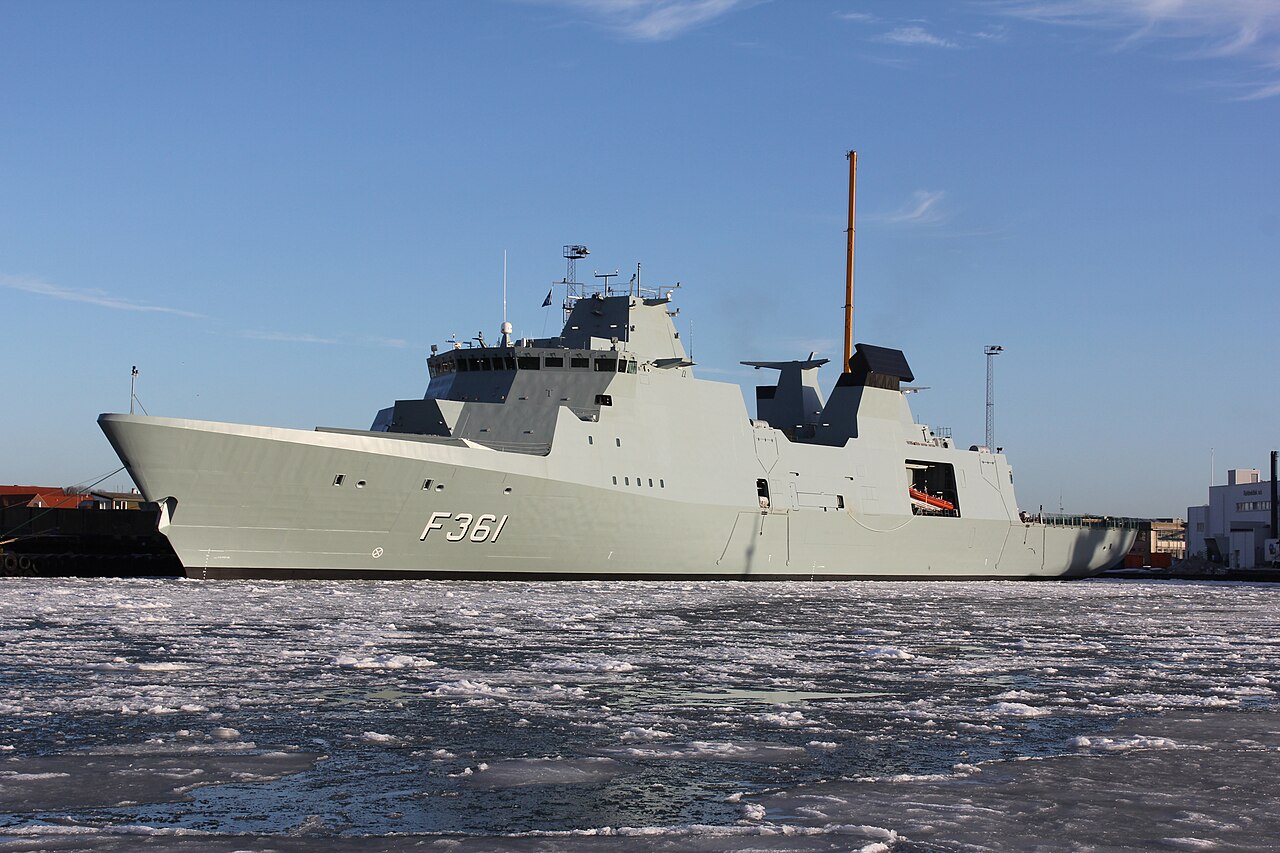
The Type 31 Inspiration-class frigate represents the Royal Navy's attempt to rebuild fleet numbers with a cost-effective general-purpose frigate designed for global presence operations. Based on the Iver Huitfeldt-class hull design from Denmark's Odense Maritime Technology, the Type 31 prioritizes affordability and export potential over cutting-edge capability, filling the gap left by the retirement of Type 23 frigates while complementing the more sophisticated Type 26 City-class. Strategically, the Type 31 embodies the UK's post-Brexit naval philosophy: maintaining global reach with constrained budgets. The design emphasizes modularity and growth potential, with significant space and power margins for future upgrades. Its mission profile centers on constabulary duties, maritime security operations, and lower-threat escort missions, freeing up more capable platforms for high-intensity operations. The frigate's design philosophy reflects hard lessons from the Type 45's troubled procurement. Babcock's approach emphasizes proven systems integration over revolutionary technology, using mature subsystems in a new hull form. The combat system is deliberately simplified compared to Type 26, built around the CMS-1 combat management system rather than the more sophisticated Sea Ceptor integration found on newer platforms. In the current threat environment, Type 31 addresses the Royal Navy's chronic shortage of hulls for global operations. While lacking the anti-submarine warfare sophistication of Type 26 or the air defense capability of Type 45, it provides credible deterrence against sub-peer threats and sufficient capability for most peacetime missions. However, its survivability in contested environments remains questionable, particularly given its limited air defense suite and basic electronic warfare systems.
Deployment Map
Home ports from known hull assignments. Operating areas reflect typical AORs — individual deployments will vary.
Timeline
Specifications
Armament
CAMM missiles for local air defense
Swedish-designed multipurpose gun
Secondary gun systems
Containerized launch system
Merlin-delivered
Doctrine & Employment
Role
Forward presence and partnership engagement in permissive and contested environments where the Royal Navy requires global reach without the expense of deploying high-end assets. The Type 31 exists to maintain the RN's traditional global presence mission while preserving the more capable Type 26s for high-threat scenarios.
Design Philosophy
The designers prioritized affordability, reliability, and export potential over sensor sophistication and weapons capacity. The platform sacrifices advanced radar capability and VLS depth for lower through-life costs and simplified logistics, accepting reduced effectiveness in high-threat environments to achieve the price point necessary for fleet numbers.
Employment
Typically deployed as single units or pairs on extended forward deployments, conducting maritime security operations, training partnerships, and showing the flag in regions like the Caribbean, West Africa, and Indo-Pacific. The platform is designed for integration with allied task groups rather than leading UK-centric formations. Command relationships emphasize regional maritime component commands and partnership engagement rather than carrier strike group integration.
Threat Context
Designed for an era where the Royal Navy acknowledged it could not afford sufficient numbers of high-end frigates to maintain global presence while also providing credible warfighting capability. The platform assumes a threat environment where deterrence and partnership matter more than tactical superiority, though evolving great power competition may stress these assumptions.
How to Compare
Compare on cost-effectiveness and deployment sustainability rather than pure combat capability - the Type 31 succeeds if it can maintain presence at half the cost of alternatives. Focus on radar range, helicopter facilities, and crew size as key differentiators, while accepting that all competitors in this tier sacrifice magazine depth for affordability.
Operational Patterns
Typical Deployment
Global presence operations, maritime security, low-intensity escort duties
Deployment Length
7 months
Typical Task Group
Independent operations or with RFA support vessels
Readiness
New class with unproven maintenance requirements and automation systems
Key Operating Areas
Peer Comparison Matrix
Gorshkov has superior firepower with Kalibr missiles and Poliment-Redut SAMs, but Type 31 emphasizes reliability and cost-effectiveness over raw capability
Video angle: East vs West frigate philosophy - capability vs affordability
FREMM is significantly more capable with Aster missiles and better ASW systems, but costs nearly double the Type 31 unit price
Video angle: European frigate approaches - premium capability vs fleet numbers
Constellation has Aegis integration and 32 VLS cells vs Type 31's 24, representing US preference for individual unit capability over cost
Video angle: Anglo-American frigate divergence post-Cold War
Type 054A has superior missile armament with 32 VLS cells and HQ-16 SAMs, but Type 31 has better sensors and crew efficiency
Video angle: Democratic vs authoritarian naval procurement models
Type 31 based on Danish hull but with UK-specific systems integration and reduced capability for cost savings
Video angle: How navies adapt foreign designs for national requirements
Known Vulnerabilities
Air Defense
Limited to 24 Sea Ceptor missiles with no area air defense capability or long-range engagement
Context: Vulnerable to saturation attacks or advanced air threats in contested environments
Mitigation: Relies on task group air defense or land-based air cover
Anti-Ship Capability
No dedicated anti-ship missiles in baseline configuration, relying on 57mm gun and helicopter-delivered weapons
Context: Cannot credibly engage modern surface combatants beyond gun range
Mitigation: Future missile integration planned but not funded
Electronic Warfare
Basic EW suite compared to peer platforms, limited cyber hardening disclosure
Context: Vulnerable to sophisticated electronic attack in near-peer conflicts
Mitigation: Classified upgrades possible but not publicly acknowledged
Crew Size
Small crew of 100 limits damage control capability and sustained operations
Context: Reduced redundancy compared to larger frigate classes
Mitigation: Automation and simplified systems designed to compensate
Variants
| Variant | Designation | Years | Count | Status | Key Changes |
|---|---|---|---|---|---|
| Batch 1 | HMS Venturer to HMS Active | 2028-2032 | 5 | building | Initial production standard with basic Sea Ceptor integration and CMS-1 combat system |
Fleet Roster (5)
| Hull | Name | Variant | Commissioned | Home Port | Status |
|---|---|---|---|---|---|
| F231 | HMS Venturer | Batch 1 | 2028 | Portsmouth | building |
| F232 | HMS Active | Batch 1 | 2029 | Portsmouth | building |
| F233 | HMS Bulldog | Batch 1 | 2030 | Portsmouth | building |
| F234 | HMS Campbeltown | Batch 1 | 2031 | Portsmouth | building |
| F235 | HMS Formidable | Batch 1 | 2032 | Portsmouth | building |
Modernization Programmes
Future Maritime Strike Capability
Integration of long-range strike missiles, likely Naval Strike Missile or similar anti-ship capability
Impact: Would provide credible anti-surface warfare capability currently lacking
Mission Bay Modules
Development of containerized mission modules for MCM, hydrographic survey, and special forces support
Impact: Enables multi-role capability and operational flexibility
Images




Recent News
Frequently Asked
How many Type 31 Inspiration-class frigate are in service?
5 Type 31 Inspiration-class frigate are currently in service with Royal Navy, with 5 under construction.
When was the first Type 31 Inspiration-class frigate commissioned?
The first Type 31 Inspiration-class frigate entered service in 2028.
Who builds the Type 31 Inspiration-class frigate?
The Type 31 Inspiration-class frigate is built by Babcock International.
How much does a Type 31 Inspiration-class frigate cost?
Unit cost is approximately $320M per hull.
Curated Research
essential
CBO analysis of frigate cost-effectiveness trade-offs directly relevant to Type 31's design philosophy.
RUSI provides authoritative analysis of the Type 31 program's strategic rationale and capability trade-offs.
Official Royal Navy doctrinal publication explaining the strategic context for platforms like the Type 31.
recommended
Friedman provides essential context on Royal Navy frigate design philosophy and the evolution of general-purpose frigate concepts.
Consistent coverage of Type 31 development, sea trials, and operational deployment planning.
Independent analysis focused specifically on Royal Navy programs with detailed Type 31 coverage and strategic context.
reference
Comprehensive technical specifications and development timeline for the Type 31 program.
Watch Type 31 Inspiration in Action
Iron Command produces in-depth comparison and analysis videos for military equipment.
Watch on YouTube