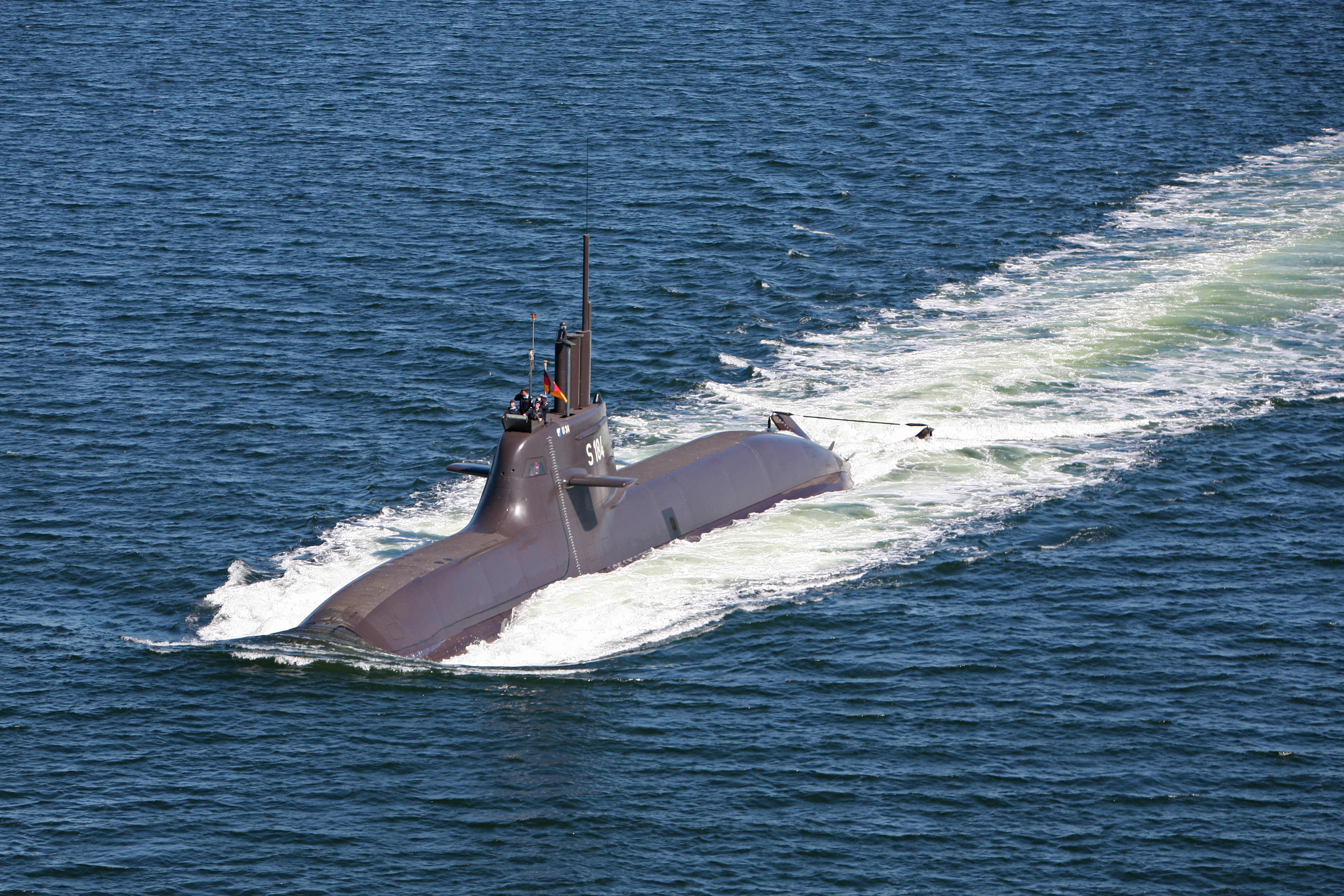
Type 212A submarine
Compare with
Overview
The Type 212A represents a revolutionary leap in submarine technology, being the world's first series-production submarine to feature hydrogen fuel cell Air Independent Propulsion (AIP) as its primary submerged power source. This German-Italian collaborative design fundamentally changed the strategic equation for diesel-electric submarines, offering unprecedented underwater endurance of up to three weeks without snorkeling—a capability that approaches nuclear submarine performance in littoral operations. Strategically, the Type 212A fills the critical gap between conventional diesel-electric boats and nuclear submarines, providing small to medium navies with a credible sea denial capability in shallow, contested waters. Its design philosophy prioritizes stealth above all else, incorporating a non-magnetic steel hull, advanced anechoic coatings, and a teardrop hull form optimized for minimal acoustic signature. The submarine's small crew requirement and high automation reflect modern naval realities of personnel constraints while maximizing operational effectiveness. In the current threat environment, the Type 212A's shallow-water capabilities make it particularly relevant for operations in confined seas like the Baltic, Mediterranean, or South China Sea. Its ability to remain submerged for extended periods while maintaining full combat capability provides a significant advantage in anti-access/area denial scenarios. The submarine's advanced sonar suite and heavyweight torpedo armament make it a credible threat to surface combatants and submarines alike. Compared to contemporary diesel-electric submarines, the Type 212A trades payload capacity and size for stealth and endurance. While larger boats like the Japanese Soryu-class carry more weapons, the 212A's fuel cell technology and stealth characteristics represent the current state-of-the-art in conventional submarine design. Its influence can be seen in follow-on designs like the Type 214 export variant and has spurred other nations to develop their own AIP systems, fundamentally altering the submarine market and tactical considerations for naval planners worldwide.
Deployment Map
Home ports from known hull assignments. Operating areas reflect typical AORs — individual deployments will vary.
Timeline
Specifications
Armament
Wire-guided, wake-homing capability
In lieu of torpedoes
Doctrine & Employment
Role
Littoral sea denial and ASW ambush operations in confined waters where nuclear submarines cannot operate effectively due to size, noise, and diplomatic constraints.
Design Philosophy
Prioritized stealth and endurance over speed and firepower, accepting reduced weapons load (6 tubes vs 8+ on larger boats) and minimal surface speed in exchange for revolutionary underwater persistence and acoustic signature reduction. The fuel cell AIP system trades mechanical complexity and higher procurement costs for strategic freedom of movement in contested littoral zones.
Employment
Typically operates independently or in small task groups for extended covert patrols in Baltic, Mediterranean, and North Sea chokepoints. Primary missions include intelligence gathering, anti-shipping operations, and forming underwater barriers during crisis escalation. Command relationships emphasize decentralized control due to extended submerged operations, with pre-planned patrol boxes and Rules of Engagement. The AIP capability enables patrol stations to be held for weeks without revealing position through snorkeling cycles.
Threat Context
Designed during post-Cold War focus on littoral operations and regional crisis management, emphasizing quality over quantity in smaller European navies. The threat has evolved toward great power competition where persistent ISR and sea denial in confined waters has regained strategic importance, particularly in Baltic approaches and Mediterranean chokepoints.
How to Compare
Compare primarily on underwater endurance and acoustic signature rather than speed or weapons capacity—the Type 212A accepts tactical limitations for strategic persistence. AIP endurance, snorkel-free patrol duration, and detectability in shallow water matter more than traditional metrics like surface speed or torpedo loadout for this class.
Operational Patterns
Typical Deployment
Solo patrol operations, littoral surveillance, chokepoint denial
Deployment Length
2 months
Typical Task Group
Independent operations or with diesel submarine flotillas
Readiness
High availability rate but fuel cell maintenance requires specialized shore support
Key Operating Areas
Peer Comparison Matrix
Gotland uses Stirling AIP vs fuel cells, similar size but older technology. Type 212A has superior underwater endurance and quieter operation, but Gotland has proven track record including US Navy lease.
Video angle: AIP technology comparison - Stirling vs Fuel Cell effectiveness in real operations
Soryu is significantly larger (4200t vs 1830t) with more weapons (30 vs 12) but lacks AIP initially. Later variants add lithium-ion batteries. Trade-off between size/payload vs stealth/endurance.
Video angle: Small stealth hunter vs large conventional submarine philosophy - which approach wins?
Yuan uses Stirling AIP, larger than 212A with more weapons. Less sophisticated but more numerous. Type 212A superior in stealth and technology but Yuan represents mass production approach.
Video angle: Quality vs Quantity - European precision engineering vs Chinese mass production in submarine warfare
Russian conventional design with optional AIP, larger and more heavily armed than 212A. Traditional approach vs German innovation. Type 212A more advanced but Amur more affordable and proven.
Video angle: Innovation vs Tradition - German high-tech vs Russian proven designs for export market
A26 represents next evolution of Stirling AIP technology with larger size and modern systems. Direct competitor to Type 212CD. Similar philosophy but different technical approaches to AIP.
Video angle: Next-generation AIP submarines - competing visions for the future of conventional submarines
Combat History
U33 successfully penetrated multi-national ASW screen undetected during major NATO anti-submarine warfare exercise in Norwegian waters
Demonstrated Type 212A stealth capabilities against modern NATO ASW assets including P-8 Poseidon aircraft and surface combatants
Italian Navy Scirè (S527) conducted extended Mediterranean patrol demonstrating 18-day submerged endurance during migrant interdiction support operations
Real-world validation of fuel cell endurance claims under operational conditions
Multiple Type 212A boats maintained patrol schedules with reduced crew rotations, demonstrating system reliability and reduced manning effectiveness
Proved small crew concept viable even under pandemic operational restrictions
Known Vulnerabilities
Limited weapons capacity
Only 12 weapons total (torpedoes/mines) compared to 20-30 on larger conventional submarines
Context: Limits engagement options in extended combat operations and reduces magazine depth for sustained operations
Mitigation: Type 212CD addresses this with larger hull and increased weapons capacity
Fuel cell complexity
Hydrogen fuel cell system requires specialized maintenance facilities and trained personnel, limiting operational flexibility
Context: Creates logistics bottleneck and reduces deployment options compared to simpler diesel-electric systems
Mitigation: Growing experience base and infrastructure development, but remains limiting factor for some operators
Size constraints in rough seas
Smaller size makes surface operations more challenging in heavy weather, limiting periscope depth operations
Context: Can affect intelligence gathering and communications in North Atlantic or North Sea conditions
Mitigation: Operational procedures emphasize submerged operations, but still constrains mission flexibility
Variants
| Variant | Designation | Years | Count | Status | Key Changes |
|---|---|---|---|---|---|
| Type 212A (German) | U31-U36 | 2005-2013 | 6 | active | Original configuration with German-specific combat systems and sonar suite |
| Type 212A (Italian - Todaro class) | S526-S528 | 2006-2017 | 4 | active | Italian combat systems, different sonar configuration, modified for Mediterranean operations |
Fleet Roster (9)
| Hull | Name | Variant | Commissioned | Home Port | Status |
|---|---|---|---|---|---|
| U31 | U31 | Type 212A German | 2005-10-19 | Eckernförde | active |
| U32 | U32 | Type 212A German | 2007-09-25 | Eckernförde | active |
| U33 | U33 | Type 212A German | 2008-07-15 | Eckernförde | active |
| U34 | U34 | Type 212A German | 2013-06-12 | Eckernförde | active |
| U35 | U35 | Type 212A German | 2015-10-08 | Eckernförde | active |
| U36 | U36 | Type 212A German | 2016-05-19 | Eckernförde | active |
| S526 | Salvatore Todaro | Type 212A Italian | 2006-03-08 | Taranto | active |
| S527 | Scirè | Type 212A Italian | 2007-05-25 | Taranto | active |
| S528 | Pietro Venuti | Type 212A Italian | 2017-03-08 | Taranto | active |
Modernization Programmes
Type 212A Evolution (212CD)
Next-generation variant with improved fuel cells, new combat system, larger hull (65m), increased weapons capacity, and advanced sonar. Joint German-Norwegian program.
Impact: Addresses payload limitations while maintaining stealth advantage, represents evolutionary upgrade path
Mid-Life Upgrade
Sonar upgrades, combat system improvements, and fuel cell technology refresh for existing German boats
Impact: Extends service life and maintains technological edge against emerging threats
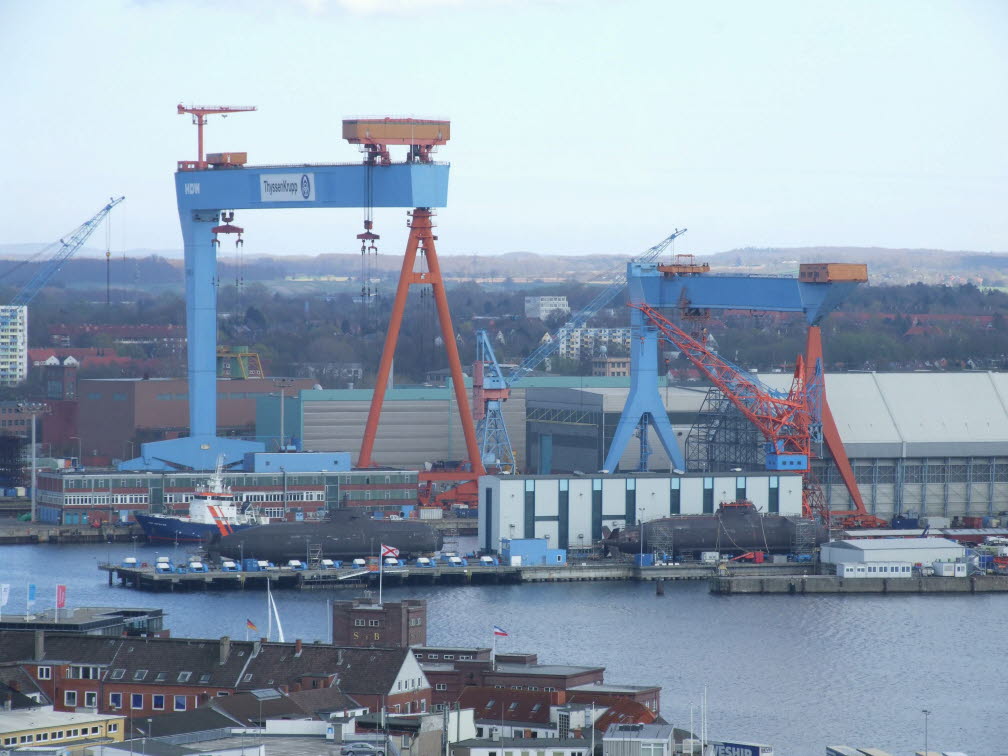
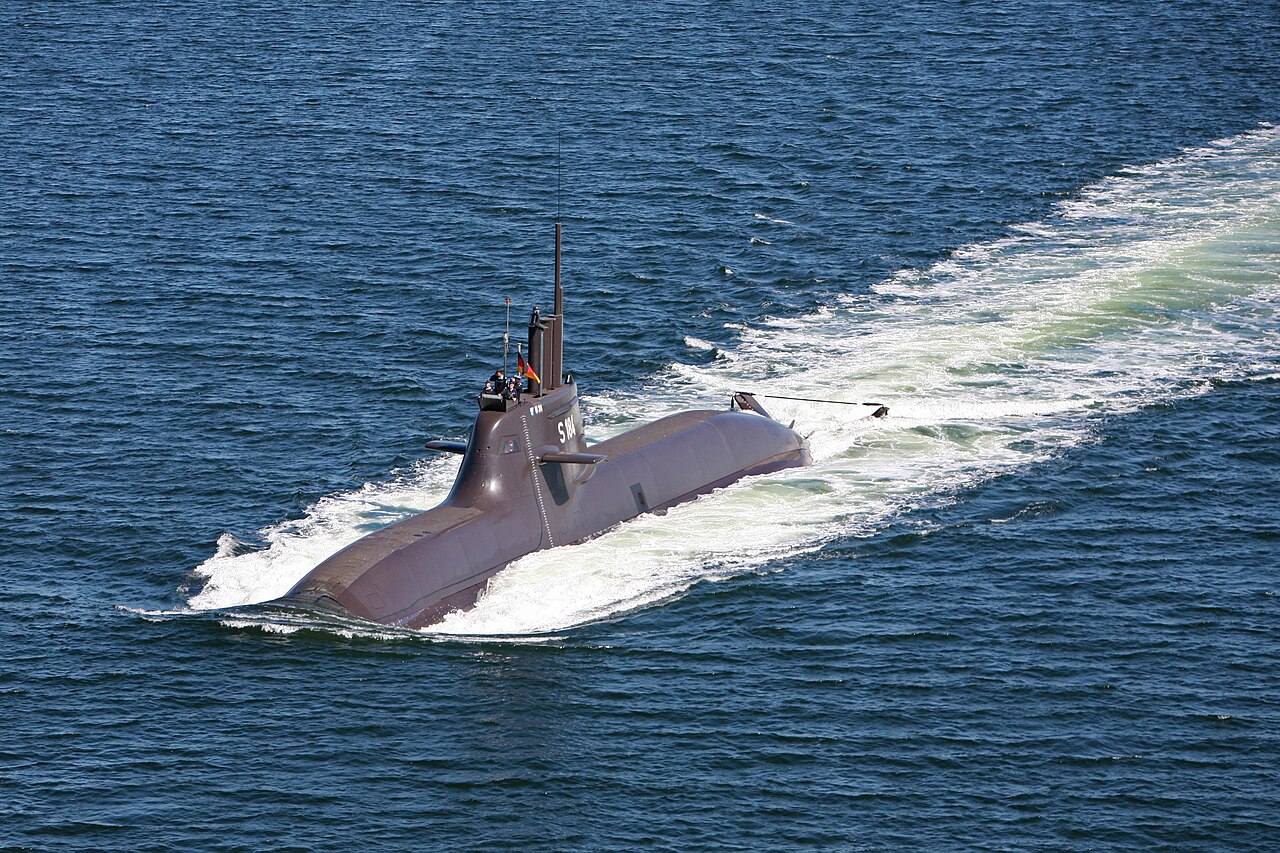
Images





Frequently Asked
How many Type 212A submarine are in service?
9 Type 212A submarine are currently in service with German Navy, Italian Navy.
When was the first Type 212A submarine commissioned?
The first Type 212A submarine entered service in 2005-10-19.
Who builds the Type 212A submarine?
The Type 212A submarine is built by Howaldtswerke-Deutsche Werft (HDW) / Fincantieri.
What variants of the Type 212A submarine exist?
Known variants include: Type 212A (German), Type 212A (Italian - Todaro class).
How much does a Type 212A submarine cost?
Unit cost is approximately $450M per hull.
Curated Research
essential
Provides comprehensive technical analysis of Type 212A systems integration and weapons suite evolution.
Detailed examination of AIP technology implications for submarine warfare and Type 212A as the pioneering platform.
recommended
Leading open source analyst for submarine developments with regular Type 212A variant tracking and technical updates.
Analyzes German naval doctrine evolution and Type 212A role in Baltic defense and NATO maritime strategy.
Strategic analysis of small submarine roles in modern naval warfare with Type 212A as case study.
reference
Comprehensive specifications database with variant comparisons and operational status updates for German and Italian boats.
Official manufacturer specifications and capability descriptions for current and export variants.
Watch Type 212A submarine in Action
Iron Command produces in-depth comparison and analysis videos for military equipment.
Watch on YouTube