
Type 002 Shandong
Overview
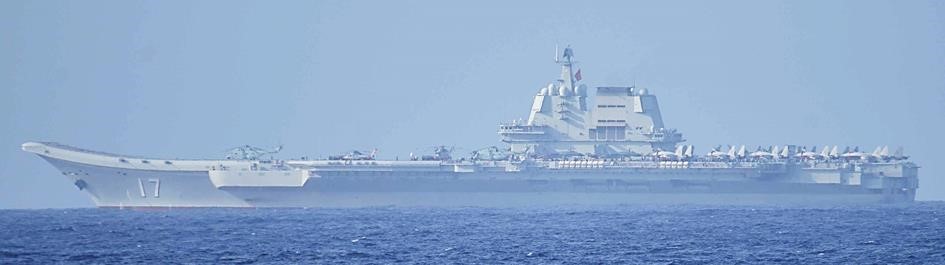
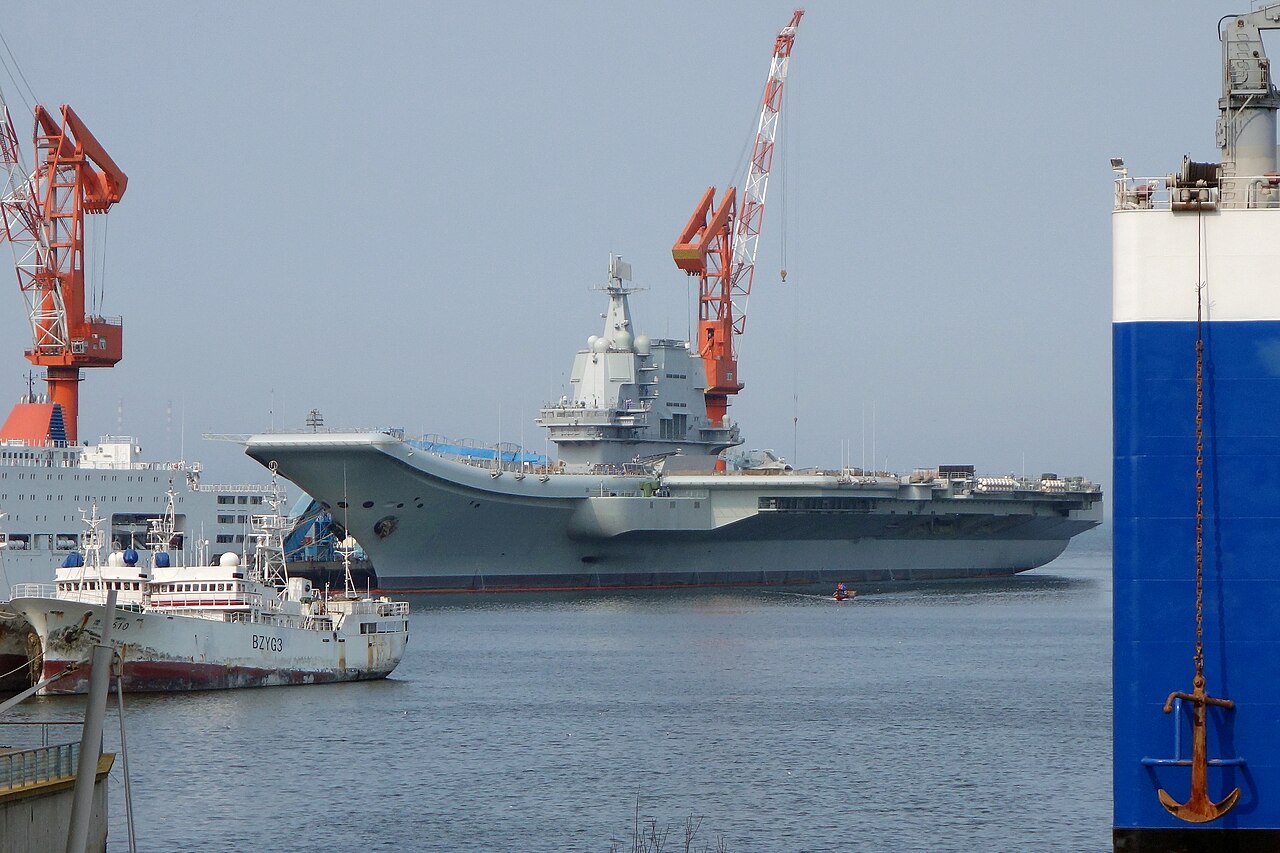
The Type 002 Shandong represents China's first indigenously designed and built aircraft carrier, marking a crucial milestone in the PLAN's blue-water ambitions. While based heavily on the Soviet-derived Kuznetsov-class design (like its predecessor Liaoning), Shandong incorporates Chinese modifications and represents Beijing's growing naval construction capabilities. The carrier serves as both a training platform and operational asset, designed to project Chinese power beyond the first island chain. Shandong employs a ski-jump launch system rather than catapults, limiting it to operating lighter aircraft loads compared to US carriers. This design philosophy prioritizes air defense and fleet protection over long-range strike capabilities. The carrier typically operates J-15 Flying Shark fighters and various helicopters, providing the PLAN with its first domestically-produced carrier aviation capability. In the current threat environment, Shandong serves as a key component of China's anti-access/area-denial strategy in the South China Sea and Western Pacific. While not matching the capability of US supercarriers, it represents a significant force multiplier for Chinese naval operations and a clear statement of intent regarding Taiwan and regional territorial disputes. The carrier's operational patterns suggest it's being used to develop PLAN carrier doctrine and train personnel for future, more capable carriers. Compared to its peers, Shandong sits between smaller carriers like India's Vikrant and the larger US Ford-class. Its ski-jump configuration and conventional propulsion limit its operational flexibility, but for China's current strategic needs—primarily regional power projection and fleet air defense—it provides a solid foundation for building carrier expertise while more advanced designs (Type 003) come online.
Deployment Map
Home ports from known hull assignments. Operating areas reflect typical AORs — individual deployments will vary.
Timeline
Specifications
Armament
FL-3000N export variant
30mm Gatling gun system
defensive countermeasures
primary fixed-wing aircraft
Doctrine & Employment
Role
Regional power projection and sea control within the second island chain, serving as the centerpiece of carrier battle groups designed to challenge US naval dominance in the Western Pacific while providing expeditionary capabilities for Chinese interests beyond traditional coastal defense.
Design Philosophy
Prioritized rapid indigenous construction capability and pilot training capacity over advanced catapult technology, accepting ski-jump limitations to accelerate operational experience. The design sacrificed aircraft payload and sortie generation rates for construction simplicity and reduced technical risk, reflecting China's focus on building naval aviation expertise rather than immediate technological parity with US carriers. Island modifications and improved flight deck layout demonstrate incremental improvement philosophy over revolutionary advancement.
Employment
Operates as the nucleus of a carrier strike group alongside Type 055 destroyers, Type 052D destroyers, and Type 054A frigates, with Type 093/094 submarine escorts. Primary mission profiles include sea lane control in the South China Sea, Taiwan contingency operations, and power projection into the Indian Ocean. The carrier operates under theater command structure, integrating with land-based DF-21D and DF-26 anti-ship ballistic missiles for layered defense. Training cycles emphasize multi-domain operations with coordinated strikes involving carrier aviation, surface combatants, and shore-based missile forces.
Threat Context
Designed for contested environments where US submarine threats and long-range precision strikes necessitate integrated air defense and multi-layered protection from accompanying surface combatants. The threat environment has intensified since construction began, with increased US freedom of navigation operations, enhanced allied coordination through AUKUS and Quad partnerships, and accelerated US hypersonic weapon development forcing greater reliance on shore-based missile support.
How to Compare
Compare primarily on air wing capacity, sortie generation rates, and defensive integration rather than pure platform capabilities—PLAN doctrine emphasizes system-of-systems warfare over individual platform performance. Aircraft launch rates and operational availability matter more than displacement or speed, as Chinese carriers operate within land-based missile coverage unlike US carriers designed for independent power projection. Focus on training throughput and maintenance cycles, as China prioritizes building institutional knowledge over immediate combat capability.
Operational Patterns
Typical Deployment
Carrier strike group operations in South China Sea and Western Pacific
Deployment Length
3 months
Typical Task Group
2-3 Type 052D destroyers, 1-2 Type 054A frigates, Type 901 supply ship
Readiness
High operational tempo for training, increasing operational deployments
Key Operating Areas
Peer Comparison Matrix
Shandong is larger with greater aircraft capacity but both use ski-jump launch. Similar displacement but different strategic focus areas.
Video angle: Asian carrier competition - comparing China and India's indigenous carrier capabilities
Shandong incorporates Chinese improvements to basic Kuznetsov design with better electronics and reliability, but maintains same basic limitations.
Video angle: Evolution of Soviet carrier design - how China improved on Russian blueprint
Queen Elizabeth is larger, more modern design with better aviation facilities, but Shandong has more defensive armament and operates in more contested environment.
Video angle: Ski-jump carriers: British innovation vs Chinese adaptation
Ford-class represents gold standard with electromagnetic catapults, nuclear power, and much larger air wing. Shandong is stepping stone toward similar capability.
Video angle: Supercarrier gap - how close is China to matching US carrier capability
Kaga is much smaller helicopter carrier being modified for F-35B, while Shandong is full-size conventional carrier with larger air wing but less advanced aircraft.
Video angle: Pacific carrier race - Japan's F-35B ships vs China's conventional carriers
Combat History
First major operational deployment with full air wing, conducted flight operations near disputed Spratly Islands
Demonstrated China's commitment to projecting power in contested waters
Sailed through Taiwan Strait during heightened tensions, accompanied by destroyer escort
Political signaling during period of increased cross-strait tensions
Extended deployment east of first island chain with multiple J-15 flight operations
First major blue-water deployment showing growing operational confidence
Known Vulnerabilities
Launch System Limitations
Ski-jump launch restricts aircraft payload and fuel loads compared to catapult systems
Context: Limits strike range and heavy payload missions, reducing offensive capability against distant targets
Mitigation: Future Type 003 carrier will have electromagnetic catapults
Air Wing Size
Relatively small air wing (24-28 fighters) compared to US carriers (60+ aircraft)
Context: Limited sustained air operations and reduced ability to maintain combat air patrol while conducting strikes
Mitigation: Operational doctrine emphasizes quality over quantity and coordination with land-based aviation
Experience Gap
PLAN has limited carrier operational experience and doctrine development compared to US Navy
Context: Potential for tactical and operational mistakes during high-intensity operations
Mitigation: Extensive training programs and gradual operational expansion to build expertise
Conventional Propulsion
Steam propulsion limits operational flexibility and requires more frequent refueling
Context: Reduces deployment duration and operational tempo compared to nuclear-powered carriers
Mitigation: Adequate for regional operations within Chinese strategic priorities
Variants
| Variant | Designation | Years | Count | Status | Key Changes |
|---|---|---|---|---|---|
| Type 002 | CV-17 | 2019-present | 1 | active | First indigenous Chinese carrier design, improved island structure, enhanced sensors compared to Liaoning |
Fleet Roster (1)
| Hull | Name | Variant | Commissioned | Home Port | Status |
|---|---|---|---|---|---|
| CV-17 | Shandong | Type 002 | 2019-12-17 | Sanya, Hainan | active |
Modernization Programmes
Enhanced Combat Systems Integration
Upgrading combat data systems and sensor integration, improved datalinks with escort vessels
Impact: Better coordination with task group elements and improved situational awareness
Air Wing Expansion
Adding more J-15 variants including electronic warfare and tanker versions
Impact: Enhanced air wing capabilities and operational flexibility
Images




Frequently Asked
How many Type 002 Shandong are in service?
1 Type 002 Shandong are currently in service with People's Liberation Army Navy.
When was the first Type 002 Shandong commissioned?
The first Type 002 Shandong entered service in 2019-12-17.
Who builds the Type 002 Shandong?
The Type 002 Shandong is built by Dalian Shipbuilding Industry Company.
How much does a Type 002 Shandong cost?
Unit cost is approximately $6.5B per hull.
Curated Research
essential
Ron O'Rourke's definitive CRS analysis of PLAN carrier development and strategic implications for US naval planning.
Andrew Erickson's authoritative analysis of China's carrier construction program and naval aviation development.
recommended
Comprehensive technical and doctrinal analysis of PLAN carrier development from conception through operational deployment.
CSIS strategic assessment of PLAN carrier operations within broader Chinese naval modernization and regional strategy.
US Naval War College analysis of Chinese carrier doctrine development and operational employment concepts.
reference
Detailed technical specifications and construction timeline for comparative analysis with other carrier platforms.
PLA doctrinal publication outlining integrated joint operations and carrier employment within Chinese military strategy.
Watch Type 002 Shandong in Action
Iron Command produces in-depth comparison and analysis videos for military equipment.
Watch on YouTube