
Sukhoi Su-34 Fullback
Compare with
Overview
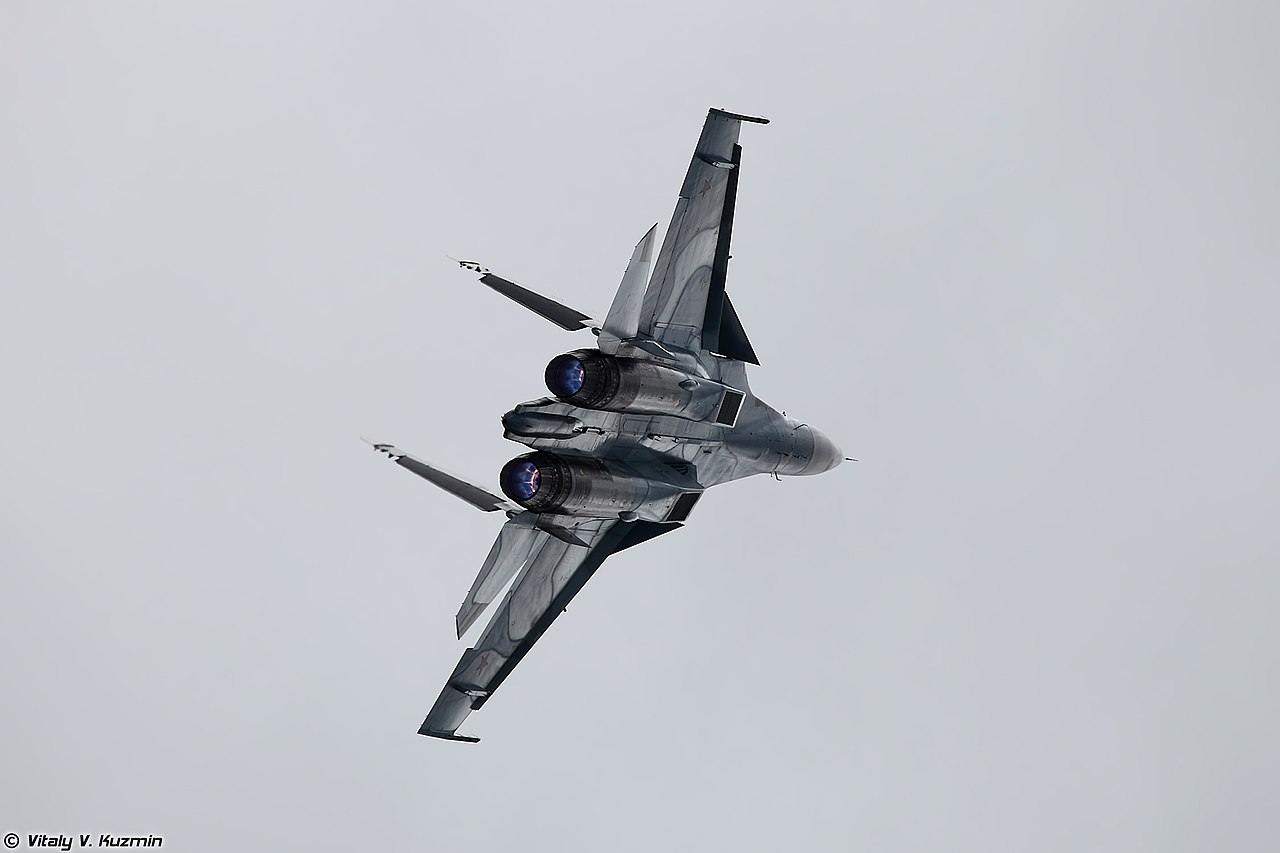
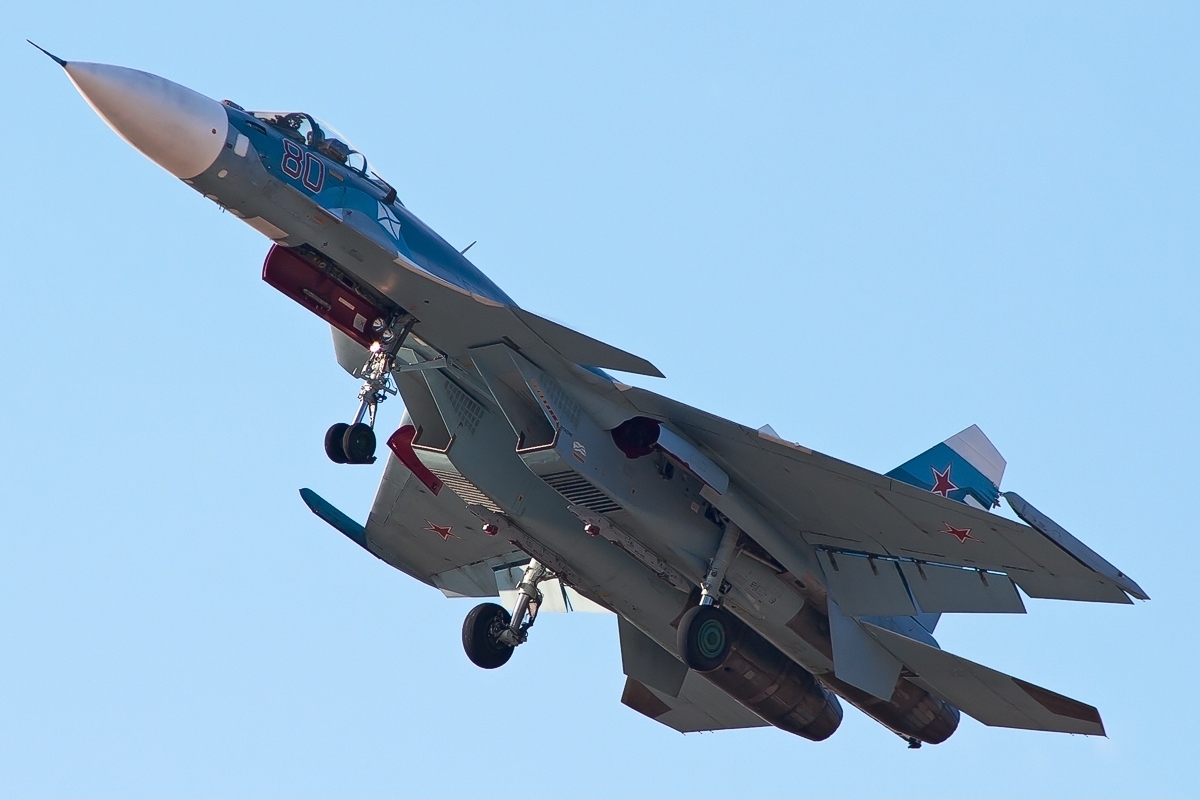
The Sukhoi Su-34 Fullback represents Russia's primary tactical strike fighter-bomber, designed to replace the aging Su-24 Fencer in the precision ground attack role. This twin-seat, twin-engine platform combines the maneuverability of a fighter with the payload capacity and avionics suite of a dedicated bomber, featuring side-by-side seating in an armored cockpit and advanced multimode radar capabilities. Strategically, the Su-34 serves as the backbone of Russia's tactical aviation forces, capable of deep interdiction missions, close air support, and anti-ship operations. Its design philosophy emphasizes survivability through electronic warfare capabilities, terrain-following flight profiles, and significant armor protection around the crew compartment. The aircraft's extended range and diverse weapons compatibility make it suitable for both tactical and operational-level missions across Russia's vast territory. In the current threat environment, the Su-34 has proven itself in combat operations over Syria and Ukraine, demonstrating both its capabilities and limitations. The platform excels in contested airspace where its speed, defensive systems, and precision weapons can be leveraged, but has shown vulnerability to modern surface-to-air missile systems and advanced fighter aircraft. Its extensive use in the Ukraine conflict has provided valuable combat data while also revealing maintenance and availability challenges. Compared to Western peers like the F-15E Strike Eagle or Tornado IDS, the Su-34 offers competitive range and payload but generally lags in precision targeting systems, network-centric warfare capabilities, and overall sensor fusion. However, its robust construction, diverse weapons integration, and lower operating costs make it an effective platform for sustained operations in high-intensity conflicts, particularly when operating from prepared bases with adequate logistical support.
Deployment Map
Home ports from known hull assignments. Operating areas reflect typical AORs — individual deployments will vary.
Timeline
Specifications
Armament
TV or laser-guided tactical missile
Supersonic anti-radar or anti-ship variants
Modern tactical missile with multiple guidance options
Infrared-guided self-defense missile
Active radar-guided beyond visual range missile
150 rounds, 1800 rpm rate of fire
Unguided and precision-guided variants
Operational Patterns
Typical Deployment
Regiment-level deployments for tactical strike missions, typically 12-24 aircraft per major operation
Deployment Length
6 months
Typical Task Group
Mixed fighter-bomber regiments with Su-35 escort or independent strike packages
Readiness
Availability rates estimated at 60-70% during sustained operations, with maintenance challenges affecting extended campaigns
Key Operating Areas
Peer Comparison Matrix
F-15E has superior avionics integration, precision targeting systems, and network connectivity, while Su-34 offers better armor protection and potentially lower operating costs. F-15E has proven more adaptable to modern precision warfare concepts.
Video angle: East vs West strike fighter philosophy: precision vs survivability approaches
Tornado emphasizes low-level penetration while Su-34 focuses on medium-altitude operations. Su-34 is newer with more modern avionics but Tornado has more extensive combat upgrade experience.
Video angle: Cold War strike fighter concepts evolved: terrain-following vs standoff approaches
Similar roles but JH-7A is older design with focus on anti-ship missions. Su-34 offers better air-to-air capability and more modern systems integration.
Video angle: Chinese vs Russian strike fighter development paths and maritime focus differences
Super Hornet offers better carrier integration and multirole flexibility, while Su-34 provides longer range and higher payload from land bases. Different operational concepts for strike missions.
Video angle: Land-based heavy striker vs carrier-capable multirole: different solutions to modern strike requirements
Combat History
Su-34s conducted first combat missions targeting ISIS positions in Syria, marking operational debut with precision strikes using conventional bombs and Kh-29 missiles
Proved platform's precision strike capability and validated long-range deployment concepts
Extensive use of Su-34s for ground attack missions, initially targeting Ukrainian airfields and command centers, later shifting to tactical targets and infrastructure
Largest combat employment of the type, revealing both capabilities and vulnerabilities to modern air defenses
Multiple Su-34 losses confirmed to Ukrainian SAM systems including S-300 and Western-supplied systems, with at least 15-20 aircraft lost by early 2024
Highlighted vulnerability to modern integrated air defense systems and need for improved electronic warfare capabilities
Adaptation to standoff weapons employment, using longer-range missiles like Kh-31 and glide bombs to reduce exposure to air defenses
Demonstrated tactical adaptation and importance of standoff capability in contested environments
Known Vulnerabilities
Surface-to-Air Missile Defense
Proven vulnerable to modern SAM systems including S-300, IRIS-T, and other advanced surface-to-air missiles, with significant losses in Ukraine
Context: Modern integrated air defense networks can effectively engage Su-34s, particularly during attack profiles
Mitigation: Shift to standoff weapons employment and improved electronic warfare systems
Maintenance and Availability
High operational tempo in Ukraine has strained maintenance capabilities, with evidence of reduced sortie rates and component shortages affecting some units
Context: Sustained combat operations reveal logistical limitations and maintenance burden
Mitigation: Increased production of spare parts and rotation of units
Network-Centric Warfare
Limited integration with modern C4ISR networks compared to Western counterparts, relying more on traditional communications and targeting methods
Context: Modern warfare increasingly requires real-time data sharing and collaborative targeting
Mitigation: Su-34M upgrade includes improved datalink capabilities
Precision Targeting Systems
Targeting pod integration and precision strike capabilities lag behind Western equivalents, though improving with Su-34M
Context: Modern conflicts require precise target identification and minimal collateral damage
Mitigation: Integration of modern targeting pods and precision weapons in upgraded variants
Variants
| Variant | Designation | Years | Count | Status | Key Changes |
|---|---|---|---|---|---|
| Su-34 (initial production) | RF-95841 to RF-95872 | 2014-2018 | 32 | active | Basic production variant with B-004 radar and standard avionics suite |
| Su-34M (modernized) | RF-95873 onwards | 2019-present | 114 | active | Upgraded avionics, improved radar modes, enhanced EW suite, compatibility with newer precision weapons including Kh-38 series |
Fleet Roster (2)
| Hull | Name | Variant | Commissioned | Home Port | Status |
|---|---|---|---|---|---|
| RF-95841 | Bort 21 | Su-34 | 2014-03 | Voronezh Air Base | active |
| Various | Multiple aircraft | Su-34/Su-34M | 2014-2024 | Multiple bases | Note: Individual tail numbers classified, approximately 146 delivered |
Modernization Programmes
Su-34M upgrade program
Comprehensive avionics upgrade including new multimode radar, improved EW suite, modernized cockpit displays, and integration of advanced precision weapons including Kh-38 series missiles and modern guided bombs
Impact: Significantly enhances precision strike capability and situational awareness, improves survivability against modern air defenses
Electronic Warfare Enhancement
Urgent upgrade to defensive EW systems based on Ukraine combat experience, including improved radar warning receivers and countermeasures dispensers
Impact: Addresses combat-identified vulnerabilities to modern SAM systems
Images




Frequently Asked
How many Sukhoi Su-34 Fullback are in service?
1 Sukhoi Su-34 Fullback are currently in service with Russian Aerospace Forces.
When was the first Sukhoi Su-34 Fullback commissioned?
The first Sukhoi Su-34 Fullback entered service in 2014.
Who builds the Sukhoi Su-34 Fullback?
The Sukhoi Su-34 Fullback is built by Sukhoi.
What variants of the Sukhoi Su-34 Fullback exist?
Known variants include: Su-34 (initial production), Su-34M (modernized).
How much does a Sukhoi Su-34 Fullback cost?
Unit cost is approximately $36M per hull.
Watch Sukhoi Su-34 Fullback in Action
Iron Command produces in-depth comparison and analysis videos for military equipment.
Watch on YouTube