
Ohio-class submarine
Overview
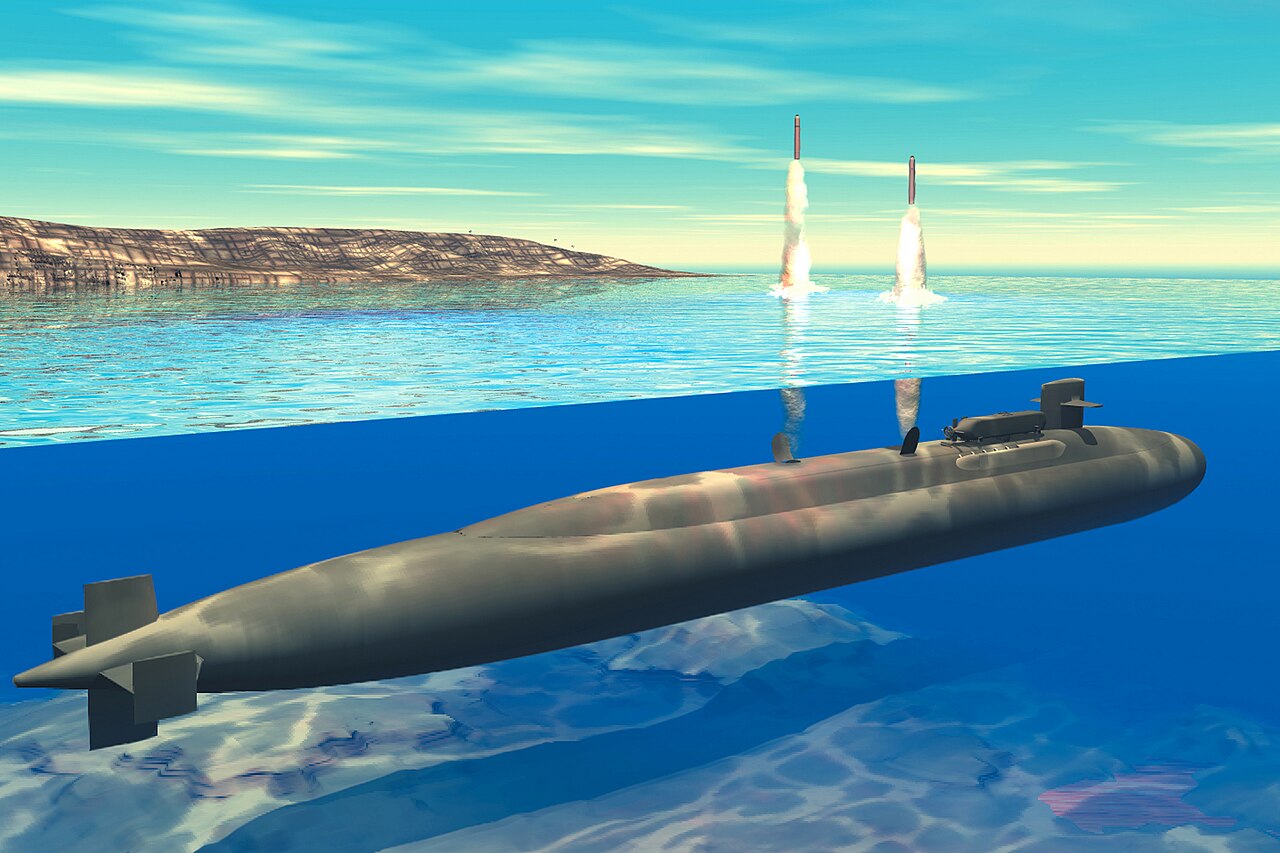
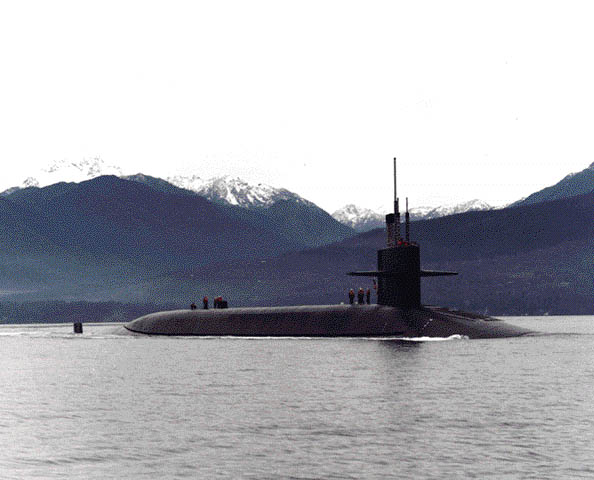
The Ohio-class submarine represents the backbone of America's nuclear deterrent, serving as the most survivable leg of the nuclear triad. Originally designed during the Cold War as strategic ballistic missile submarines (SSBNs), these 560-foot behemoths were built to carry 24 Trident missiles and remain undetected in the world's oceans for months at a time. Fourteen boats continue this strategic deterrent mission today, while four have been converted to guided-missile submarines (SSGNs) carrying up to 154 Tomahawk cruise missiles each. The Ohio-class embodies the principle of assured second-strike capability — the ability to survive a nuclear first strike and retaliate with devastating force. Each SSBN carries more destructive power than was used in all of World War II, making them among the most strategically important military assets in existence. Their stealth characteristics, global reach, and command survivability make them virtually undetectable when properly deployed, providing the ultimate insurance policy against nuclear aggression. In the current threat environment, Ohio-class boats face new challenges from advancing anti-submarine warfare capabilities of near-peer competitors like China and Russia. However, their deep-ocean operating areas and advanced quieting technologies maintain their edge. The SSGN variants have proven invaluable in conventional conflicts, providing massive precision strike capability from concealed positions — as demonstrated in operations against Libya, Syria, and ISIS targets. Compared to peer strategic submarines like Russia's Borei-class or China's Jin-class, the Ohio-class remains superior in stealth, reliability, and weapon accuracy. However, all Ohio-class boats are aging, with the youngest commissioned in 1997. The Columbia-class replacement program is critical, as these submarines must remain effective through the 2080s in an increasingly contested undersea domain where quantum sensing and other breakthrough technologies may challenge traditional stealth advantages.
Deployment Map
Home ports from known hull assignments. Operating areas reflect typical AORs — individual deployments will vary.
Timeline
Specifications
Armament
Multiple independently targetable warheads
SSGN conversion replaces SLBM tubes
Anti-submarine and anti-surface
Doctrine & Employment
Role
Assured second-strike nuclear deterrence through survivable launch platforms that can remain undetected for extended periods, ensuring mutual assured destruction remains credible even after a first strike.
Design Philosophy
Designers prioritized acoustic stealth and weapons magazine depth over speed and defensive systems, accepting reduced maneuverability for unmatched quieting and 24-missile capacity. The massive size was accepted as necessary for strategic payload requirements, sacrificing the operational flexibility of smaller attack submarines for deterrent credibility. SSGN conversions traded ballistic missile capacity for tactical flexibility, accepting reduced strategic value for enhanced conventional strike capability.
Employment
SSBNs operate independently on 70-day strategic deterrent patrols, maintaining constant at-sea presence through coordinated deployment cycles with shore-based command authority retaining launch control. SSGNs integrate into joint strike operations as precision fires platforms, typically operating alone but coordinating with carrier strike groups and special operations forces. Both variants leverage acoustic superiority and deep ocean access to achieve positional advantage before mission execution. Command relationships flow directly through STRATCOM for SSBNs and geographic combatant commanders for SSGNs.
Threat Context
Originally designed to survive Soviet ASW networks during Cold War nuclear competition, emphasizing deep ocean operations beyond effective ASW barriers. Modern threat environment includes improved Chinese and Russian submarine-hunting capabilities, advanced sonar networks, and proliferation of quiet diesel-electric submarines that complicate traditional acoustic advantages.
How to Compare
Compare Ohio-class boats on strategic payload capacity and acoustic signature versus patrol duration, not surface speed or defensive armament—all modern SSBNs accept similar performance parameters for survivability. SSGN variants should be evaluated against tactical missile capacity and special operations integration rather than traditional submarine metrics. The key analytical dimension remains detection probability over mission duration rather than engagement capability.
Operational Patterns
Typical Deployment
Strategic deterrent patrols (SSBN) lasting 70 days submerged, or special operations/strike missions (SSGN)
Deployment Length
2 months
Typical Task Group
Operates independently for strategic missions, or with special operations forces for SSGN missions
Readiness
Maintains minimum 12 of 14 SSBNs operationally available, with typically 4-5 on patrol simultaneously
Key Operating Areas
Peer Comparison Matrix
Borei is newer but smaller (16 vs 24 missiles), less stealthy, and operates from more constrained bastions. Ohio has superior quieting and global reach but is much older.
Video angle: Cold War titans: comparing the backbone submarines of US and Russian nuclear deterrents
Jin carries only 12 JL-2 missiles with shorter range, forcing closer approaches to US targets. Significantly noisier than Ohio but represents China's growing sea-based deterrent.
Video angle: Dragon vs Eagle: How China's submarine deterrent stacks up against America's proven Ohio-class
Smaller (16 vs 24 tubes) but uses same Trident missiles. Similar stealth characteristics but limited to four boats total, providing minimal continuous deterrent.
Video angle: Special relationship underwater: comparing British and American strategic submarine capabilities
Uses shorter-range French M51 missiles (16 tubes) requiring closer patrol areas. More modern design but smaller strategic impact than Ohio-class.
Video angle: Independent deterrent: how France's submarine nuclear force compares to the US Ohio-class
Will have fewer missiles (16 vs 24) but improved stealth, longer hull life (42 vs 30 years), and advanced reactor design. More expensive per unit but more capable.
Video angle: Passing the torch: how the new Columbia-class will replace the legendary Ohio submarines
Combat History
USS Florida (SSGN-728) launched 93 Tomahawk cruise missiles against Libyan air defense targets, the largest single submarine strike in naval history.
Demonstrated the massive conventional firepower capability of SSGN conversions and their ability to conduct opening strikes in contested environments.
SSGN submarines launched Tomahawk strikes against ISIS targets in Syria, marking first combat use against terrorist organizations.
Showed strategic submarines' role in conventional warfare against asymmetric threats.
USS John Warner (not Ohio-class) conducted strikes, but Ohio SSGNs were reportedly positioned for potential follow-up strikes.
Demonstrated strategic deterrent role even in limited conventional operations.
Multiple Ohio-class boats conducted deterrent patrols in South China Sea and Western Pacific amid rising tensions with China.
Maintains strategic stability through visible deterrence in contested regions.
Known Vulnerabilities
Aging Hull and Systems
Oldest boats are over 40 years old with original hull structures and many legacy systems reaching end of design life.
Context: Increased maintenance requirements and potential reliability issues as Columbia-class delays put pressure on Ohio availability.
Mitigation: Aggressive maintenance programs and selective component upgrades, but fundamental age limitations cannot be overcome.
Chokepoint Transit Vulnerability
Must transit predictable chokepoints from Bangor and Kings Bay, potentially exposing boats to advanced persistent surveillance networks.
Context: China and Russia have invested heavily in underwater sensor networks and satellite-based submarine detection capabilities.
Mitigation: Varied transit patterns and advanced countermeasures, but geography constrains options.
Communications Vulnerability
Strategic communications require boats to come to shallow depth or trail antennas, potentially exposing them to detection.
Context: Modern satellite and signals intelligence capabilities can exploit communication windows for tracking.
Mitigation: Very Low Frequency communications and burst transmissions minimize exposure, but fundamental vulnerability remains.
Industrial Base Constraints
Only Electric Boat can maintain these submarines, creating single point of failure for the deterrent.
Context: Shipyard capacity limits simultaneous maintenance availability and creates strategic vulnerability to sabotage or attack.
Mitigation: Navy is expanding shipyard capacity and cross-training workforce, but fundamental constraint remains.
Variants
| Variant | Designation | Years | Count | Status | Key Changes |
|---|---|---|---|---|---|
| Ohio SSBN | SSBN-726 to SSBN-743 | 1981-1997 | 14 | active | Strategic ballistic missile configuration with 24 Trident missile tubes |
| Ohio SSGN | SSGN-726 to SSGN-729 | 2006-2008 | 4 | active | Converted from SSBN to guided missile submarine, 154 Tomahawk VLS cells, special operations capability |
Fleet Roster (18)
| Hull | Name | Variant | Commissioned | Home Port | Status |
|---|---|---|---|---|---|
| SSBN-726 | USS Ohio | SSGN | 1981-11-11 | Bangor, WA | active |
| SSBN-727 | USS Michigan | SSGN | 1982-09-11 | Bangor, WA | active |
| SSBN-728 | USS Florida | SSGN | 1983-06-18 | Kings Bay, GA | active |
| SSBN-729 | USS Georgia | SSGN | 1984-02-11 | Kings Bay, GA | active |
| SSBN-730 | USS Henry M. Jackson | SSBN | 1984-10-06 | Bangor, WA | active |
| SSBN-731 | USS Alabama | SSBN | 1985-05-25 | Bangor, WA | active |
| SSBN-732 | USS Alaska | SSBN | 1986-01-25 | Kings Bay, GA | active |
| SSBN-733 | USS Nevada | SSBN | 1986-08-16 | Bangor, WA | active |
| SSBN-734 | USS Tennessee | SSBN | 1988-12-17 | Kings Bay, GA | active |
| SSBN-735 | USS Pennsylvania | SSBN | 1989-09-09 | Bangor, WA | active |
| SSBN-736 | USS West Virginia | SSBN | 1990-10-20 | Kings Bay, GA | active |
| SSBN-737 | USS Kentucky | SSBN | 1991-07-13 | Bangor, WA | active |
| SSBN-738 | USS Maryland | SSBN | 1992-06-13 | Kings Bay, GA | active |
| SSBN-739 | USS Nebraska | SSBN | 1993-07-10 | Bangor, WA | active |
| SSBN-740 | USS Rhode Island | SSBN | 1994-07-09 | Kings Bay, GA | active |
| SSBN-741 | USS Maine | SSBN | 1995-07-29 | Bangor, WA | active |
| SSBN-742 | USS Wyoming | SSBN | 1996-07-13 | Kings Bay, GA | active |
| SSBN-743 | USS Louisiana | SSBN | 1997-09-06 | Bangor, WA | active |
Modernization Programmes
Trident II D5 Life Extension
Upgrading Trident missiles with improved accuracy, reliability, and penetration aids to counter advanced missile defenses.
Impact: Maintains credible deterrent against hardened targets and emerging missile defense systems.
Ohio Replacement Program (Columbia-class)
12 new Columbia-class SSBNs will replace Ohio SSBNs with improved stealth, 16 missile tubes, and 42-year hull life.
Impact: Essential for maintaining continuous deterrent patrols as Ohio-class reaches end of service life.
SSGN Service Life Extension
Extended SSGN service life through 2040s with reactor refueling, hull maintenance, and systems upgrades.
Impact: Maintains conventional strike capability until Virginia Payload Module submarines enter service.
Images






Recent News
Frequently Asked
How many Ohio-class submarine are in service?
18 Ohio-class submarine are currently in service with United States Navy.
When was the first Ohio-class submarine commissioned?
The first Ohio-class submarine entered service in 1981-11-11.
Who builds the Ohio-class submarine?
The Ohio-class submarine is built by General Dynamics Electric Boat.
What variants of the Ohio-class submarine exist?
Known variants include: Ohio SSBN, Ohio SSGN.
How much does a Ohio-class submarine cost?
Unit cost is approximately $2.7B per hull.
Curated Research
essential
Provides definitive technical development history and design rationale for Ohio-class submarines within broader U.S. submarine evolution.
Congressional Research Service analysis of Ohio-class role within nuclear triad and modernization requirements.
Strategic analysis of Ohio-class replacement requirements and deterrent effectiveness in modern threat environment.
recommended
Primary professional publication for U.S. submarine warfare community with regular Ohio-class operational insights.
Official U.S. doctrine for nuclear operations including SSBN employment principles and command relationships.
reference
Comprehensive technical specifications and deployment history for all Ohio-class variants.
Independent British analysis of submarine warfare developments affecting Ohio-class operational environment.
Watch Ohio in Action
Iron Command produces in-depth comparison and analysis videos for military equipment.
Watch on YouTube