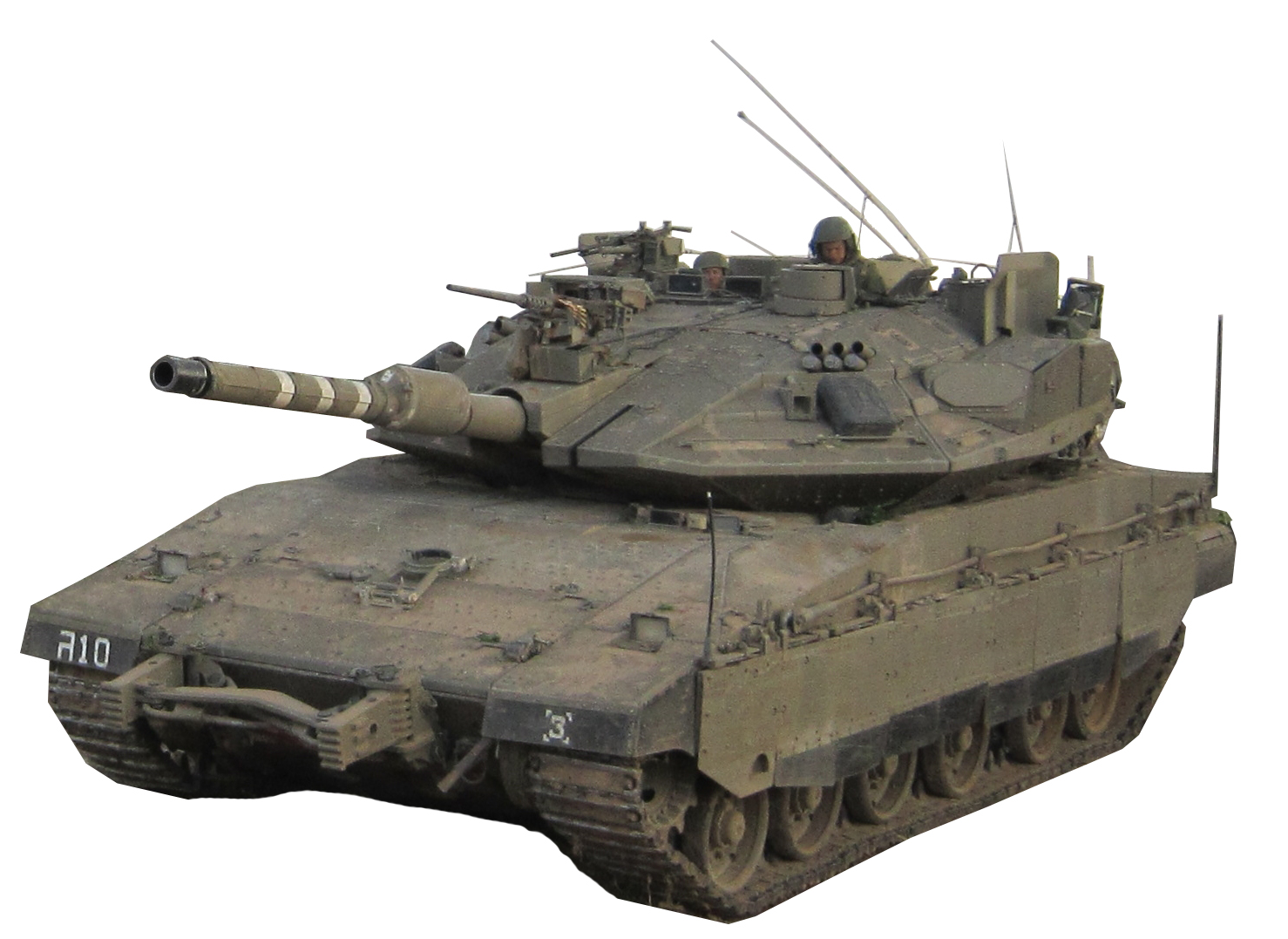
Merkava Mk 4 Main Battle Tank
Overview
The Merkava Mk 4 represents Israel's fourth-generation main battle tank philosophy, emphasizing crew survivability above all else through its unique rear-engine configuration and modular armor design. Unlike conventional Western tank designs that prioritize firepower and mobility equally with protection, the Merkava's rear-mounted powerpack creates a survivable crew compartment with multiple escape routes and allows for casualty evacuation or infantry transport in the rear fighting compartment. Strategically, the Merkava Mk 4 is designed for Israel's specific operational requirements: urban warfare in dense civilian areas, operations against both conventional armored threats and asymmetric forces, and the ability to operate independently with minimal logistics support. The tank's design philosophy reflects Israel's strategic reality of fighting on multiple fronts with limited strategic depth, where every crew member's survival is critical to national defense. The Mk 4's Trophy active protection system represents a paradigm shift in tank survivability, being the world's first operational hard-kill APS deployed at scale. This system, combined with the tank's modular armor and battle management systems, makes it arguably the most survivable MBT currently in service. The platform has been extensively combat-tested in Gaza operations and along the Lebanese border, proving its urban warfare capabilities. Compared to peers like the M1A2 Abrams or Leopard 2A7, the Merkava Mk 4 sacrifices some mobility (60 tons vs 70+ tons, but lower power-to-weight ratio) for superior crew survivability features and urban warfare optimization. Its 120mm smoothbore gun provides equivalent firepower to Western counterparts, while its advanced fire control and battle management systems give it superior situational awareness in complex threat environments.
Deployment Map
Home ports from known hull assignments. Operating areas reflect typical AORs — individual deployments will vary.
Timeline
Specifications
Armament
Fires APFSDS, HEAT, HE rounds
Coaxially mounted with main gun
Commander's cupola mounted
Loader and driver positions
Intercepts RPGs and ATGMs
360-degree coverage
Operational Patterns
Typical Deployment
Integrated into IDF armored brigades for border security and rapid response to multiple threat sectors
Deployment Length
12 months
Typical Task Group
Company-level formations with infantry, engineering, and air support integration
Readiness
High maintenance requirements for Trophy and electronic systems, limited by specialized technician availability
Key Operating Areas
Peer Comparison Matrix
Abrams prioritizes mobility and firepower, Merkava emphasizes crew survival. Abrams has superior armor protection and mobility, Merkava has better urban warfare features and active protection.
Video angle: Survivability philosophy comparison - American vs Israeli design approaches to crew protection
Leopard 2A7 has superior mobility and modular armor, but lacks operational active protection system. Merkava has proven urban warfare experience and Trophy APS advantage.
Video angle: European precision engineering vs Israeli battle-tested innovation comparison
T-90M lighter and more mobile but inferior crew protection. Shtora system less capable than Trophy. Merkava has superior fire control and battle management systems.
Video angle: Active protection systems comparison - Trophy vs Shtora effectiveness analysis
K2 has superior mobility and advanced suspension system, but unproven active protection. Both emphasize advanced electronics and crew interfaces over raw armor.
Video angle: Next-generation MBT technology comparison - digital battlefield integration
Challenger 2 TES has superior armor protection but inferior active protection and mobility. Both designed for survivability but different approaches - passive vs active protection.
Video angle: Urban warfare adaptation comparison - British vs Israeli solutions to asymmetric threats
Combat History
First combat deployment of Mk 4 prototypes. Multiple tanks hit by Hezbollah Kornet ATGMs, crew survivability superior to earlier Merkava variants.
Validated survivability design philosophy and identified need for active protection systems
First major operational use in Gaza urban environment. Demonstrated urban warfare capabilities and crew compartment versatility for infantry support.
Proved urban warfare design concepts and rear compartment utility
Trophy APS first combat intercept of RPG-29 round, protecting Mk 4M crew from direct hit.
World's first operational hard-kill APS combat success, validating active protection concept
Extensive urban combat in Gaza. Trophy system achieved over 90% intercept rate against ATGMs and RPGs. Multiple crew saves documented.
Demonstrated maturity of Trophy system and overall platform survivability in intensive urban combat
Mk 4 Barak variant with Iron Vision system used in Gaza operations. Enhanced situational awareness in urban environment.
First operational use of latest variant with advanced crew interfaces
Known Vulnerabilities
Mobility limitations
Lower power-to-weight ratio compared to contemporary MBTs, limiting tactical mobility in rapid maneuver scenarios
Context: Critical in potential multi-front conflict where rapid repositioning between sectors required
Mitigation: IDF doctrine emphasizes defensive positions and urban warfare where mobility less critical
Trophy system gaps
Limited effectiveness against kinetic penetrators, top-attack munitions, and coordinated simultaneous attacks
Context: Advanced adversaries developing specific countermeasures to Trophy system
Mitigation: Trophy Gen 2 development and integration with other defensive systems
Logistics footprint
Complex systems require specialized maintenance and high-tech spare parts, vulnerable to supply disruption
Context: Extended conflict could strain maintenance capabilities for electronic systems
Mitigation: Domestic production of critical components and modular design for field replacement
Urban warfare signature
Trophy launches and muzzle blast create significant visual/audible signatures in urban environment
Context: Reveals position to enemy observers and can cause civilian casualties from interceptor debris
Mitigation: Tactical employment procedures and soft-kill countermeasures development
Variants
| Variant | Designation | Years | Count | Status | Key Changes |
|---|---|---|---|---|---|
| Merkava Mk 4 | Initial production | 2004-2008 | 100 | active | New fire control system, modular armor, improved engine, battle management system vs Mk 3 |
| Merkava Mk 4M | Trophy-equipped | 2009-2016 | 200 | active | Rafael Trophy APS integration, improved armor modules, enhanced BMS |
| Merkava Mk 4 Barak | Latest variant | 2017-present | 60 | active | 360-degree camera system, improved Trophy radar, enhanced networking, Iron Vision helmet display |
Fleet Roster (1)
| Hull | Name | Variant | Commissioned | Home Port | Status |
|---|---|---|---|---|---|
| N/A | Merkava Mk 4 Fleet | Mixed variants | 2004-present | Various IDF armored brigades | active |
Modernization Programmes
Iron Vision Integration
Elbit Iron Vision 360-degree camera system with helmet-mounted displays, allowing crew to see through armor
Impact: Dramatically improved situational awareness while maintaining protection
Trophy Gen 2
Upgraded Trophy system with improved radar, faster response time, and lighter interceptors
Impact: Enhanced protection against advanced threats and reduced system weight
Digital Army Program
Integration with IDF's digital battlefield network, AI-assisted threat detection, autonomous features
Impact: Network-centric warfare capabilities and reduced crew workload
Mk 5 Development
Next-generation Merkava with electric drive, AI systems, and modular mission packages
Impact: Maintains technological edge against emerging threats
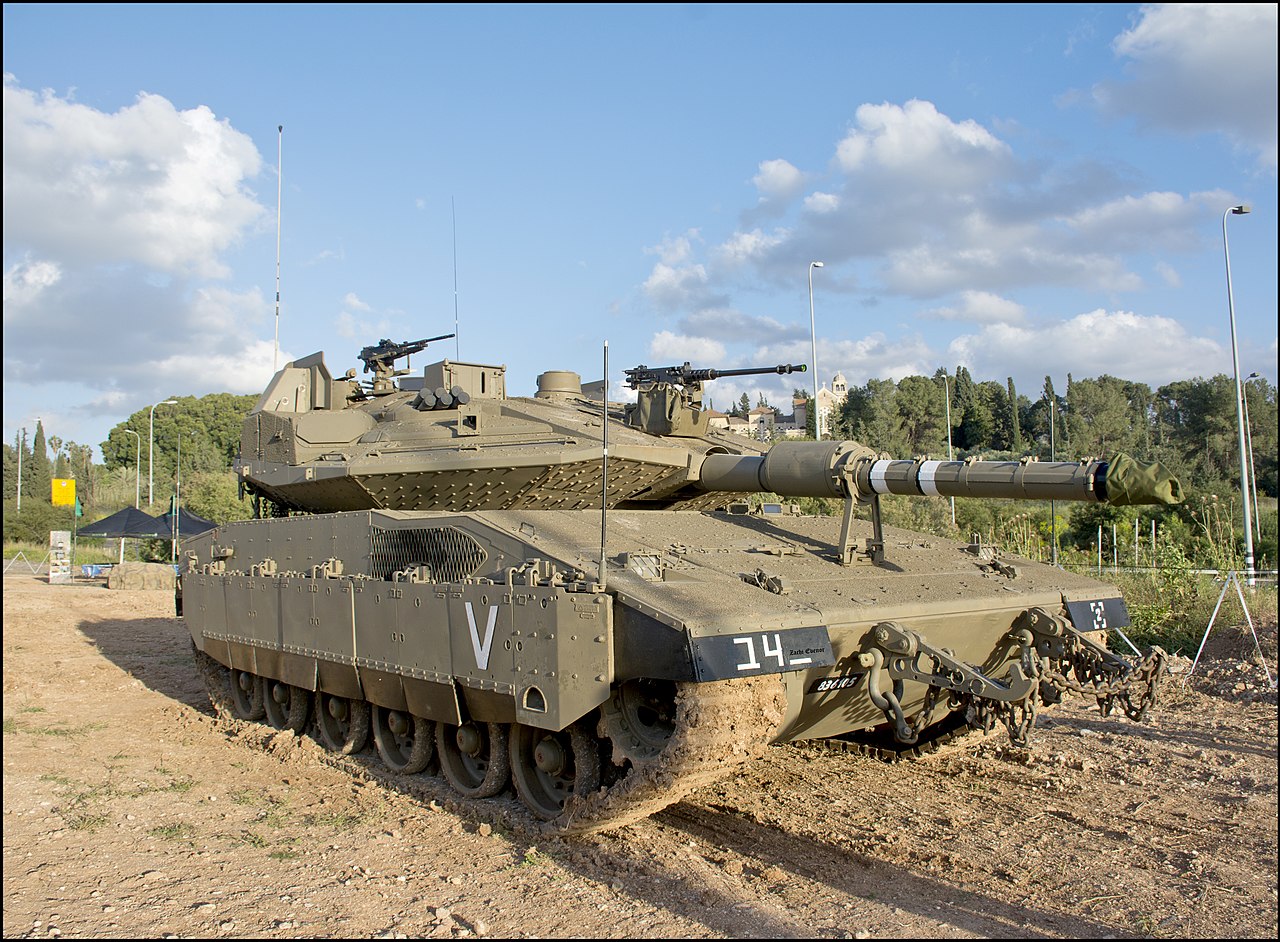
Images




Frequently Asked
How many Merkava Mk 4 Main Battle Tank are in service?
1 Merkava Mk 4 Main Battle Tank are currently in service with Israel Defense Forces.
When was the first Merkava Mk 4 Main Battle Tank commissioned?
The first Merkava Mk 4 Main Battle Tank entered service in 2004.
Who builds the Merkava Mk 4 Main Battle Tank?
The Merkava Mk 4 Main Battle Tank is built by Israel Military Industries (IMI Systems).
What variants of the Merkava Mk 4 Main Battle Tank exist?
Known variants include: Merkava Mk 4, Merkava Mk 4M, Merkava Mk 4 Barak.
How much does a Merkava Mk 4 Main Battle Tank cost?
Unit cost is approximately $5M per hull.
Watch Merkava Mk 4 Main Battle Tank in Action
Iron Command produces in-depth comparison and analysis videos for military equipment.
Watch on YouTube