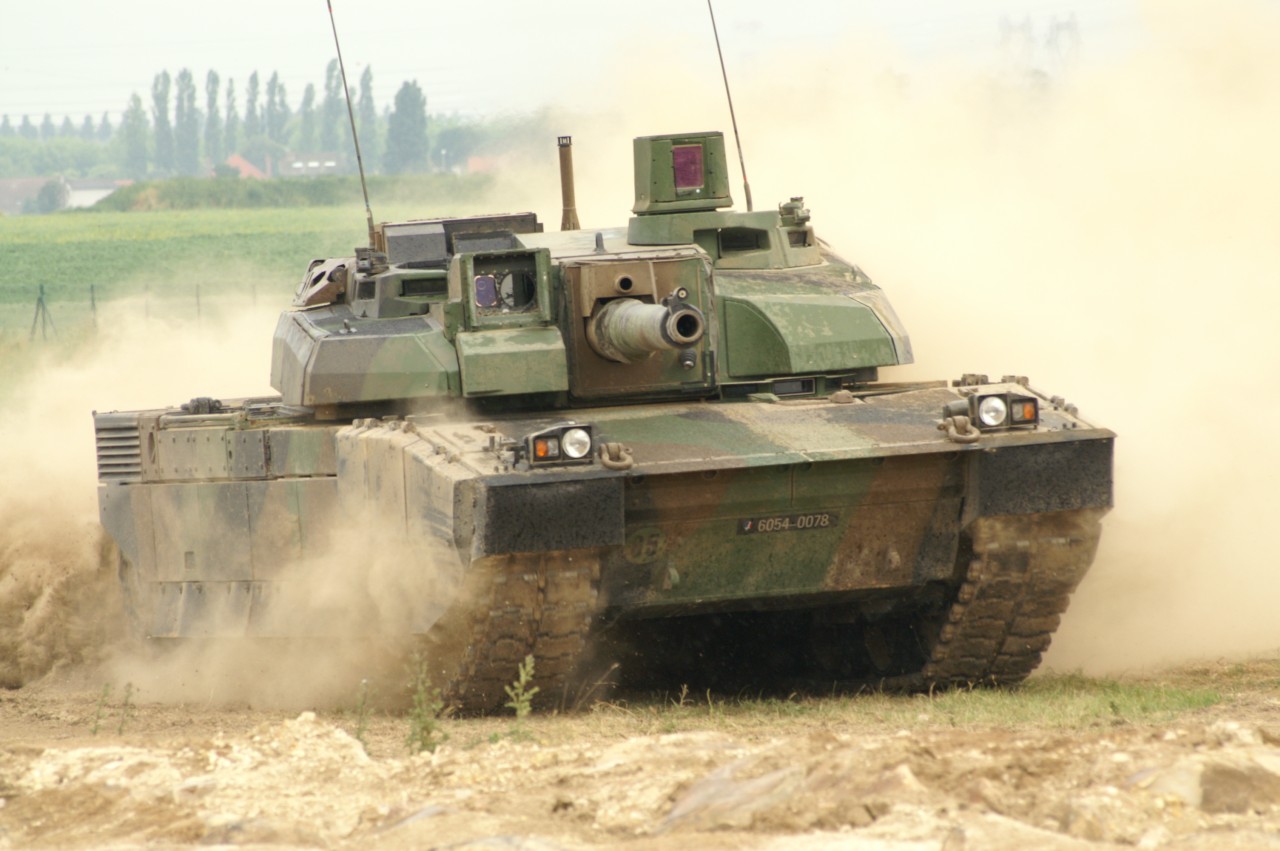
Leclerc Main Battle Tank
Overview
The Leclerc main battle tank represents France's commitment to independent defense capability and technological sovereignty in armored warfare. Developed during the Cold War as a replacement for the AMX-30, the Leclerc entered service in 1992 as one of the most technologically advanced tanks of its generation, featuring an autoloader, advanced fire control system, and emphasis on mobility over raw protection. Strategically, the Leclerc embodies French military doctrine emphasizing rapid deployment and technological superiority. Its relatively light weight (56.5 tons) compared to contemporary MBTs like the M1A2 Abrams (73 tons) reflects French emphasis on strategic mobility and the ability to deploy forces globally via air transport. The tank's FINDERS battle management system and advanced thermal imaging represent France's push toward network-centric warfare capabilities. In the current threat environment, the Leclerc faces the challenge of remaining relevant against modern Russian and Chinese armor while dealing with asymmetric threats. Its combat experience in Lebanon, Yemen, and the Sahel has provided valuable lessons about urban warfare and counter-insurgency operations, though it has yet to face peer-level armor threats in combat. Compared to its peers, the Leclerc trades raw survivability for mobility and technological sophistication. While the Abrams and Challenger 2 prioritize heavy armor, and the Leopard 2 balances protection with mobility, the Leclerc represents a distinct philosophy prioritizing advanced sensors, networking capability, and rapid engagement. However, questions remain about its protection levels against modern kinetic energy penetrators and its upgrade potential compared to more modular designs like the Leopard 2A8.
Deployment Map
Home ports from known hull assignments. Operating areas reflect typical AORs — individual deployments will vary.
Timeline
Specifications
Armament
22-round autoloader, 6-second reload
Commander's cupola mount
Coaxial mount
IR and visual obscuration
Operational Patterns
Typical Deployment
Brigade-level formations with mechanized infantry, rapid deployment forces for expeditionary operations
Deployment Length
6 months
Typical Task Group
Combined arms brigade with VBCI infantry fighting vehicles, Caesar artillery
Readiness
Higher maintenance requirements than competitors, limited spare parts production affects availability rates
Key Operating Areas
Peer Comparison Matrix
Abrams prioritizes heavy armor protection (73t vs 56t) while Leclerc emphasizes mobility and advanced electronics. Abrams uses turbine engine vs Leclerc diesel. Leclerc autoloader vs Abrams manual loading.
Video angle: Weight vs Protection: Can the Leclerc's mobility advantage overcome the Abrams' armor superiority?
Similar weight class but Leopard 2 more modular design enables easier upgrades. Leopard manual loading vs Leclerc autoloader. Both diesel engines but different transmission approaches.
Video angle: European MBT showdown: French sophistication vs German engineering pragmatism
Challenger 2 heaviest armor, rifled gun vs Leclerc smoothbore. Both emphasize crew protection but different philosophies - British conservatism vs French innovation.
Video angle: Battle of doctrines: British evolutionary approach vs French revolutionary technology
Similar autoloader philosophy but T-90M lighter (46t). Russian ERA vs Western composite armor. Leclerc superior optics and fire control vs T-90M raw firepower focus.
Video angle: East vs West: Can advanced French electronics overcome Russian numerical superiority?
Both emphasize advanced electronics and autoloaders. Type 99A heavier (58t) with different armor philosophy. Chinese active protection vs French countermeasures.
Video angle: High-tech heavyweight fight: French finesse vs Chinese power projection
Combat History
French Leclerc tanks deployed with UNIFIL peacekeeping force in southern Lebanon. Limited engagement with IEDs and small arms fire.
First operational deployment, demonstrated strategic mobility but highlighted vulnerability to asymmetric threats
UAE Leclerc tanks engaged in combat operations in Yemen against Houthi forces. Several tanks damaged or destroyed by ATGMs including Kornet missiles.
Revealed protection gaps against modern ATGMs, leading to urgent armor upgrade programs
French Leclerc AZUR variants deployed in Mali and Sahel region for counter-terrorism operations. Effective in desert mobility and precision engagement.
Validated urban warfare modifications and desert performance, but limited to COIN operations
Known Vulnerabilities
Side and rear armor protection
Yemen combat experience revealed vulnerability to modern ATGMs like Kornet when struck from sides or rear. Lighter armor compared to Abrams/Challenger makes it more vulnerable to kinetic energy penetrators.
Context: Modern battlefield proliferation of advanced ATGMs makes side/rear protection critical
Mitigation: AZUR upgrade added side skirts, XLR program includes improved armor packages, APS consideration
Autoloader reliability
22-round cassette autoloader more complex than manual loading, requires specialized maintenance. Cassette reload process is lengthy and vulnerable.
Context: Sustained combat operations require reliable ammunition handling
Mitigation: Improved maintenance training, reliability upgrades in XLR program
Upgrade modularity
Less modular design compared to Leopard 2 makes major upgrades more expensive and time-consuming. Power generation limits for future systems.
Context: Rapid technological change requires adaptable platform architecture
Mitigation: XLR program addresses some issues, MGCS program for next-generation replacement
Variants
| Variant | Designation | Years | Count | Status | Key Changes |
|---|---|---|---|---|---|
| Leclerc Serie 1 | First 17 tanks | 1992-1993 | 17 | active | Initial production variant with basic FINDERS system |
| Leclerc Serie 2 | Bulk production | 1994-2008 | 389 | active | Improved armor package, enhanced FINDERS, NBC protection upgrades |
| Leclerc AZUR | Upgrade program | 2008-2015 | 200 | active | Urban warfare kit, roof armor, side skirts, rear camera, infantry phone |
| Leclerc UAE | Export variant | 1993-2004 | 388 | active | Desert modifications, improved air conditioning, different radio systems |
| Leclerc XLR | Modernization program | 2020-2028 | 200 | building | SICS combat system, improved armor, new thermal sights, battlefield digitization |
Fleet Roster (3)
| Hull | Name | Variant | Commissioned | Home Port | Status |
|---|---|---|---|---|---|
| Serie 1-17 | Initial Production | Serie 1 | 1992 | Various French Army units | active |
| 001-389 | Main Production | Serie 2 | 1994-2008 | French Army | active |
| UAE001-388 | UAE Fleet | Leclerc UAE | 1993-2004 | UAE Land Forces | active |
Modernization Programmes
Leclerc XLR (Rénovation)
Major upgrade program including SICS (Système d'Information de Combat SCORPION) integration, improved armor packages, new thermal imaging, enhanced battlefield networking capability, and improved reliability.
Impact: Extends service life to 2040+, provides network-centric warfare capability, addresses Yemen combat lessons
AZUR Urban Combat Kit
Urban warfare modifications including roof armor against RPGs, side skirts, rear-view camera, infantry telephone, and improved air conditioning.
Impact: Enhanced survivability in urban environments and COIN operations
Future Combat System Integration
Integration with MGCS (Main Ground Combat System) development program with Germany, AI-assisted fire control, and active protection systems.
Impact: Maintains relevance against peer threats through next-generation capabilities
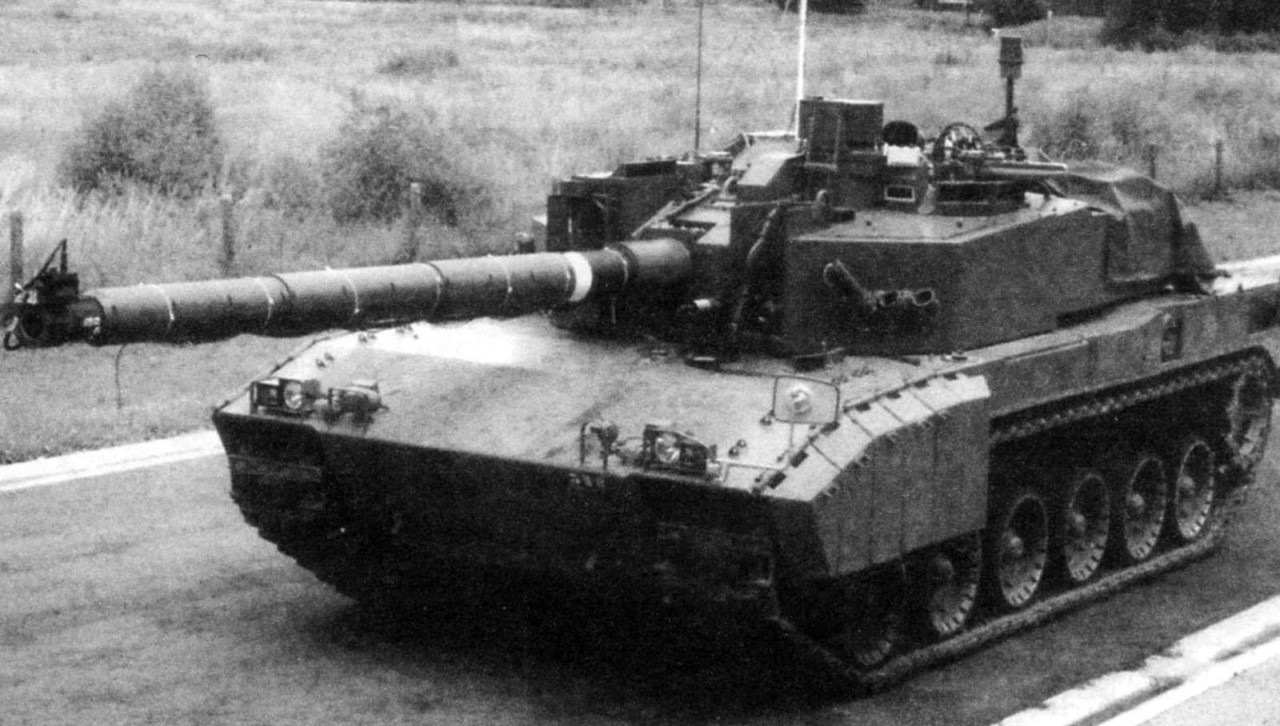
Images




Frequently Asked
How many Leclerc Main Battle Tank are in service?
3 Leclerc Main Battle Tank are currently in service with French Army.
When was the first Leclerc Main Battle Tank commissioned?
The first Leclerc Main Battle Tank entered service in 1992.
Who builds the Leclerc Main Battle Tank?
The Leclerc Main Battle Tank is built by Nexter Systems (formerly GIAT Industries).
What variants of the Leclerc Main Battle Tank exist?
Known variants include: Leclerc Serie 1, Leclerc Serie 2, Leclerc AZUR, Leclerc UAE, Leclerc XLR.
How much does a Leclerc Main Battle Tank cost?
Unit cost is approximately $9M per hull.
Watch Leclerc Main Battle Tank in Action
Iron Command produces in-depth comparison and analysis videos for military equipment.
Watch on YouTubeSources