
Kolkata-class destroyer
Overview
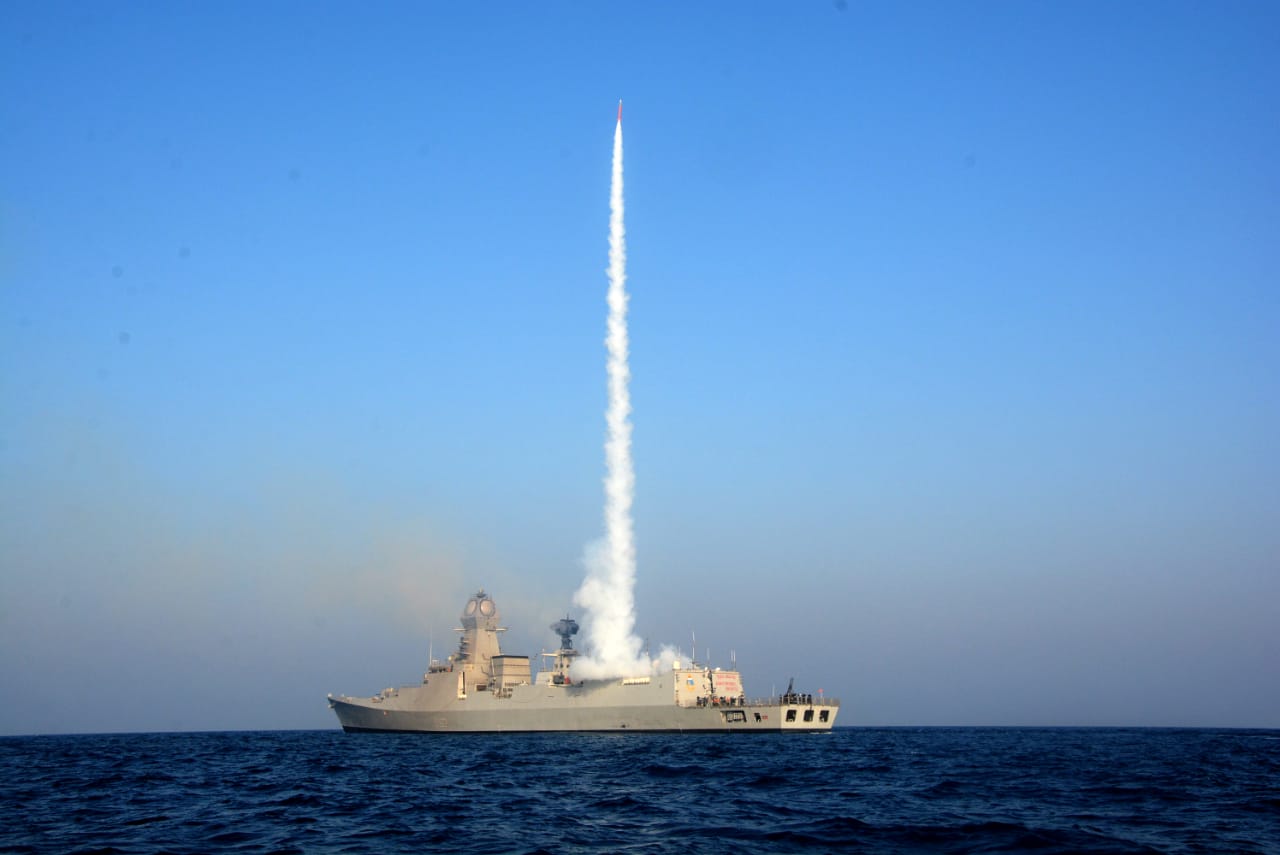
The Kolkata-class destroyer represents India's most ambitious indigenous warship program and the backbone of the Indian Navy's surface combatant fleet. Designated Project 15A, these destroyers are designed to establish sea control in the Indian Ocean and project power across India's extended maritime interests from the Arabian Sea to the Bay of Bengal. With their distinctive angular stealth design and mix of Indian, Israeli, and Russian systems, they embody India's complex defense procurement strategy and growing shipbuilding capabilities. Strategically, the Kolkata-class fills India's need for a blue-water destroyer capable of independent operations or leading task groups in contested environments. The design emphasizes multi-role capability with strong anti-air warfare (AAW) and anti-surface warfare (ASuW) systems, though anti-submarine warfare (ASW) capabilities remain more limited compared to Western contemporaries. The integration of the Israeli EL/M-2248 MF-STAR AESA radar gives these ships credible area air defense capability, while the mix of BrahMos supersonic cruise missiles and Barak-8 SAMs provides significant offensive and defensive firepower. In the current Indo-Pacific threat environment, the Kolkata-class serves as India's answer to China's growing naval presence in the Indian Ocean. Their ability to operate independently for extended periods makes them ideal for India's strategy of maintaining persistent presence in key sea lanes. However, their limited production run of just three hulls reflects the challenges of India's defense industrial base and the complexity of integrating multiple foreign systems. Compared to regional peers, the Kolkata-class sits between China's Type 052D and Type 055 destroyers in capability. While lacking the VLS cell count of Chinese designs, the BrahMos missile gives them a unique supersonic anti-ship capability that most rivals lack. Their operational significance extends beyond pure military capability—they represent India's emergence as a serious naval shipbuilder and its commitment to indigenous defense production, even as they reveal the ongoing challenges of that transition.
Deployment Map
Home ports from known hull assignments. Operating areas reflect typical AORs — individual deployments will vary.
Timeline
Specifications
Armament
Can also engage land targets
Dual-pulse rocket motor
Super Rapid variant
Russian-origin rotary cannon
Soviet-era design
For anti-submarine warfare
Doctrine & Employment
Role
Sea control and power projection in the Indian Ocean region, establishing India as the dominant maritime force between the Arabian Sea and Bay of Bengal while deterring Chinese naval expansion into Indian sphere of influence.
Design Philosophy
Prioritized indigenous systems integration and stealth characteristics over pure firepower density, accepting slower construction timelines to build domestic naval shipbuilding capability. Sacrificed close-in defensive systems depth for long-range engagement capability, reflecting confidence in outer defensive perimeters and emphasis on first-strike advantages.
Employment
Operates as flagship of carrier battle groups or leads independent surface action groups, typically accompanied by Shivalik-class frigates and fleet tankers for extended operations. Primarily deployed for high-intensity warfare scenarios, freedom of navigation operations, and diplomatic presence missions across chokepoints like the Strait of Hormuz and Malacca Strait. Commands task groups through indigenous CMS and maintains networked operations with P-8I maritime patrol aircraft and shore-based surveillance systems.
Threat Context
Designed primarily against Pakistani surface combatants and Chinese Type 052C/D destroyers operating in Indian Ocean, with emphasis on anti-ship missile defense and long-range strike capability. Threat environment has evolved to include Chinese Type 055 cruisers and Pakistani acquisition of Chinese systems, requiring software upgrades to Barak-8 and BrahMos systems.
How to Compare
Compare on sensor integration sophistication and indigenous content rather than raw VLS count - Indian doctrine emphasizes quality of engagement over magazine depth. Focus on stealth characteristics and multi-role flexibility versus specialized anti-air or anti-ship platforms, as these destroyers must operate independently across vast Indian Ocean distances.
Operational Patterns
Typical Deployment
Independent patrol or task group leader in Indian Ocean, often with frigate escort
Deployment Length
4 months
Typical Task Group
Usually operates with Shivalik-class frigates and Kamorta-class corvettes
Readiness
High operational tempo has stressed maintenance schedules; complex systems integration requires specialized technical support
Key Operating Areas
Peer Comparison Matrix
Type 052D has more VLS cells (64 vs 48 total) and integrated systems, but lacks supersonic anti-ship missiles. Kolkata has longer range but lower production numbers.
Video angle: David vs Goliath: Can India's elite destroyers match China's mass production approach?
Korean ships are much larger (11,000 tons vs 7,500) with Aegis system and 128 VLS cells, but cost nearly twice as much. Different design philosophy: Korean emphasis on air defense vs Indian balanced approach.
Video angle: Allied approaches: How different threat environments shape destroyer design
Atago has proven Aegis system and superior ASW capability, while Kolkata emphasizes supersonic anti-ship missiles. Similar displacement but different mission focus.
Video angle: East vs West: Japanese precision versus Indian firepower in destroyer design
Type 45 has superior air defense radar (SAMPSON) but limited anti-ship capability. Both suffer from small production runs but Daring has power plant issues Kolkata avoided.
Video angle: Empire builders: How former naval powers adapt destroyer designs for modern threats
Combat History
INS Chennai deployed to Persian Gulf during heightened US-Iran tensions, providing escort for Indian merchant vessels
Demonstrated India's ability to project power and protect commercial interests in distant waters
Multiple Kolkata-class destroyers deployed to Ladakh region via Arabian Sea during India-China border standoff
Showed integration of naval power in continental border disputes
INS Kochi participated in evacuation of Indian nationals from Afghanistan via Chabahar Port
Highlighted the class's role in non-combat overseas operations and regional diplomacy
Known Vulnerabilities
Anti-submarine warfare
Limited ASW capability compared to Western destroyers, with dated RBU-6000 systems and basic sonar suite
Context: Critical weakness given growing Chinese submarine presence in Indian Ocean
Mitigation: Project 15B includes improved ASW systems; towed array sonar upgrade planned
Systems integration complexity
Mix of Indian, Israeli, Russian, and Italian systems creates maintenance and upgrade challenges
Context: Could impact readiness rates and complicate future modernization efforts
Mitigation: Project 15B emphasizes greater systems standardization and indigenous content
Limited production rate
Mazagon Dock's limited capacity means slow delivery schedule and high per-unit costs
Context: Constrains India's ability to rapidly expand destroyer fleet to match regional rivals
Mitigation: Additional shipyard capacity being developed; private sector involvement increasing
Electronic warfare suite
EW capabilities appear limited compared to latest Chinese and Western systems
Context: Critical vulnerability in high-intensity electromagnetic warfare environment
Mitigation: Domestic EW system development underway for Project 15B
Variants
| Variant | Designation | Years | Count | Status | Key Changes |
|---|---|---|---|---|---|
| Project 15A (Kolkata-class) | D63-D65 | 2003-2021 | 3 | active | Original configuration with MF-STAR radar, BrahMos/Barak-8 missile mix, indigenous CMS |
| Project 15B (Visakhapatnam-class) | D66-D69 | 2013-2024 | 4 | building | Enhanced stealth, improved indigenous content, upgraded sensors and electronics |
Fleet Roster (3)
| Hull | Name | Variant | Commissioned | Home Port | Status |
|---|---|---|---|---|---|
| D63 | INS Kolkata | Project 15A | 2014-08-16 | Mumbai | active |
| D64 | INS Kochi | Project 15A | 2015-09-30 | Visakhapatnam | active |
| D65 | INS Chennai | Project 15A | 2016-11-21 | Chennai | active |
Modernization Programmes
Project 15B follow-on
Four Visakhapatnam-class destroyers incorporating lessons learned from Kolkata operations. Enhanced stealth, improved indigenous systems integration, upgraded electronic warfare capabilities
Impact: Will double India's modern destroyer fleet and increase indigenous content to 75%
BrahMos-NG integration
Integration of next-generation BrahMos missile with extended range and reduced radar signature
Impact: Will extend anti-ship engagement envelope and improve survivability
Indigenous sonar upgrade
Replacement of current sonar systems with advanced indigenous towed array sonar
Impact: Significant improvement in ASW capability and reduced foreign dependence
Images


Frequently Asked
How many Kolkata-class destroyer are in service?
3 Kolkata-class destroyer are currently in service with Indian Navy.
When was the first Kolkata-class destroyer commissioned?
The first Kolkata-class destroyer entered service in 2014-08-16.
Who builds the Kolkata-class destroyer?
The Kolkata-class destroyer is built by Mazagon Dock Shipbuilders Limited.
What variants of the Kolkata-class destroyer exist?
Known variants include: Project 15A (Kolkata-class), Project 15B (Visakhapatnam-class).
How much does a Kolkata-class destroyer cost?
Unit cost is approximately $1.2B per hull.
Curated Research
essential
Provides comprehensive analysis of Indian naval doctrine and the strategic rationale behind Project 15A development.
Official Indian Navy doctrinal publication explaining sea control concepts that drove Project 15A requirements.
Updated Indian maritime strategy document outlining force structure rationale for advanced destroyers.
recommended
Congressional Research Service report analyzing India's defense procurement strategy including indigenous shipbuilding programs.
CSIS analysis of strategic competition in Indian Ocean that contextualizes Kolkata-class operational requirements.
Leading Indian naval strategic thinker who provides authoritative commentary on Indian Navy force development and doctrine.
reference
Comprehensive technical specifications and deployment history of Kolkata-class destroyers with regular updates.
Tracks Indian Navy operations and deployment patterns of major surface combatants including Kolkata-class.
Watch Kolkata in Action
Iron Command produces in-depth comparison and analysis videos for military equipment.
Watch on YouTube