
Kirov-class nuclear-powered guided missile cruiser
Overview
The Kirov-class battlecruiser represents the pinnacle of Soviet naval engineering and Russia's most powerful surface combatant. Designated Project 1144 Orlan (Eagle), these nuclear-powered guided missile cruisers were designed during the Cold War to hunt and destroy US carrier battle groups using massive supersonic anti-ship missiles. At over 28,000 tons displacement, they are the largest non-carrier warships built since WWII and remain among the most heavily armed surface combatants afloat. The Kirov's strategic role centers on power projection and sea denial, serving as the flagship of Russia's Northern Fleet expeditionary operations. Their nuclear propulsion provides unlimited range and sustained high-speed operations, while their armament combines long-range anti-ship missiles (P-700 Granit), comprehensive air defense systems (S-300F), and anti-submarine warfare capabilities. This makes them uniquely suited for independent operations far from Russian bases or leading surface action groups. Design philosophy emphasized overwhelming firepower over survivability, reflecting Soviet naval doctrine of delivering decisive strikes against NATO naval forces. The massive P-700 Granit missiles (SS-N-19 Shipwreck) were specifically designed to penetrate carrier battle group defenses through coordinated saturation attacks, with each missile carrying either a 750kg conventional or 500kt nuclear warhead. In today's threat environment, only one Kirov remains fully operational (Pyotr Velikiy), with Admiral Nakhimov undergoing extensive modernization. Despite their age, these platforms remain strategically significant due to their unique combination of nuclear propulsion, massive missile armament, and ability to operate independently in contested waters. However, their Cold War-era systems, enormous crew requirements, and maintenance challenges limit their operational availability and effectiveness against modern naval forces equipped with advanced electronic warfare and precision strike capabilities.
Deployment Map
Home ports from known hull assignments. Operating areas reflect typical AORs — individual deployments will vary.
Timeline
Specifications
Armament
Primary anti-carrier weapon, Mach 2.5, 750kg warhead
Primary area air defense system
Close-range air defense
ASW rocket with torpedo or nuclear warhead
Twin-barrel automatic gun system
Gatling-type CIWS for missile defense
Doctrine & Employment
Role
Strategic sea denial and carrier battle group destruction, designed to break NATO's Atlantic sea lines of communication and eliminate US power projection capabilities in contested waters.
Design Philosophy
Prioritized overwhelming firepower and survivability over cost-effectiveness, accepting extreme expense and complexity to achieve carrier-killing capability. Designers sacrificed operational availability and maintenance simplicity for maximum combat power, resulting in a platform that spends most of its service life pier-side but remains unmatched in raw destructive potential when operational.
Employment
Operates as the centerpiece of a surface action group, typically accompanied by Udaloy-class destroyers and nuclear submarines for integrated anti-submarine warfare. Missions include long-range strikes against high-value targets, area air defense for fleet formations, and independent operations in sea denial campaigns. Command structure integrates with shore-based aviation and submarine forces through centralized Soviet-era battle management systems.
Threat Context
Designed specifically to counter US carrier battle groups during the Cold War when Soviet naval aviation lacked the range and capability for effective anti-carrier operations. The threat environment has evolved toward distributed lethality and multi-domain operations, making these concentrated high-value units potentially vulnerable to precision strikes while their massive missile salvos remain uniquely relevant against modern naval formations.
How to Compare
Compare primarily on missile magazine capacity and engagement range rather than availability rates or cost-per-hull—this represents a fundamentally different design philosophy prioritizing peak combat capability over sustained operations. Evaluate sensor integration and battle management systems as force multipliers, not individual platform capabilities.
Operational Patterns
Typical Deployment
Flagship for Northern Fleet surface action groups or independent power projection missions
Deployment Length
4 months
Typical Task Group
Operates with destroyers, frigates, support vessels, and submarine escort
Readiness
Limited operational availability due to maintenance requirements and crew training needs
Key Operating Areas
Peer Comparison Matrix
Kirov emphasizes massive anti-ship firepower while Ticonderoga focuses on area air defense and multi-mission capability. Nuclear vs conventional propulsion trades unlimited range for maintenance complexity.
Video angle: Cold War cruiser philosophy comparison - Soviet alpha strike vs American multi-mission flexibility
Type 055 represents modern approach to large surface combatants with stealth, advanced sensors, and flexible VLS. Similar displacement but completely different design philosophy.
Video angle: Evolution of large surface combatants - Soviet brute force vs Chinese high-tech approach
Modern Russian surface combatants emphasize stealth, modern sensors, and flexible missile systems over raw firepower. Much smaller but more survivable.
Video angle: Russian naval evolution - from Cold War battlecruisers to modern multi-role frigates
Similar displacement and heavy armament but built with modern stealth features and Aegis-type integrated combat system. Conventional propulsion limits range.
Video angle: Large destroyer concepts - Cold War Soviet vs modern allied approaches to firepower
Combat History
Pyotr Velikiy deployed to Black Sea during Georgian conflict, first major combat deployment since Cold War
Demonstrated Russia's ability to project naval power using nuclear-powered surface combatants
Pyotr Velikiy conducted extended Mediterranean deployment supporting Russian operations in Syria
Showcased sustained deep-water operations and power projection capabilities
Admiral Kuznetsov carrier group including Pyotr Velikiy transited English Channel en route to Syria
Largest Russian naval deployment since Cold War, demonstrated operational reach
Pyotr Velikiy conducted Arctic patrol operations asserting Russian territorial claims
Nuclear propulsion enables sustained Arctic operations in contested waters
Known Vulnerabilities
Electronic warfare susceptibility
Cold War-era electronics and radar systems vulnerable to modern jamming and cyber warfare capabilities
Context: NATO forces possess sophisticated EW capabilities that could degrade Soviet-era combat systems
Mitigation: Admiral Nakhimov modernization includes updated electronic warfare suites
Massive radar signature
Enormous size and metallic superstructure create huge radar cross-section, easily detected at long range
Context: Modern anti-ship missiles can engage targets beyond visual range, negating armor protection
Mitigation: Limited stealth improvements possible due to fundamental design constraints
Single-point failures
Complex systems with limited redundancy; reactor or major system failures could mission-kill the platform
Context: Nuclear propulsion provides unlimited range but reactor casualties would leave ship dead in water
Mitigation: Extensive crew training and maintenance protocols, but fundamental design limitation remains
Enormous crew requirements
727-person crew creates massive logistical burden and increases casualty vulnerability
Context: Modern warships achieve similar capabilities with crews of 200-400, reducing costs and risks
Mitigation: Modernization programs include some automation but crew size remains necessarily large
Variants
| Variant | Designation | Years | Count | Status | Key Changes |
|---|---|---|---|---|---|
| Project 1144.1 | Kirov | 1980-1990 | 1 | retired | Initial production variant with original electronics and weapons suite |
| Project 1144.2 | Frunze/Admiral Lazarev, Admiral Ushakov | 1984-1988 | 2 | retired | Improved electronics, enhanced S-300F system, upgraded combat management |
| Project 1144.3 | Pyotr Velikiy | 1998 | 1 | active | Modernized sensors, improved S-300FM system, upgraded electronics and communications |
| Project 1144.4 (planned) | Admiral Nakhimov modernization | 2025-2027 | 1 | building | Complete electronics overhaul, Kalibr/Oniks missiles, modern air defense systems |
Fleet Roster (5)
| Hull | Name | Variant | Commissioned | Home Port | Status |
|---|---|---|---|---|---|
| 183 | Kirov | Project 1144.1 | 1980-12-30 | Severodvinsk | retired |
| 135 | Admiral Ushakov (ex-Kirov) | Project 1144.2 | 1988-05-10 | Severodvinsk | retired |
| 099 | Admiral Lazarev (ex-Frunze) | Project 1144.2 | 1984-10-31 | Sovetskaya Gavan | retired |
| 144 | Admiral Nakhimov (ex-Kalinin) | Project 1144.2/1144.4 | 1988-12-30 | Severodvinsk | modernization |
| 183 | Pyotr Velikiy | Project 1144.3 | 1998-04-18 | Severomorsk | active |
Modernization Programmes
Admiral Nakhimov Deep Modernization
Complete overhaul including new Kalibr/Oniks VLS systems, modern air defense, updated electronics and radar systems. Granit missiles being replaced with modern VLS cells.
Impact: Will restore one Kirov to frontline service with modern weapons and sensors comparable to current Russian surface combatants
Pyotr Velikiy Mid-Life Upgrade
Electronics upgrade, weapons system modernization, reactor maintenance. Less extensive than Nakhimov refit.
Impact: Extends service life and maintains operational capability of Russia's only active battlecruiser
Admiral Ushakov Reactivation
Planned return to service cancelled due to costs and technical challenges. Hull remains in reserve.
Impact: Reduces potential Kirov fleet to maximum of two operational hulls
Images


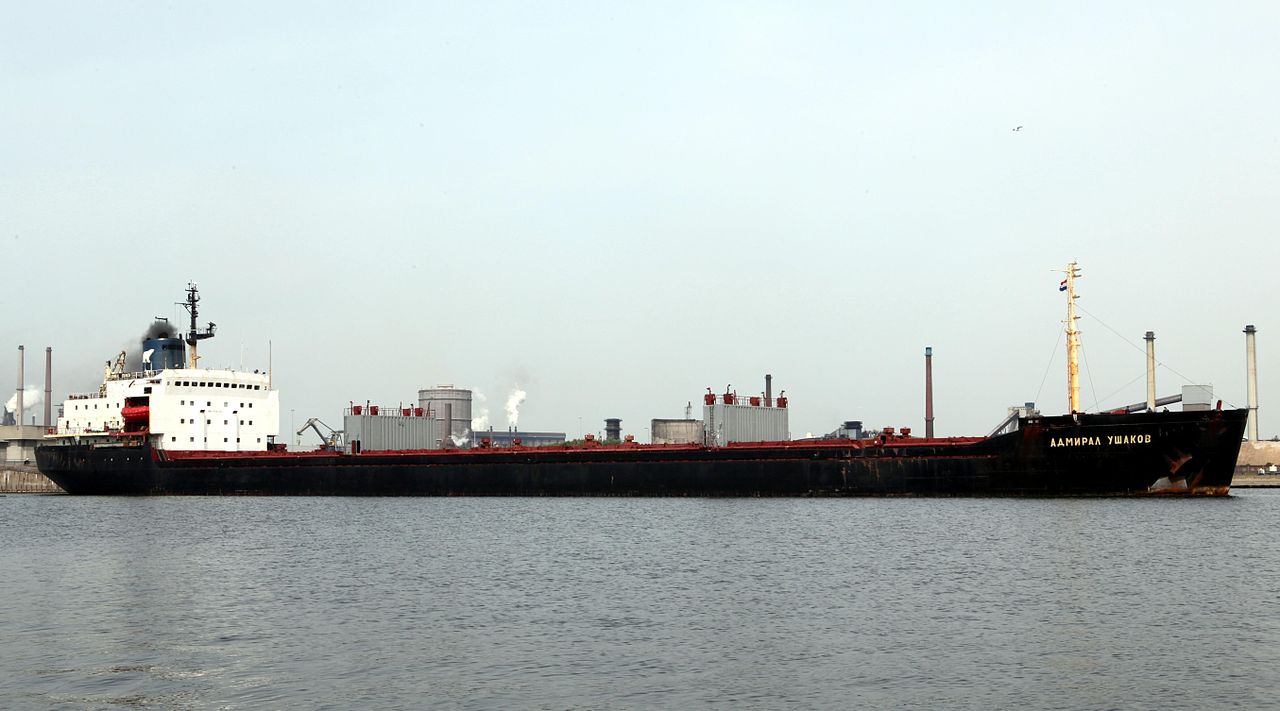


Frequently Asked
How many Kirov-class nuclear-powered guided missile cruiser are in service?
1 Kirov-class nuclear-powered guided missile cruiser are currently in service with Russian Navy.
When was the first Kirov-class nuclear-powered guided missile cruiser commissioned?
The first Kirov-class nuclear-powered guided missile cruiser entered service in 1980-12-30.
Who builds the Kirov-class nuclear-powered guided missile cruiser?
The Kirov-class nuclear-powered guided missile cruiser is built by Baltic Shipyard, Saint Petersburg.
What variants of the Kirov-class nuclear-powered guided missile cruiser exist?
Known variants include: Project 1144.1, Project 1144.2, Project 1144.3, Project 1144.4 (planned).
How much does a Kirov-class nuclear-powered guided missile cruiser cost?
Unit cost is approximately $1.5B per hull.
Curated Research
essential
Provides detailed technical analysis of the Kirov's weapon systems and their tactical employment within Soviet naval doctrine.
Authoritative analysis of current Russian naval capabilities including operational status and strategic role of remaining Kirov-class units.
Essential context for understanding the strategic rationale behind Kirov-class design and intended employment doctrine.
recommended
Provides current operational status and fleet composition context for evaluating Kirov-class strategic relevance.
Academic analysis of how Russian naval doctrine has evolved and where legacy platforms like Kirov fit current strategy.
reference
Comprehensive technical specifications and weapons loadout data for tactical analysis and comparison frameworks.
Authoritative reference for current configuration details and modernization status of active Kirov-class units.
Watch Kirov in Action
Iron Command produces in-depth comparison and analysis videos for military equipment.
Watch on YouTube