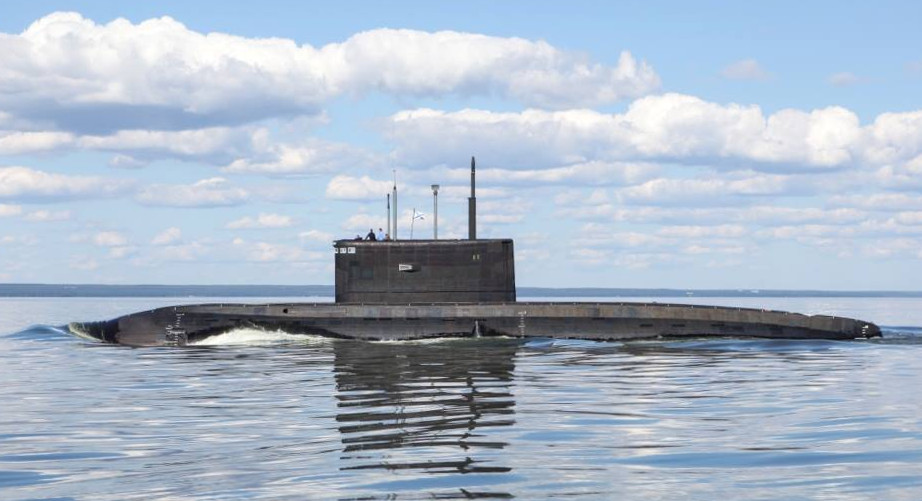
Kilo-class Submarine
Compare with
Overview
The Kilo-class submarine (Project 877/636 *Paltus*) represents Russia's most successful conventional submarine export program and remains one of the world's quietest diesel-electric attack submarines. First commissioned in 1982, the Kilo was designed as a relatively simple, cost-effective platform optimized for coastal defense and ASW operations in Soviet territorial waters. Its reputation for stealth earned it the NATO nickname "Black Hole" due to its exceptionally quiet operation when running on battery power. Strategically, the Kilo serves as Russia's primary conventional submarine for both domestic use and foreign military sales, with over 60 units built for operators including China, India, Iran, Vietnam, and Algeria. The platform's enduring relevance stems from its proven reliability, low acoustic signature, and continuous modernization through the improved Project 636 variants. The latest 636.3 "Varshavyanka" variant features enhanced sonar, modern combat systems, and Kalibr cruise missile capability, transforming a coastal defense asset into a strategic strike platform. In the current threat environment, Kilos represent a significant asymmetric challenge to Western naval forces. Their ability to operate in shallow littoral waters while remaining nearly undetectable makes them ideal for area denial operations. Recent combat deployments in the Black Sea and Mediterranean have demonstrated the platform's evolution from a defensive ASW asset to an offensive land-attack platform capable of striking targets 1,500+ km inland with Kalibr missiles. Compared to peers like the German Type 214 or Japanese Soryu-class, the Kilo trades advanced air-independent propulsion for proven reliability and lower cost. While it lacks the extended underwater endurance of AIP submarines, its traditional diesel-electric configuration offers advantages in maintenance simplicity and operational availability, particularly for navies with limited submarine support infrastructure.
Deployment Map
Home ports from known hull assignments. Operating areas reflect typical AORs — individual deployments will vary.
Timeline
Specifications
Armament
Primary anti-ship weapon
Anti-submarine warfare
Project 636.3 variant only
Alternative to torpedo loadout
Doctrine & Employment
Role
Sea denial in littoral waters and choke points, designed to attrit enemy naval forces attempting to approach Soviet/Russian territorial waters or threaten coastal installations.
Design Philosophy
Designers prioritized acoustic stealth and simplicity over speed and endurance, accepting limited submerged speed (17-20 knots) and basic automation to achieve exceptional quietness and reliability. The platform sacrifices deep-ocean capability and sophisticated combat systems for cost-effectiveness and ease of maintenance, making it suitable for export and operation by smaller navies.
Employment
Typically deployed as individual patrol units in predetermined defensive zones, operating from forward bases to maximize time on station. Primary mission profiles include anti-submarine warfare against enemy SSNs, anti-surface warfare against surface combatants, and intelligence gathering through covert surveillance. Command relationships emphasize coordination with coastal defense systems and shore-based maritime patrol aircraft for target cueing.
Threat Context
Originally designed to counter NATO submarine and surface threats in confined waters like the Baltic and Black Seas during the Cold War. The threat has evolved to include advanced Western SSNs with superior sensors and weapons range, forcing reliance on ambush tactics and defensive positioning rather than open-ocean pursuit.
How to Compare
Compare on acoustic signature and cost-effectiveness rather than speed or sensor suite sophistication — the Kilo's value lies in being undetectable while lying in wait. Endurance and weapons load matter for sustained operations, but stealth remains the primary performance metric for this defensive platform.
Operational Patterns
Typical Deployment
Coastal patrol and area denial, strategic strike missions from patrol areas
Deployment Length
1 months
Typical Task Group
Independent operations, occasionally coordinated with surface fleet movements
Readiness
Russian Navy Kilos maintain higher readiness than export operators due to better maintenance infrastructure
Key Operating Areas
Peer Comparison Matrix
Type 214 features AIP for extended underwater endurance but Kilo offers proven reliability and lower cost. Kilo has demonstrated combat effectiveness while Type 214 remains unproven in conflict.
Video angle: Traditional diesel-electric vs modern AIP technology trade-offs
Soryu features sophisticated AIP system and advanced sonar but costs significantly more than Kilo. Soryu designed for open ocean operations while Kilo optimized for littoral combat.
Video angle: High-tech vs cost-effective submarine design philosophies
Scorpène offers modular design and Western systems integration but Kilo provides strategic missile capability and lower acquisition cost. Both compete heavily in export markets.
Video angle: European vs Russian submarine export competition
Song-class incorporates Kilo technology acquired through purchases but adds indigenous Chinese systems. Less proven than Kilo but offers AIP capability in later variants.
Video angle: Technology transfer impact on submarine development
Gotland pioneered operational AIP and is extremely quiet but lacks Kilo's strategic strike capability and has limited export success. Designed specifically for Baltic operations.
Video angle: Specialized regional design vs multi-role export platform
Combat History
B-237 Rostov-on-Don fired Kalibr cruise missiles at ISIS targets in Syria from submerged position in Mediterranean, first combat use of submarine-launched Kalibr
Demonstrated Russia's new long-range precision strike capability from conventional submarines, major capability evolution
B-262 Stary Oskol launched Kalibr missiles at targets in Idlib province from Eastern Mediterranean
Confirmed operational deployment pattern of Kilo submarines for strategic strike missions beyond traditional ASW role
B-268 Velikiy Novgorod reportedly struck land targets in Ukraine with Kalibr missiles from Black Sea patrol area
Demonstrates continued tactical relevance in regional conflicts and area denial operations
Iranian Kilo-class Tareq closely shadowed USS Abraham Lincoln CSG, demonstrating ability to operate undetected near major surface combatants
Highlighted asymmetric threat potential and stealth capabilities against advanced naval forces
Known Vulnerabilities
Air-independent propulsion
Lacks AIP system, limiting underwater endurance to 72 hours compared to modern AIP submarines that can remain submerged for weeks
Context: Major disadvantage in extended patrol operations and contested waters where frequent snorkeling exposes the boat to detection
Mitigation: Russia developing new AIP systems but retrofitting existing Kilos appears unlikely due to cost
Sonar technology gap
While quiet, sonar and processing capabilities lag behind latest Western systems, particularly in shallow water detection and classification
Context: Reduces situational awareness and first-shot capability against advanced opponents with superior passive sonar arrays
Mitigation: Project 636.3 includes improved MGK-400EM sonar but still uses older processing algorithms
Limited missile capacity
Must sacrifice torpedo capacity for Kalibr missiles, creating difficult trade-offs between ASW and strike missions
Context: Unlike VLS-equipped submarines, Kilos cannot carry both full torpedo loadout and maximum cruise missiles simultaneously
Mitigation: Mission-specific loadouts required, reducing tactical flexibility
Maintenance infrastructure
Many export operators lack adequate submarine maintenance facilities, reducing operational availability
Context: Critical for sustained operations, several export navies report low availability rates due to maintenance bottlenecks
Mitigation: Russia providing maintenance support packages but this creates operational dependencies
Variants
| Variant | Designation | Years | Count | Status | Key Changes |
|---|---|---|---|---|---|
| Project 877 (Original Kilo) | B-445 onwards | 1982-1994 | 24 | mostly retired | Original design with MGK-400 sonar, basic combat systems, export versions designated Project 877E |
| Project 636 (Improved Kilo) | B-871 onwards | 1997-2016 | 16 | active | Improved sonar, better noise isolation, enhanced combat system, some with Club-S missile capability |
| Project 636.3 (Varshavyanka) | B-261 onwards | 2014-present | 22 | active | MGK-400EM sonar, Kalibr cruise missiles, improved electronics, enhanced stealth coating |
Fleet Roster (8)
| Hull | Name | Variant | Commissioned | Home Port | Status |
|---|---|---|---|---|---|
| B-445 | Novorossiisk | Project 877 | 1982-12-25 | Severodvinsk | retired |
| B-871 | Alrosa | Project 636 | 1997 | Black Sea Fleet | active |
| B-261 | Novorossiisk | Project 636.3 | 2014-08-22 | Novorossiysk | active |
| B-237 | Rostov-on-Don | Project 636.3 | 2014-12-30 | Novorossiysk | active |
| B-262 | Stary Oskol | Project 636.3 | 2015-07-17 | Novorossiysk | active |
| B-265 | Krasnodar | Project 636.3 | 2015-11-05 | Novorossiysk | active |
| B-268 | Velikiy Novgorod | Project 636.3 | 2016-10-26 | Novorossiysk | active |
| B-271 | Kolpino | Project 636.3 | 2016-11-24 | Novorossiysk | active |
Modernization Programmes
Project 636.3 Varshavyanka production
Continued production of improved Kilo variants with Kalibr capability, enhanced sonar, and improved stealth characteristics for Russian Navy and export customers
Impact: Maintains relevance of diesel-electric submarine force with strategic strike capability
Existing Kilo upgrades
Retrofit programs for earlier Project 877/636 boats to add Kalibr capability and modernize sonar/combat systems
Impact: Extends service life and enhances capability of legacy hulls
Export modernization packages
Upgrade programs for export operators including India, China, and Algeria focusing on sonar improvements and weapon system updates
Impact: Maintains competitive position in export submarine market
Images


Recent News
Frequently Asked
How many Kilo-class Submarine are in service?
7 Kilo-class Submarine are currently in service with Russian Navy and export customers.
When was the first Kilo-class Submarine commissioned?
The first Kilo-class Submarine entered service in 1982.
Who builds the Kilo-class Submarine?
The Kilo-class Submarine is built by Admiralty Shipyard, Komsomolsk-on-Amur Shipyard.
What variants of the Kilo-class Submarine exist?
Known variants include: Project 877 (Original Kilo), Project 636 (Improved Kilo), Project 636.3 (Varshavyanka).
How much does a Kilo-class Submarine cost?
Unit cost is approximately $350M per hull.
Curated Research
essential
Provides comprehensive analysis of Soviet submarine design philosophy and the strategic context that drove Kilo-class development.
Examines current Russian naval doctrine and the role of conventional submarines in Moscow's maritime strategy.
recommended
Authoritative reference for current Kilo-class variants, operators, and technical specifications across all export customers.
Leading open-source analyst tracking Kilo-class deployments, modifications, and operational patterns globally.
Despite the title, includes detailed coverage of Russian conventional submarine programs including Project 877/636 evolution.
reference
Comprehensive technical specifications and export history of all Kilo-class variants.
Analysis of Russian submarine fleet modernization and the continued relevance of diesel-electric platforms.
Watch Kilo in Action
Iron Command produces in-depth comparison and analysis videos for military equipment.
Watch on YouTube