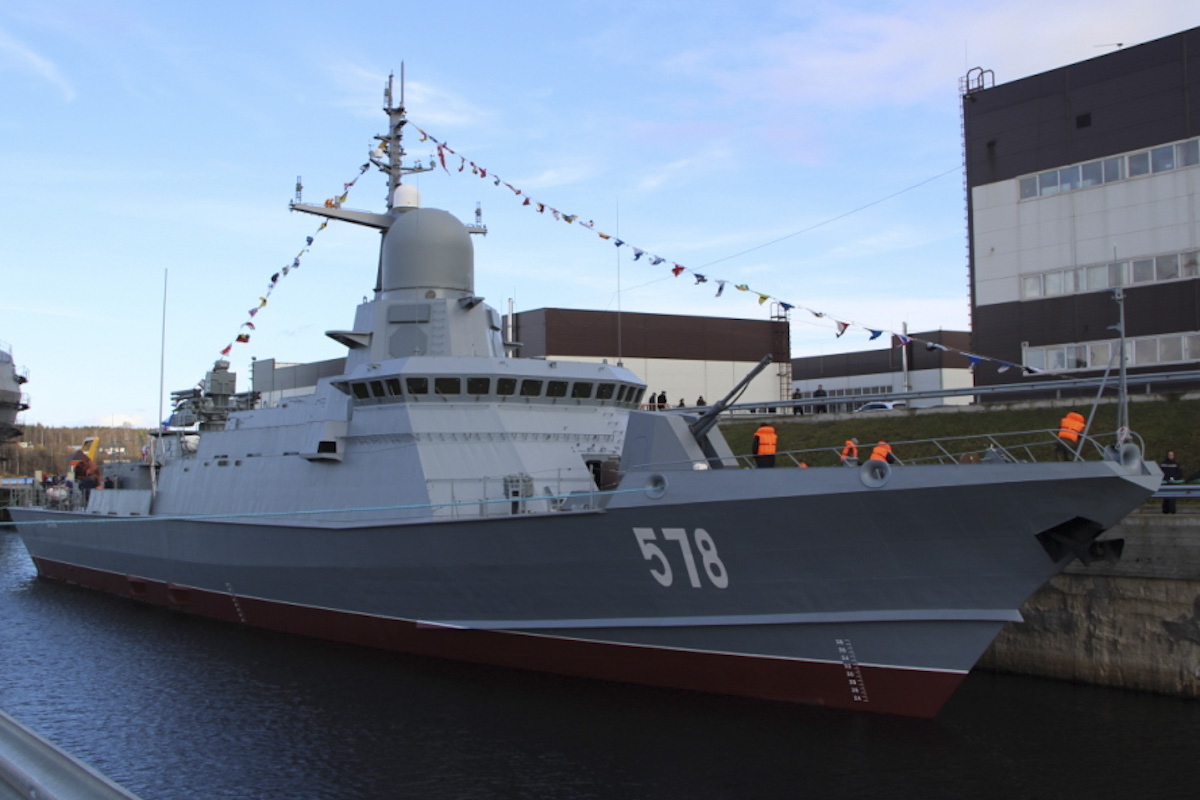
Project 22800 Karakurt-class corvette
Compare with
Overview
The Project 22800 Karakurt-class corvette represents Russia's latest attempt to field a fast, missile-armed coastal combatant capable of projecting power in contested littoral environments. Designed as a smaller, more affordable complement to the larger Steregushchiy-class corvettes, the Karakurt prioritizes speed and striking power over endurance and multirole capability. Its primary mission is anti-surface warfare in Russia's near seas, particularly the Baltic, Black Sea, and Caspian regions. The design philosophy centers on the "mosquito fleet" concept — small, fast platforms that can deliver disproportionate firepower through standoff weapons while remaining difficult to target. Each Karakurt carries eight Kalibr cruise missiles, giving these 800-ton vessels the ability to strike land targets at ranges exceeding 1,500km or engage surface combatants at 300km+. This represents a significant capability density for such a small platform. In the current threat environment, the Karakurt-class serves Russia's A2/AD strategy by providing distributed lethality across multiple small platforms rather than concentrating firepower in fewer, more expensive vessels. However, their limited air defense capability and modest seakeeping ability restrict their operational flexibility compared to Western corvettes like the Israeli Sa'ar 6 or German K130 Braunschweig-class. The class has seen active combat deployment during the Ukraine conflict, with several hulls operating in the Black Sea and reportedly launching Kalibr strikes against Ukrainian targets. This operational experience has highlighted both the platform's striking power and its vulnerability to modern anti-ship missiles, with Ukraine's successful strikes against similar Russian naval assets demonstrating the risks of operating in contested littoral environments.
Deployment Map
Home ports from known hull assignments. Operating areas reflect typical AORs — individual deployments will vary.
Timeline
Specifications
Armament
Land-attack and anti-ship variants
Automated gun mount
Some hulls only, limited air defense
Doctrine & Employment
Role
Sea denial and anti-access operations in Russia's near seas, designed to complicate NATO naval operations through distributed lethality and swarming tactics.
Design Philosophy
Prioritized maximum striking power and speed over endurance and defensive systems, accepting vulnerability in exchange for lethality. Designers sacrificed helicopter facilities, extensive sensor suites, and blue-water seakeeping for a powerful missile battery and high speed. The result is essentially a missile boat scaled up to corvette size with minimal defensive capability beyond basic point defense.
Employment
Typically operates in small groups of 2-4 vessels within integrated coastal defense systems, leveraging shore-based radar and air cover. Primary mission profiles include anti-surface strikes against enemy task groups, convoy interdiction, and protection of critical maritime infrastructure. Command relationships flow through regional fleet headquarters with tactical control often delegated to squadron level for rapid response. The platform's shallow draft enables operations in areas inaccessible to larger combatants.
Threat Context
Originally designed to counter NATO surface action groups in confined waters where geography limits maneuver options and Russian land-based systems provide overwatch. The threat environment has evolved toward greater emphasis on unmanned systems and long-range precision strikes, potentially reducing the platform's survivability in contested environments.
How to Compare
Compare primarily on missile payload density and maximum speed rather than sensor sophistication or defensive systems - most corvettes in this class prioritize firepower over survivability. Magazine depth per displacement ton and time-to-weapons-release are more relevant metrics than radar range or helicopter capacity for this mission set.
Operational Patterns
Typical Deployment
Regional patrol and power projection in Baltic, Black Sea, and Caspian regions
Deployment Length
2 months
Typical Task Group
Often operates in pairs or with larger corvettes/frigates
Readiness
High availability rate but limited by crew training pipeline and maintenance infrastructure
Key Operating Areas
Peer Comparison Matrix
Israeli platform emphasizes air defense with Barak-8 SAMs and better multi-mission capability, while Karakurt focuses purely on strike missions with Kalibr
Video angle: Small corvette missile capability comparison - quantity vs quality approach
German K130 has better seakeeping and modular mission systems but less striking power, reflecting different operational philosophies
Video angle: NATO vs Russian corvette design philosophy - multirole vs specialized strike
Swedish corvette features advanced stealth design and modular systems but lacks land-attack missiles, showing different regional priorities
Video angle: Stealth vs firepower in modern corvette design
Chinese corvette built in much larger numbers but with less striking power, emphasizing patrol and ASW over land attack
Video angle: Mass production vs capability density in modern naval construction
Combat History
Multiple Karakurt-class corvettes deployed to Black Sea Fleet for combat operations, launching Kalibr cruise missiles against Ukrainian infrastructure and military targets from standoff positions
First major combat deployment demonstrated the platform's land-attack capability and integration with broader Russian strike operations
Following the sinking of Moskva, Karakurt corvettes among Russian naval assets that withdrew to greater standoff distances while maintaining missile strike capability
Highlighted both the platform's utility as a distributed strike asset and its vulnerability in contested environments
Ukrainian naval drones reportedly targeted Novorossiysk naval base where Karakurt corvettes were stationed, demonstrating the vulnerability of these platforms to asymmetric threats
Showed the challenge of protecting small combatants against emerging drone threats in home ports
Known Vulnerabilities
Air defense
Limited air defense capability with only Pantsir-M on some hulls, vulnerable to air attack and anti-ship missiles
Context: Ukraine conflict demonstrated effectiveness of Neptune and other anti-ship missiles against Russian naval assets
Mitigation: Pantsir-M retrofits and operating under land-based air defense coverage
Seakeeping
Small size limits operations in rough seas and reduces crew endurance for extended operations
Context: Restricts operational flexibility compared to larger corvettes in open ocean environments
Mitigation: Focus on near-shore operations and rotation of crews
Electronic warfare
Limited EW suite compared to larger combatants, vulnerable to GPS jamming and missile guidance disruption
Context: Modern littoral warfare heavily dependent on electronic systems and counter-measures
Mitigation: Operating in groups and with larger platforms providing EW coverage
Variants
| Variant | Designation | Years | Count | Status | Key Changes |
|---|---|---|---|---|---|
| Baseline Karakurt | Project 22800 | 2018-present | 12 | active | Original configuration with 8x Kalibr VLS and 76mm gun |
| Pantsir-equipped | Later hulls | 2020-present | 6 | active | Addition of Pantsir-M air defense system replacing some equipment |
Fleet Roster (12)
| Hull | Name | Variant | Commissioned | Home Port | Status |
|---|---|---|---|---|---|
| 551 | Uragan | Baseline | 2018-12-25 | Baltiysk | active |
| 552 | Typhoon | Baseline | 2019-07-28 | Baltiysk | active |
| 553 | Shkval | Baseline | 2020-03-31 | Sevastopol | active |
| 554 | Smerch | Pantsir-equipped | 2020-12-29 | Sevastopol | active |
| 555 | Grad | Pantsir-equipped | 2021-07-25 | Caspian Flotilla | active |
| 556 | Buyanka | Pantsir-equipped | 2021-12-17 | Caspian Flotilla | active |
| 557 | Ingul | Pantsir-equipped | 2022-05-20 | Sevastopol | active |
| 558 | Grayvoron | Pantsir-equipped | 2022-12-25 | Sevastopol | active |
| 559 | Kozelsk | Pantsir-equipped | 2023-07-30 | Sevastopol | active |
| 560 | Tsiklon | Baseline | 2023-12-29 | Baltiysk | active |
| 561 | Amur | Baseline | 2024-07-28 | Pacific Fleet | active |
| 562 | Ob | Baseline | 2024-12-25 | Pacific Fleet | active |
Modernization Programmes
Pantsir-M integration
Installation of Pantsir-M combined missile/gun air defense system on later hulls to address air defense vulnerability
Impact: Improved short-range air defense but at cost of deck space and weight margins
Upgraded Kalibr variants
Integration of newer Kalibr variants with improved range and precision, including hypersonic Zircon missiles on select hulls
Impact: Enhanced strike capability but may require combat system modifications
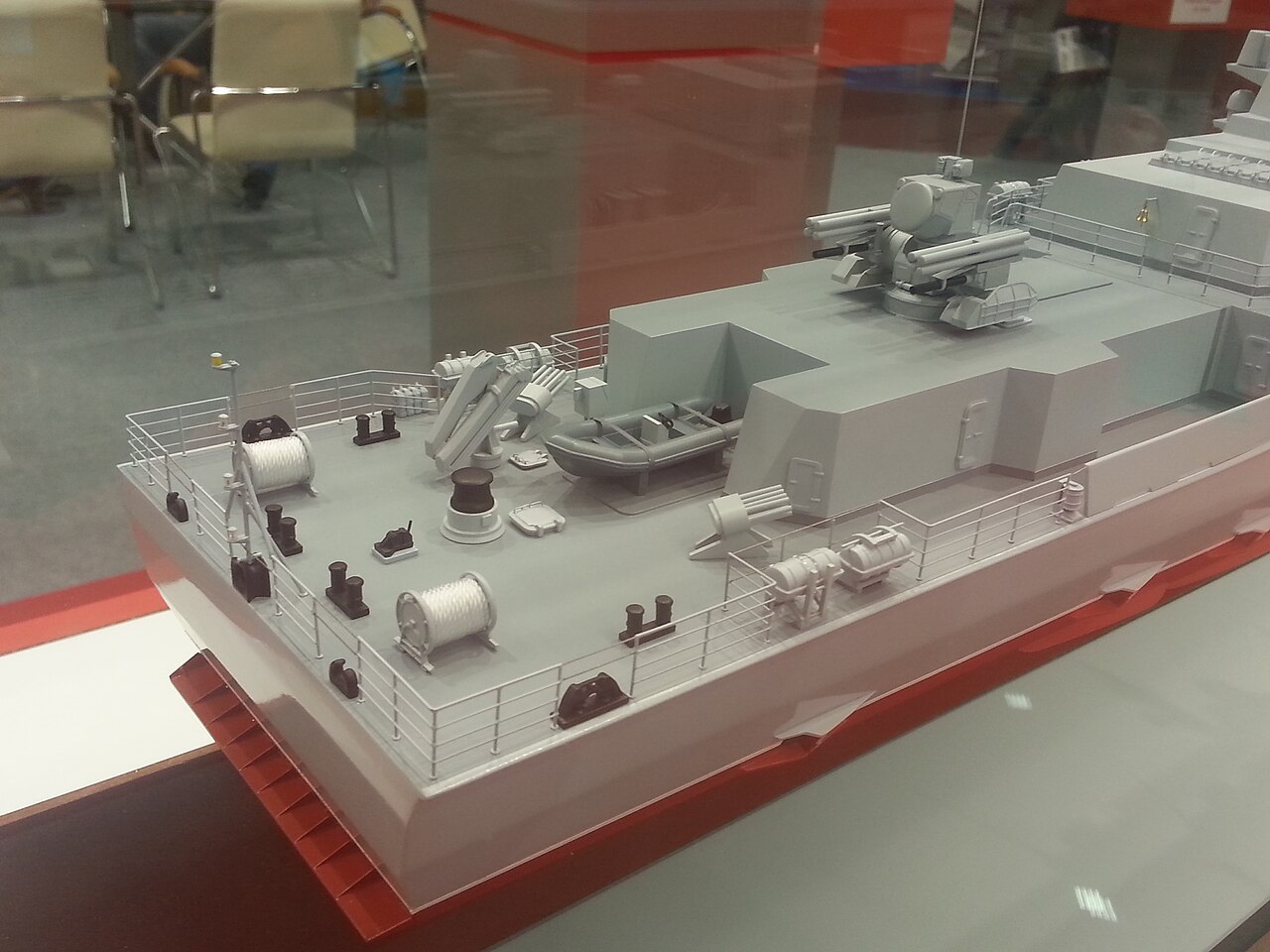
Images




Frequently Asked
How many Project 22800 Karakurt-class corvette are in service?
12 Project 22800 Karakurt-class corvette are currently in service with Russian Navy.
When was the first Project 22800 Karakurt-class corvette commissioned?
The first Project 22800 Karakurt-class corvette entered service in 2018-12-25.
Who builds the Project 22800 Karakurt-class corvette?
The Project 22800 Karakurt-class corvette is built by Pella Shipyard, Zelenodolsk Shipyard.
What variants of the Project 22800 Karakurt-class corvette exist?
Known variants include: Baseline Karakurt, Pantsir-equipped.
How much does a Project 22800 Karakurt-class corvette cost?
Unit cost is approximately $65M per hull.
Curated Research
essential
Provides essential context on Russian naval modernization priorities and the shift toward coastal defense strategies that drove Karakurt development.
RUSI analysis of Russian naval doctrine emphasizing coastal defense and anti-access strategies that define Karakurt employment.
Leading open-source analyst for Russian naval developments with detailed technical analysis and satellite imagery of Karakurt operations.
recommended
IISS annual assessment provides authoritative specifications and fleet numbers for Russian naval platforms including Karakurt production status.
CNA analysis explaining the doctrinal framework that shapes platforms like Karakurt within Russia's maritime defense concept.
RUSI examination of Russian naval operations in contested littoral environments where Karakurt-class vessels are primarily employed.
reference
Comprehensive technical specifications and construction details for the Karakurt class with vessel-by-vessel tracking.
Watch Project 22800 Karakurt in Action
Iron Command produces in-depth comparison and analysis videos for military equipment.
Watch on YouTube