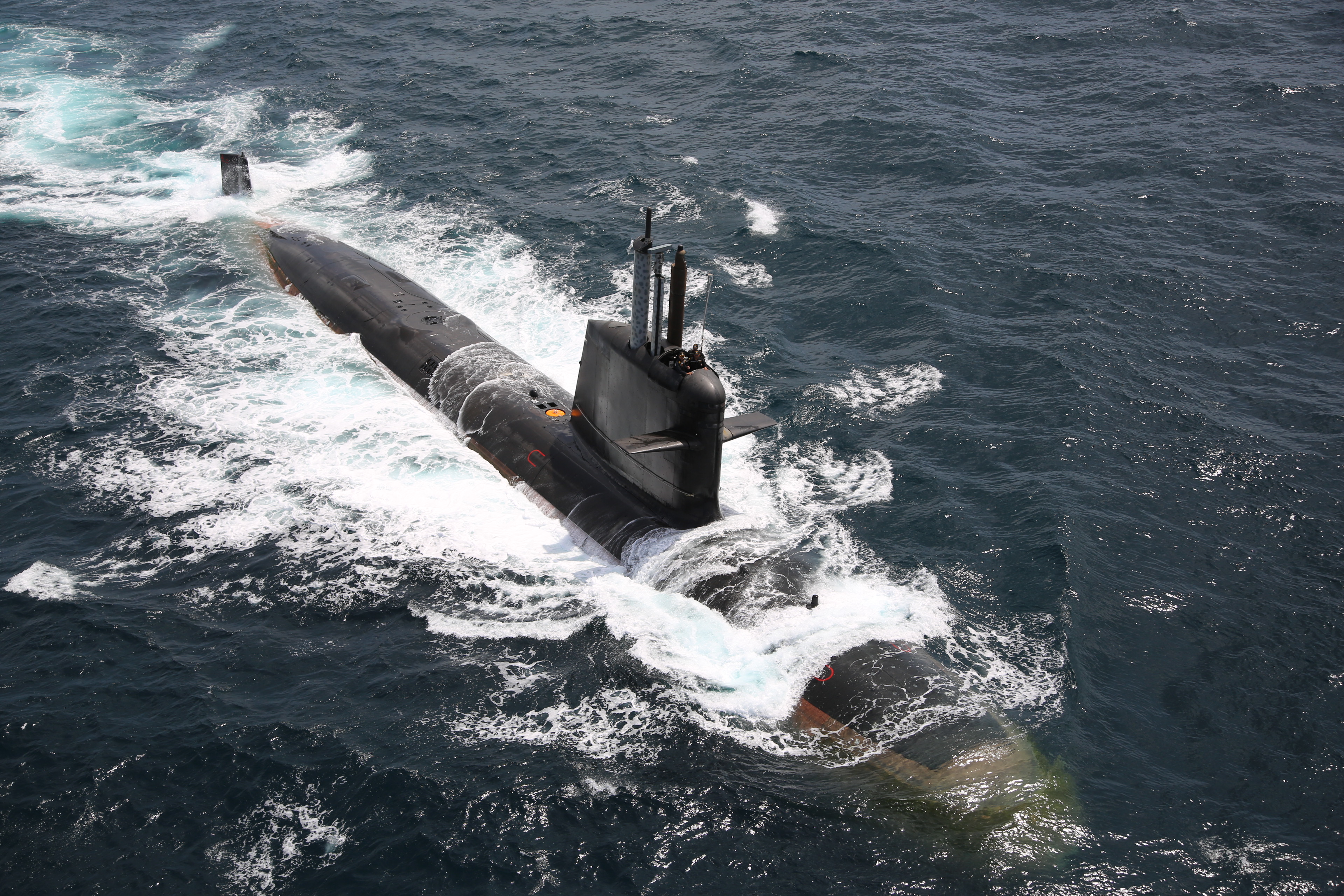
Kalvari-class submarine
Compare with
Overview
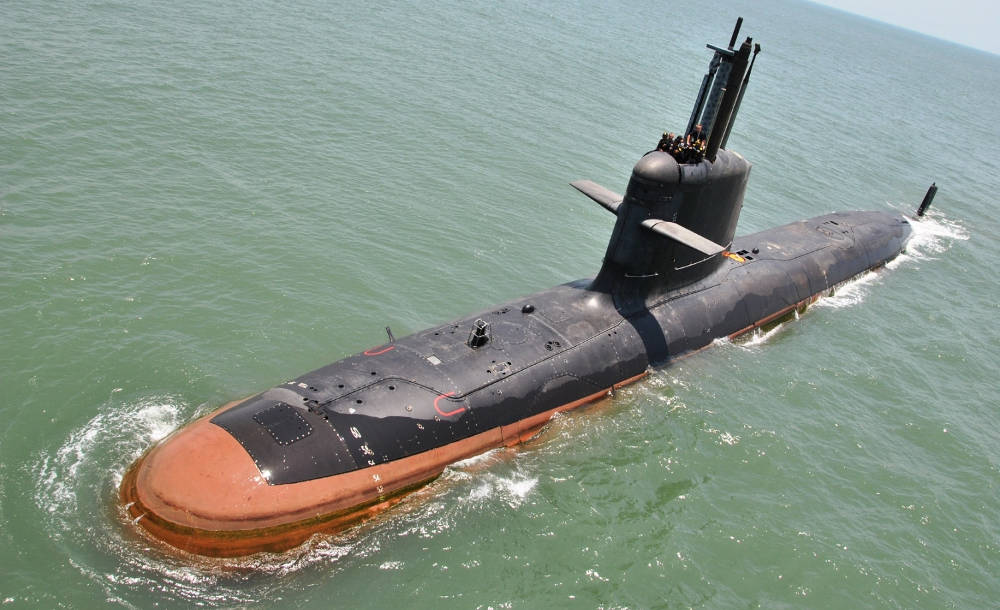
The Kalvari-class submarines represent India's most ambitious indigenous submarine construction program and a cornerstone of the Indian Navy's Project 75 initiative. Based on the French Scorpène design by Naval Group (formerly DCNS), these diesel-electric attack submarines are being built at Mazagon Dock Shipbuilders Limited in Mumbai under technology transfer agreements, marking India's transition from submarine operator to submarine builder. Strategically, the Kalvari class addresses India's critical submarine capability gap in the Indian Ocean Region, where China's growing naval presence demands a credible underwater deterrent. These boats are designed for multi-role operations including anti-submarine warfare, anti-surface warfare, intelligence gathering, and area denial missions. The class incorporates modern stealth features, advanced sonar systems, and the capability to launch both torpedoes and anti-ship missiles. The program reflects India's broader naval modernization strategy and 'Make in India' defense initiative, though it has faced significant delays and cost overruns typical of complex technology transfer programs. While technologically advanced, the Kalvari class lacks the air-independent propulsion (AIP) systems found in contemporary submarine designs, limiting their submerged endurance compared to regional competitors. In the current Indo-Pacific security environment, these submarines provide India with a credible conventional deterrent against Pakistan's submarine force and contribute to India's broader strategy of maintaining maritime dominance in the Indian Ocean. However, with only six planned units, the class addresses only part of India's submarine shortfall, with follow-on programs like Project 75I already in planning stages.
Deployment Map
Home ports from known hull assignments. Operating areas reflect typical AORs — individual deployments will vary.
Timeline
Specifications
Armament
Wire-guided, wake-homing capability
Encapsulated for underwater launch
Mine-laying capability
Doctrine & Employment
Role
Sea denial and maritime domain control in the northern Arabian Sea and eastern Indian Ocean, establishing India's strategic depth against Pakistan's submarine force and China's expanding naval presence.
Design Philosophy
Prioritized stealth, endurance, and multi-mission capability over speed and diving depth, accepting the limitations of diesel-electric propulsion to achieve cost-effectiveness and technology transfer for indigenous production. The design sacrifices some acoustic performance compared to European contemporaries in favor of tropical water optimization and maintenance simplicity for extended patrols in the Indian Ocean.
Employment
Operates as part of India's Western and Eastern Naval Commands, typically deployed in hunter-killer roles against enemy submarines and surface vessels. Forms the backbone of India's submarine warfare capability alongside the nuclear Arihant-class, with missions including intelligence gathering, special operations support, and anti-ship warfare. Command relationships flow through Fleet Operations Centers, with submarines operating both independently and in coordination with surface action groups and maritime patrol aircraft.
Threat Context
Designed primarily to counter Pakistan Navy's Agosta 90B submarines and emerging Chinese submarine presence in the Indian Ocean, with requirements shaped by the 1999 Kargil conflict's naval dimensions. The threat environment has since evolved to include more sophisticated Chinese nuclear submarines transiting through the Indian Ocean and Pakistan's acquisition of Chinese submarines, requiring upgrades to sensors and weapons systems.
How to Compare
Compare on acoustic signature management, sensor integration, and tropical water performance rather than raw speed or diving depth - Indian Ocean operations prioritize stealth and endurance over extreme performance parameters. Focus on weapons loadout flexibility, maintenance intervals, and crew training requirements as these drive operational availability in extended deployments.
Operational Patterns
Typical Deployment
Arabian Sea patrol, surveillance missions, training operations
Deployment Length
2 months
Typical Task Group
Solo operations or with surface escorts during exercises
Readiness
High operational tempo due to small fleet size; maintenance scheduling challenging
Key Operating Areas
Peer Comparison Matrix
Yuan-class features AIP propulsion for extended submerged operations, but Kalvari has superior French sonar and fire control systems. Yuan has larger fleet numbers but potentially less advanced sensors.
Video angle: David vs Goliath: Quality vs Quantity in submarine warfare - Indian precision vs Chinese mass production
Pakistan's Agosta boats are older design but have MESMA AIP system. Kalvari has more modern sensors and weapons but lacks extended underwater endurance capability.
Video angle: Underwater rivalry: How India and Pakistan's submarine arms race shapes Indian Ocean security
Same basic hull design but different combat systems and sensors. Indian version has SUBTICS while others may have different systems. Provides insight into technology transfer success.
Video angle: Global Scorpène family: How the same submarine design serves different navies worldwide
German design offers superior AIP technology and fuel cell propulsion, but Kalvari has proven French combat systems. Type 214 exports have had mixed success records.
Video angle: French vs German submarine philosophy: Different approaches to modern conventional submarine design
Japanese boats are larger, more advanced, but also more expensive. Represent different strategic approaches to submarine warfare in the Indo-Pacific region.
Video angle: Indo-Pacific submarine strategies: How India and Japan approach underwater warfare differently
Combat History
INS Kalvari successfully conducted torpedo firing trials in Arabian Sea, demonstrating combat readiness of lead boat
Validated the submarine's primary weapon system and crew training standards
Multiple Kalvari-class boats maintained patrol schedules during pandemic, demonstrating operational availability despite global disruptions
Proved the class's reliability and the Indian Navy's ability to maintain submarine operations under challenging conditions
INS Khanderi participated in coastal security exercise, conducting surveillance and interdiction training
Demonstrated integration with broader Indian maritime security framework
Known Vulnerabilities
Limited submerged endurance
Lack of AIP systems restricts underwater patrol time to battery capacity, requiring frequent snorkeling
Context: Modern submarine warfare demands extended submerged operations; competitors like Pakistan's Yuan-class have AIP
Mitigation: Future AIP retrofit under consideration, but not yet funded
Small fleet size
Only six submarines cannot provide adequate coverage of India's vast maritime interests
Context: Navy requires 18-24 conventional submarines for effective area denial and patrol coverage
Mitigation: Project 75I planned for additional submarines, but timeline uncertain
Technology dependence
Critical systems and weapons remain French-supplied, creating potential supply chain vulnerabilities
Context: Geopolitical tensions could affect spare parts and upgrade support
Mitigation: Ongoing indigenization efforts, but key components still foreign-dependent
Limited strike capability
Current armament focused on anti-ship/anti-submarine roles, lacks significant land-attack capability
Context: Regional competitors have submarine-launched cruise missiles for strategic strikes
Mitigation: BrahMos integration study underway, but technical challenges remain
Variants
| Variant | Designation | Years | Count | Status | Key Changes |
|---|---|---|---|---|---|
| Kalvari (Batch 1) | S21-S26 | 2017-2022 | 6 | building | Original Scorpène design with Indian modifications, SUBTICS combat system, no AIP initially planned |
Fleet Roster (6)
| Hull | Name | Variant | Commissioned | Home Port | Status |
|---|---|---|---|---|---|
| S21 | INS Kalvari | Kalvari | 2017-12-14 | Mumbai | active |
| S22 | INS Khanderi | Kalvari | 2019-09-28 | Mumbai | active |
| S23 | INS Karanj | Kalvari | 2021-03-10 | Mumbai | active |
| S24 | INS Vela | Kalvari | 2021-11-25 | Mumbai | active |
| S25 | INS Vagir | Kalvari | 2023-01-23 | Mumbai | active |
| S26 | INS Vagsheer | Kalvari | 2024-01-15 | Mumbai | active |
Modernization Programmes
AIP Integration Study
Evaluation of retrofitting air-independent propulsion systems to enhance submerged endurance
Impact: Would significantly extend underwater patrol capability and reduce detection risk
Indigenous Sonar Upgrade
Integration of DRDO-developed sonar systems and indigenous torpedo fire control systems
Impact: Reduces foreign dependency and improves integration with Indian naval systems
BrahMos Integration
Potential integration of submarine-launched BrahMos cruise missiles for extended strike capability
Impact: Would provide land-attack capability and significantly extend strike range
Images




Frequently Asked
How many Kalvari-class submarine are in service?
6 Kalvari-class submarine are currently in service with Indian Navy.
When was the first Kalvari-class submarine commissioned?
The first Kalvari-class submarine entered service in 2017-12-14.
Who builds the Kalvari-class submarine?
The Kalvari-class submarine is built by Mazagon Dock Shipbuilders Limited (MDL), Mumbai.
How much does a Kalvari-class submarine cost?
Unit cost is approximately $550M per hull.
Curated Research
essential
Provides comprehensive analysis of Indian Navy's submarine doctrine development and Project 75's strategic rationale within broader maritime strategy.
Details Project 75 program development, technology transfer arrangements, and integration challenges within India's defense modernization efforts.
Official doctrinal framework defining submarine roles within India's maritime strategy and force employment concepts.
recommended
Leading analyst on South Asian submarine warfare dynamics and India's underwater domain awareness challenges.
Analyzes India's submarine force structure requirements against regional submarine proliferation and capability gaps.
Strategic context for India's submarine modernization in response to Chinese naval expansion in the Indian Ocean region.
reference
Detailed technical specifications and configuration differences between French baseline and Indian variant requirements.
Watch Kalvari in Action
Iron Command produces in-depth comparison and analysis videos for military equipment.
Watch on YouTube