K21 Infantry Fighting Vehicle
Compare with
Overview
The K21 Infantry Fighting Vehicle represents South Korea's most advanced armored fighting platform, designed specifically to counter North Korean mechanized threats and provide technological overmatch on the Korean Peninsula. Developed by Hanwha Defense (formerly Samsung Techwin) as part of South Korea's indigenous defense modernization effort, the K21 incorporates advanced fire control systems, modular armor protection, and network-centric warfare capabilities that position it among the world's most sophisticated IFVs. The K21's design philosophy centers on survivability, firepower, and situational awareness in the unique terrain and threat environment of Korea. Its hybrid electric drive system provides exceptional fuel efficiency and silent watch capability, while the KSTAM (Korean Smart Top-Attack Munition) integration gives it anti-tank capabilities typically reserved for main battle tanks. The vehicle's modular armor system and active protection features address the immediate threat of North Korean ATGMs and RPGs in urban combat scenarios. Strategically, the K21 serves as the backbone of South Korea's mechanized infantry transformation, moving away from Cold War-era M113 derivatives toward a digitized, network-enabled force structure. The platform's advanced fire control system and battlefield management capabilities integrate seamlessly with South Korea's C4ISR architecture, enabling real-time intelligence sharing and coordinated fires across battalion-level operations. Compared to Western peers like the Bradley M2A4 or German Puma, the K21 emphasizes anti-armor lethality and protection over strategic mobility, reflecting the specific requirements of Korean Peninsula defense. Its domestic production capability and technology transfer restrictions make it a key component of South Korea's defense industrial strategy, with export variants competing directly with established platforms in the global IFV market.
Deployment Map
Home ports from known hull assignments. Operating areas reflect typical AORs — individual deployments will vary.
Timeline
Specifications
Armament
Stabilized turret with dual-feed capability
Roof-mounted launcher, Israeli-manufactured
Indigenous smart munition, uncertain availability
Coaxially mounted
Operational Patterns
Typical Deployment
Mechanized infantry support, forward defense positions along DMZ, rapid reaction forces
Deployment Length
12 months
Typical Task Group
Operates in mechanized infantry battalions with K2 Black Panther MBTs and K9 Thunder artillery
Readiness
High operational tempo with frequent training exercises, some maintenance challenges with hybrid systems
Key Operating Areas
Peer Comparison Matrix
K21 emphasizes anti-tank lethality and protection over strategic mobility, hybrid drive provides silent watch capability Bradley lacks. Bradley has superior battle-tested reliability and logistics support.
Video angle: Technology vs. proven reliability - next-gen features versus combat-proven systems
K21 has superior armor protection and fire control but less amphibious capability than BMP-3. K21's electronics and situational awareness significantly more advanced.
Video angle: High-tech vs. mass production - sophisticated systems versus quantity and simplicity
Both emphasize protection and technology, but Puma focuses on modularity while K21 emphasizes anti-armor capability. Puma has superior strategic mobility for NATO operations.
Video angle: Different philosophies - European modularity versus Korean Peninsula-specific optimization
K21 has more advanced fire control and networking, ZBD-04A emphasizes amphibious capability and mass production. K21 superior in defensive operations, ZBD-04A better for power projection.
Video angle: Quality vs. quantity in Asian land warfare - technological edge versus mass deployment
Both target similar export markets with advanced technology. CV90 has proven export success and modularity, K21 offers lower cost and integrated anti-tank capability.
Video angle: Export market battle - established European brand versus emerging Asian alternative
Combat History
K21 units were deployed to forward positions following North Korean artillery attack on Yeonpyeong Island, marking first operational deployment in heightened readiness posture
Demonstrated rapid deployment capability and readiness for Korean Peninsula contingencies
K21 units provided security for THAAD missile defense system deployment sites, operating in anti-infiltration role
Showed integration with strategic defense systems and ability to operate in politically sensitive environments
Known Vulnerabilities
Top attack munitions
Limited top armor protection against advanced top-attack ATGMs and loitering munitions, particularly vulnerable to Javelin-type threats
Context: North Korean acquisition of top-attack capabilities and proliferation of loitering munitions in regional conflicts
Mitigation: Active protection system integration and operational tactics emphasizing cover and concealment
Electronic warfare susceptibility
Heavy reliance on electronic systems and datalinks creates vulnerability to sophisticated EW attacks, particularly GPS jamming
Context: North Korean development of cyber and EW capabilities, demonstrated GPS jamming incidents
Mitigation: Hardening of electronic systems and development of alternative navigation methods
Logistics complexity
Hybrid drive system and advanced electronics create maintenance burden requiring specialized training and parts supply
Context: Need for sustained operations in wartime without access to manufacturer support
Mitigation: Expanded maintenance training programs and stockpiling of critical components
Variants
| Variant | Designation | Years | Count | Status | Key Changes |
|---|---|---|---|---|---|
| K21 Basic | Initial production | 2009-2014 | 206 | active | Base configuration with 30mm cannon, basic armor package, standard diesel engine |
| K21A1 | Improved variant | 2014-present | 260 | active | Hybrid electric drive, enhanced armor, improved fire control system, SPIKE-LR integration |
| K21-105 | Export variant | 2019-present | — | building | 105mm gun turret option, Iron Fist APS, export-cleared systems |
Fleet Roster (1)
| Hull | Name | Variant | Commissioned | Home Port | Status |
|---|---|---|---|---|---|
| Various | K21 Fleet | Mixed Basic/A1 | 2009-present | Multiple ROK Army bases | active |
Modernization Programmes
Active Protection System Integration
Integration of Rafael Iron Fist APS on export variants, domestic APS development for ROK Army fleet
Impact: Significantly improves survivability against RPGs and ATGMs in urban combat
AI-Enhanced Fire Control
Machine learning target recognition and engagement systems, automated threat prioritization
Impact: Reduces crew workload and improves first-round hit probability
K21A2 Development
Next-generation variant with improved armor, 40mm cannon option, enhanced networking capabilities
Impact: Maintains technological edge over regional threats and extends service life
Images


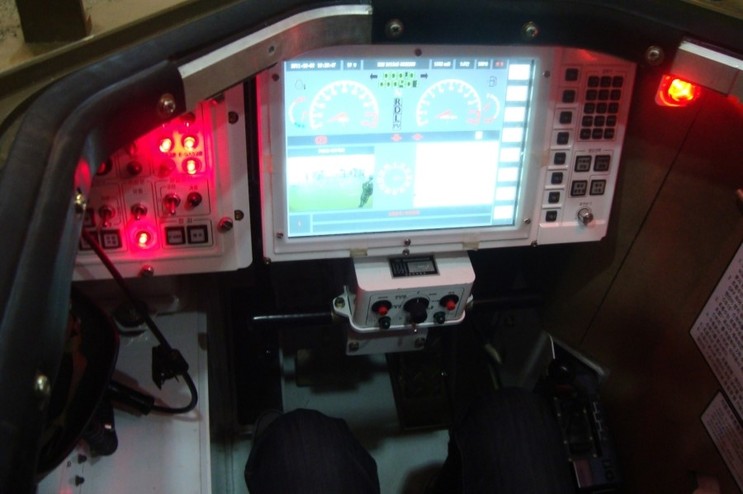


Frequently Asked
How many K21 Infantry Fighting Vehicle are in service?
1 K21 Infantry Fighting Vehicle are currently in service with Republic of Korea Army.
When was the first K21 Infantry Fighting Vehicle commissioned?
The first K21 Infantry Fighting Vehicle entered service in 2009.
Who builds the K21 Infantry Fighting Vehicle?
The K21 Infantry Fighting Vehicle is built by Hanwha Defense.
What variants of the K21 Infantry Fighting Vehicle exist?
Known variants include: K21 Basic, K21A1, K21-105.
How much does a K21 Infantry Fighting Vehicle cost?
Unit cost is approximately $5M per hull.
Watch K21 Infantry Fighting Vehicle in Action
Iron Command produces in-depth comparison and analysis videos for military equipment.
Watch on YouTube