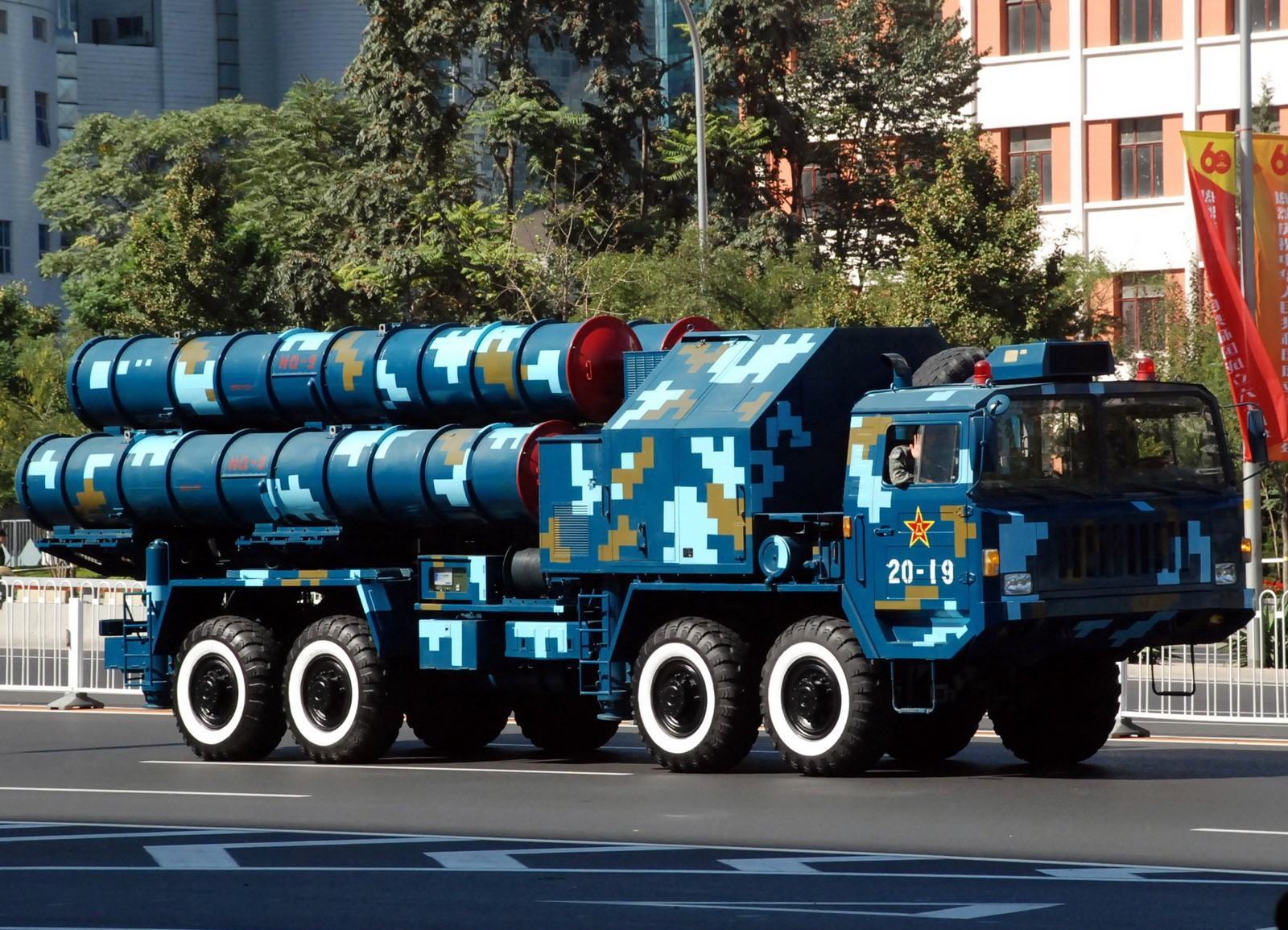
HQ-9 long-range surface-to-air missile
Overview
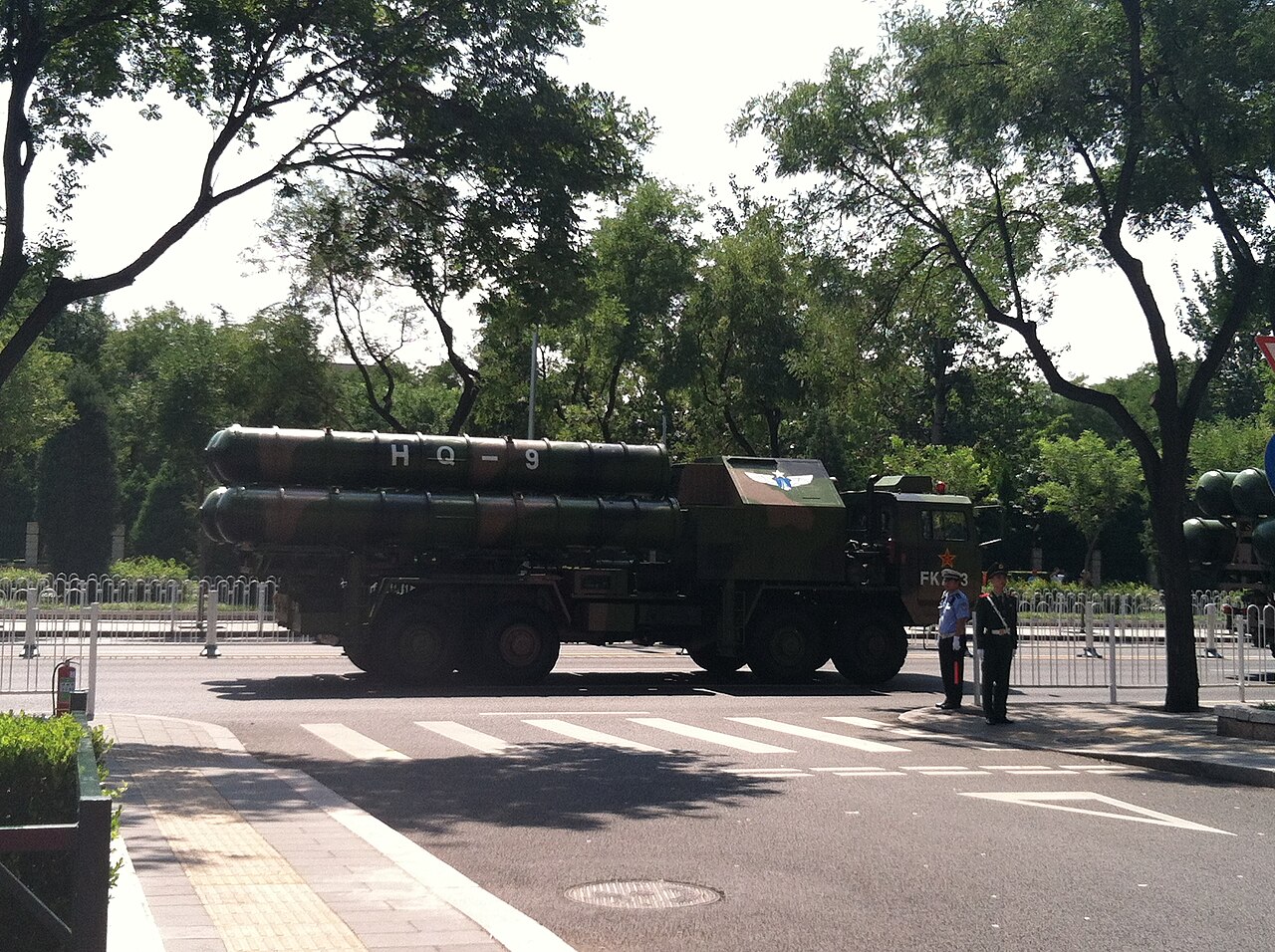
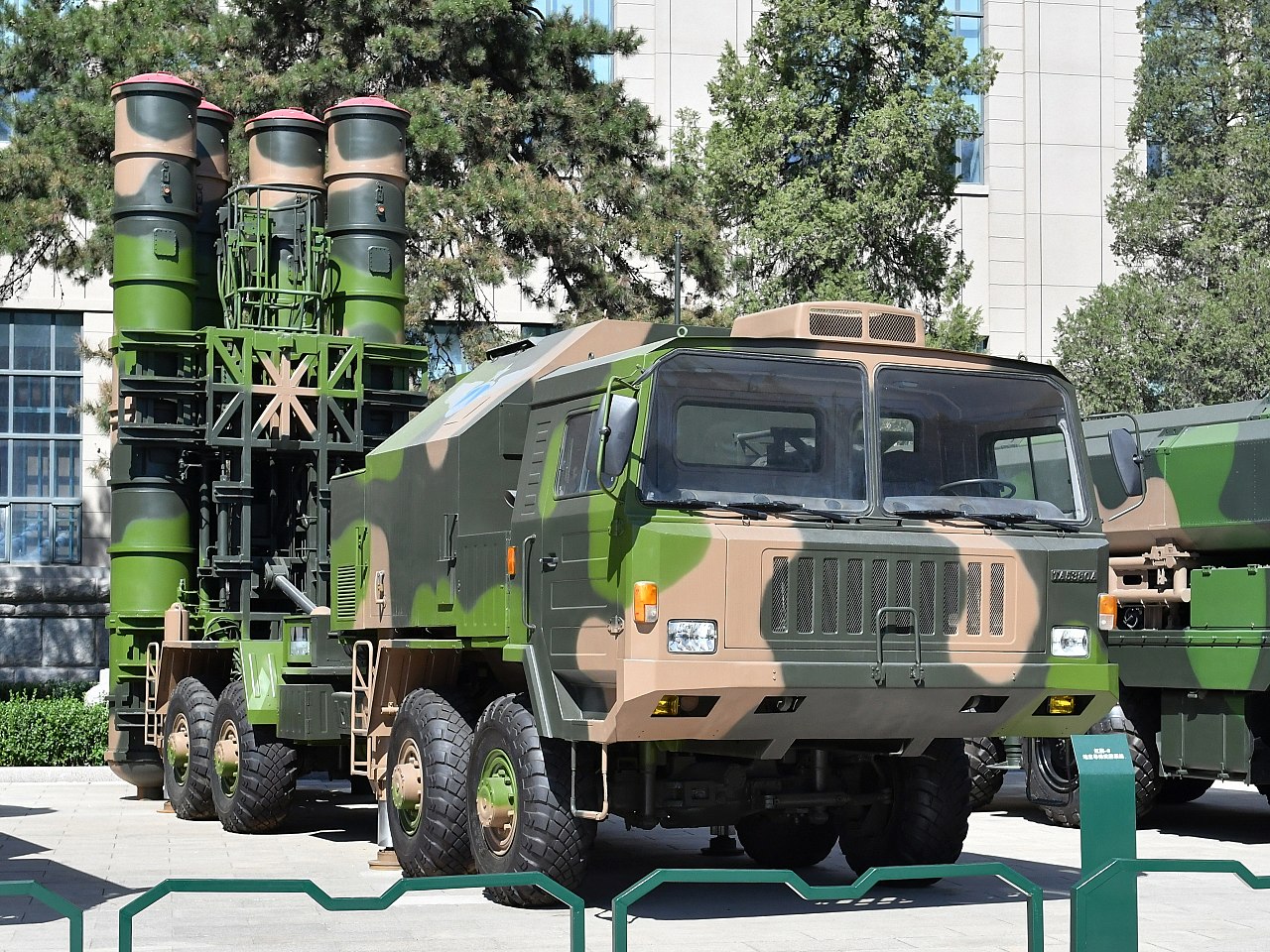
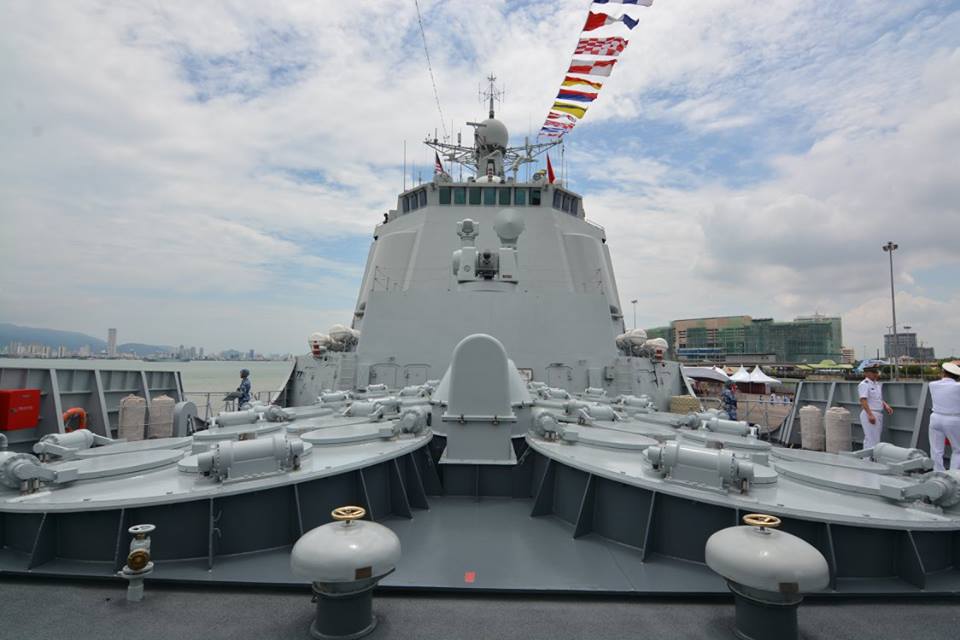
The HQ-9 (Hong Qi, "Red Banner") is China's premier long-range surface-to-air missile system and the backbone of its layered integrated air-defence network. Often described as China's S-300/Patriot-class system, it blends design influences from the Russian S-300 with indigenous radar and missile technology to provide area defence against aircraft, cruise missiles and, in later variants, some ballistic-missile threats. The system pairs a road-mobile transporter-erector-launcher with the powerful HT-233 phased-array engagement radar and a network of acquisition and low-altitude radars. The missile uses inertial guidance with mid-course datalink updates and an active or track-via-missile terminal mode, reaching out to around 125 km in the baseline HQ-9 and roughly 200 km in the improved HQ-9B, at altitudes up to the mid-twenties of kilometres. A naval version, the HHQ-9, is the long-range layer of the air-defence suite on China's Type 052C, Type 052D and Type 055 destroyers — effectively the "Aegis-equivalent" reach of the modern PLA Navy. Strategically, the HQ-9 is a core component of China's anti-access bubble. Batteries deployed on the mainland, on Hainan, and notably on militarised features in the South China Sea (such as Woody Island in the Paracels) extend a defended-airspace umbrella over contested waters, raising the risk to any aircraft operating nearby. Its export success — most prominently the FD-2000 sold to Pakistan — also makes it a tool of Chinese defence diplomacy. For an analyst, the HQ-9 represents the maturation of Chinese air defence from imported S-300s to a capable, exportable, navalised family of its own. Its real-world performance against modern stealth aircraft, standoff jamming and saturation attacks is untested, but its proliferation across Chinese territory and the South China Sea makes it a permanent feature of any Western Pacific air campaign planning.
Deployment Map
Home ports from known hull assignments. Operating areas reflect typical AORs — individual deployments will vary.
Timeline
Specifications
Armament
Cold-launched two-stage interceptor
Improved seeker and range; some ABM capability
Doctrine & Employment
Role
Long-range area air-defence missile system and backbone of China's integrated air-defence network, with a navalised fleet-defence variant.
Design Philosophy
Indigenise and navalise S-300-class capability into an exportable, mobile, networked family.
Employment
Mobile batteries and naval VLS engage aircraft, cruise missiles and UAVs at long range, layered with shorter-range SAMs and fighters.
Threat Context
Extends China's anti-access bubble over the near seas and South China Sea features; the long-range layer of PLAN destroyer defences.
How to Compare
China's S-300/Patriot-class system — read against the S-400, Patriot and THAAD.
Operational Patterns
Typical Deployment
Mobile batteries protecting key bases, the mainland coast and South China Sea features; naval HHQ-9 providing fleet area defence.
Typical Task Group
Networked into the national IADS with acquisition radars, fighters and shorter-range SAMs (HQ-16, HQ-7).
Readiness
Widely fielded land and naval variants; actively exported.
Key Operating Areas
Peer Comparison Matrix
S-400 offers longer-range missiles and a broader interceptor mix; HQ-9 is the indigenous Chinese answer, also operated alongside imported S-300/S-400.
Video angle: China's home-grown SAM vs the Russian system that inspired it.
Patriot PAC-3 emphasises hit-to-kill ballistic-missile defence; HQ-9 is primarily an aircraft/cruise-missile area defender with growing ABM reach.
Video angle: HQ-9 vs Patriot — competing air-defence philosophies.
THAAD is a dedicated high-altitude ballistic-missile interceptor; its deployment to South Korea provoked strong Chinese objection.
Video angle: Why China fears THAAD in Korea.
Combat History
HQ-9 batteries deployed to Woody Island in the Paracels, the first confirmed long-range SAM emplacement on a South China Sea feature.
Extended a defended-airspace bubble over contested waters.
No confirmed combat interceptions; widely exercised in PLA air-defence drills.
Capability assessed from exercises and deployments, not combat.
Known Vulnerabilities
Low-observable threats
Untested against modern stealth aircraft and standoff missiles.
Context: 5th-gen penetrators and decoys may degrade engagement.
Mitigation: Networked low-band acquisition radars and layered batteries.
Saturation & SEAD
Finite interceptors per battery are vulnerable to saturation and anti-radiation/SEAD attack.
Context: A determined air campaign can attrite emitters.
Mitigation: Mobility, emission control and decoys.
Variants
| Variant | Designation | Years | Count | Status | Key Changes |
|---|---|---|---|---|---|
| HQ-9 | — | 2001– | — | active | Baseline long-range SAM, ~125 km |
| HQ-9B | — | 2010s– | — | active | Extended range ~200 km, improved guidance and ABM capability |
| HHQ-9 (naval) | — | 2004– | — | active | VLS-launched fleet area air-defence variant for Type 052C/D and 055 |
| FD-2000 (export) | — | export | — | active | Downgraded export model, sold to Pakistan and others |
Modernization Programmes
HQ-9B / HQ-19 layering
Extended-range HQ-9B and the higher-tier HQ-19 build a layered air- and missile-defence shield.
Impact: Broadens China's IADS toward credible ballistic-missile defence.
Images





Frequently Asked
When was the first HQ-9 long-range surface-to-air missile commissioned?
The first HQ-9 long-range surface-to-air missile entered service in 2001.
Who builds the HQ-9 long-range surface-to-air missile?
The HQ-9 long-range surface-to-air missile is built by CASIC / CPMIEC.
What variants of the HQ-9 long-range surface-to-air missile exist?
Known variants include: HQ-9, HQ-9B, HHQ-9 (naval), FD-2000 (export).
Curated Research
essential
Authoritative system profile
reference
Variants, radar and missile data
Watch HQ-9 long-range surface-to-air missile in Action
Iron Command produces in-depth comparison and analysis videos for military equipment.
Watch on YouTube