
HQ-17 short-range air-defence system
Compare with
Overview
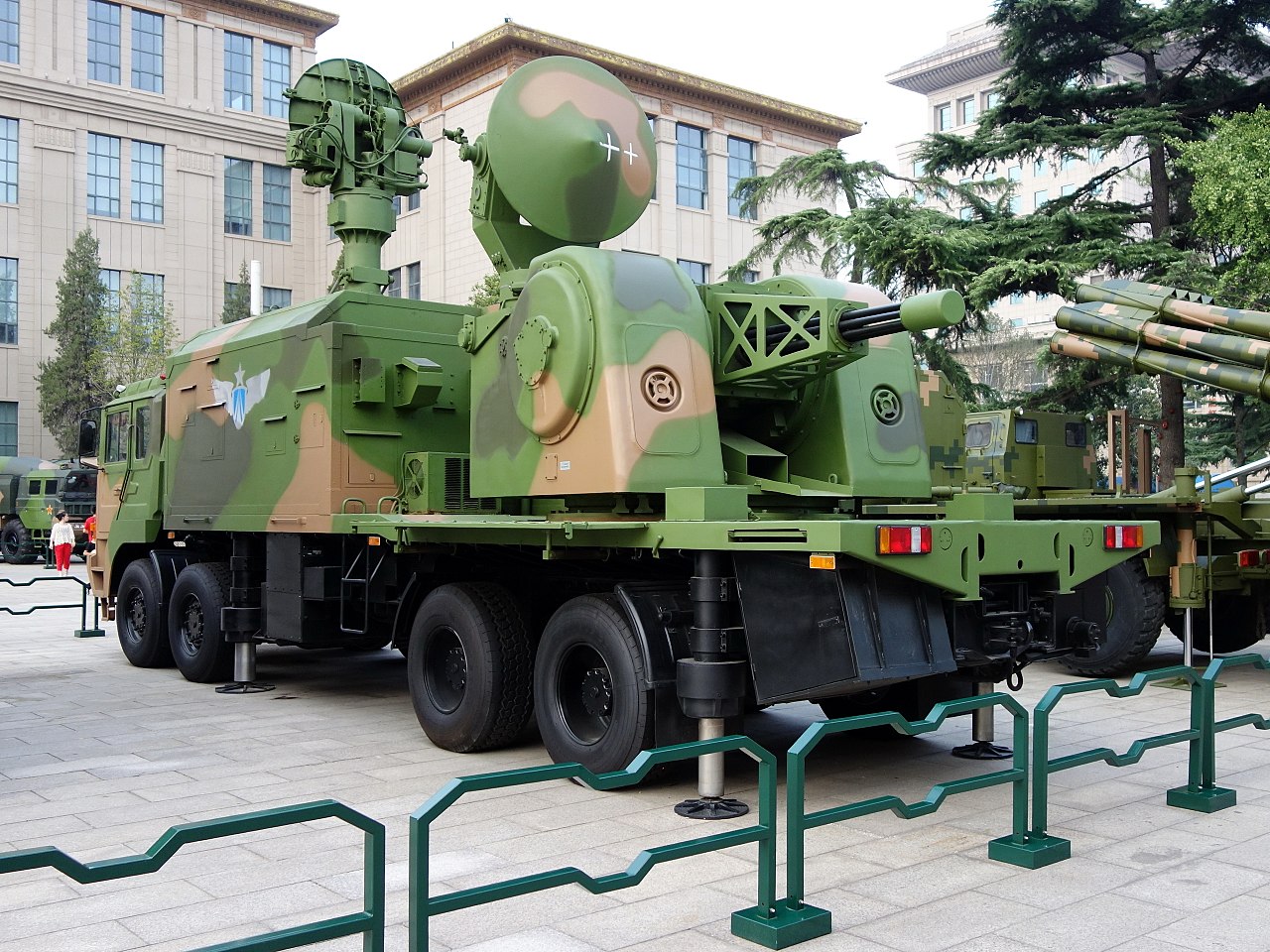
The HQ-17 is the PLA's modern short-range, point-defence surface-to-air missile system — the inner layer of Chinese air defence that protects manoeuvre forces and high-value assets from aircraft, helicopters, cruise missiles, precision-guided munitions and, increasingly, drones. Derived from the Russian Tor-M1, it has been developed into an indigenous Chinese system on both tracked and wheeled (HQ-17A) chassis. Where the HQ-9 and HQ-16 provide long- and medium-range area defence, the HQ-17 fills the close-in gap: a fast-reacting, vertically-launched system that travels with armoured and mechanised columns and engages low-flying, agile threats at ranges of around 15 km and altitudes up to roughly 10 km. Its quick reaction time and ability to engage on the move make it well suited to defeating the precision strikes and loitering munitions that increasingly threaten ground forces. For an analyst, the HQ-17 is the layer that makes Chinese ground formations survivable under air attack. As drones and cruise missiles proliferate — vividly demonstrated in recent conflicts — short-range mobile air defence has become essential, and the HQ-17 (with related gun-missile systems) is how the PLA keeps its armoured spearheads protected while the HQ-16 and HQ-9 handle the medium and long tiers above it.
Deployment Map
Home ports from known hull assignments. Operating areas reflect typical AORs — individual deployments will vary.
Timeline
Specifications
Armament
Vertical cold-launch, point defence
Doctrine & Employment
Role
Short-range point-defence SAM protecting manoeuvre forces and key assets from close-in air threats.
Design Philosophy
Mobile, quick-reaction close defence — the inner layer of the IADS.
Employment
Fast-reacting vertical-launch engagement of low, agile threats while accompanying ground columns.
Threat Context
Keeps PLA armoured spearheads survivable against PGMs, cruise missiles and drones.
How to Compare
Read against the Russian Tor (parent), the HQ-16 (above) and the Pantsir.
Operational Patterns
Typical Deployment
Mobile point defence accompanying armoured/mechanised forces and protecting key assets.
Typical Task Group
Inner layer beneath HQ-16 and HQ-9 in the IADS.
Readiness
Widely fielded on tracked and wheeled chassis.
Key Operating Areas
Peer Comparison Matrix
The HQ-17 derives from the Russian Tor and is China's indigenised short-range point-defence SAM.
Video angle: From Tor to HQ-17.
The HQ-16 is the medium tier; the HQ-17 is the close-in point-defence layer.
Video angle: The inner layers of Chinese air defence.
The Pantsir combines guns and missiles for point defence; the HQ-17 is missile-only.
Video angle: Short-range air defence systems compared.
Combat History
No confirmed combat; fielded with PLA combined-arms brigades and exercised in air-defence drills.
Capability assessed from fielding.
Known Vulnerabilities
Short reach
Point-defence range only; not an area defender.
Context: Needs HQ-16/HQ-9 layers above it.
Mitigation: Layered IADS.
Saturation by cheap drones
Expensive interceptors versus swarms of cheap UAS.
Context: Unfavourable cost-exchange.
Mitigation: Pairing with gun systems and EW.
Variants
| Variant | Designation | Years | Count | Status | Key Changes |
|---|---|---|---|---|---|
| HQ-17 | — | 2017– | — | active | Tracked short-range point-defence SAM (Tor-derived) |
| HQ-17A | — | 2019– | — | active | Wheeled 8x8 variant with improved radar |
Modernization Programmes
Counter-UAS adaptation
Improved sensors and engagement against small drones and loitering munitions.
Impact: Keeps manoeuvre forces survivable against proliferating drone threats.
Images




Frequently Asked
When was the first HQ-17 short-range air-defence system commissioned?
The first HQ-17 short-range air-defence system entered service in 2017.
Who builds the HQ-17 short-range air-defence system?
The HQ-17 short-range air-defence system is built by China Aerospace Science and Industry Corp. (CASIC).
What variants of the HQ-17 short-range air-defence system exist?
Known variants include: HQ-17, HQ-17A.
Curated Research
recommended
Air-defence inventory
reference
Variants and role
Watch HQ-17 short-range air-defence system in Action
Iron Command produces in-depth comparison and analysis videos for military equipment.
Watch on YouTube