
Ghadir-class submarine
Compare with
Overview
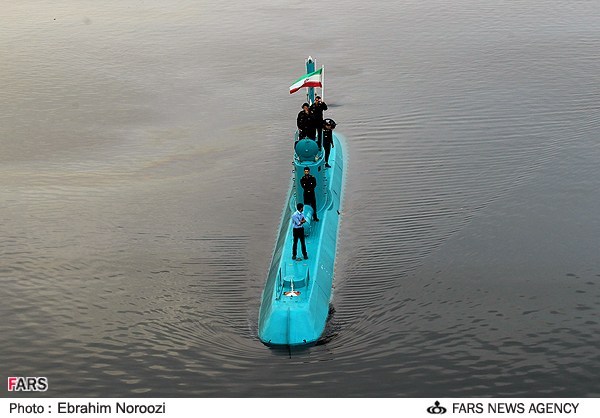
The Ghadir-class is Iran's domestically-produced midget submarine, designed for coastal defense and asymmetric naval warfare in the Persian Gulf's shallow waters. Based on North Korean Yono-class technology with Iranian modifications, these 120-ton boats represent Tehran's attempt to create a credible submarine deterrent despite international sanctions limiting access to advanced naval technology. Strategically, the Ghadir-class embodies Iran's asymmetric naval doctrine — using large numbers of small, hard-to-detect platforms to threaten much larger naval forces in confined waters. Their shallow draft and compact size make them well-suited for the Persian Gulf's average depth of 50 meters, where they can potentially ambush larger vessels or lay mines in shipping channels. The design philosophy prioritizes simplicity, manufacturability, and stealth over conventional submarine capabilities like endurance or deep-water operations. Iran has reportedly built over 20 units, making it one of the world's largest midget submarine fleets. However, their operational effectiveness remains questionable due to limited range, basic sensors, and Iran's historical challenges with complex military systems. In the current threat environment, these boats pose a nuisance-level threat to Gulf shipping and could complicate naval operations in a conflict scenario. While easily outmatched by modern anti-submarine warfare capabilities, their small signature and potential to operate in very shallow coastal waters create detection challenges. They represent quantity over quality — a classic asymmetric approach by a technologically inferior but determined adversary.
Deployment Map
Home ports from known hull assignments. Operating areas reflect typical AORs — individual deployments will vary.
Timeline
Specifications
Armament
Likely Iranian-produced variants of foreign designs
Can substitute for torpedo load
Doctrine & Employment
Role
Asymmetric sea denial and area access deterrence in the shallow waters of the Persian Gulf and Strait of Hormuz. The Ghadir-class exists to compensate for Iran's inability to match Gulf Arab states' surface fleets through swarm tactics and stealth ambushes.
Design Philosophy
Prioritized shallow-water maneuverability, small acoustic signature, and low-cost mass production over range, endurance, and weapon capacity. Iran sacrificed blue-water capability and substantial firepower for a platform that could be built domestically under sanctions and operate effectively in Gulf littorals where larger submarines cannot.
Employment
Operated in coordinated groups of 2-4 boats from hardened coastal bases, integrating with IRGCN fast attack craft and shore-based anti-ship missiles in layered defense. Primary missions include intelligence gathering, special forces insertion, and ambush attacks on high-value targets transiting the Strait of Hormuz. Command structure typically flows through IRIN submarine command with coordination through integrated coastal defense networks.
Threat Context
Designed to counter U.S. Navy carrier strike groups and allied surface combatants in a Strait of Hormuz closure scenario during the 2000s-2010s sanctions period. The threat has evolved toward more sophisticated ASW capabilities and distributed maritime operations, potentially reducing the effectiveness of massed midget submarine tactics.
How to Compare
Compare on shallow-water performance, production rate, and acoustic signature rather than weapon load or range — Iran accepts severe operational limitations for tactical surprise and mass deployment. Cost-per-unit and domestic production capacity matter more than individual platform capability in Iran's quantity-over-quality approach.
Operational Patterns
Typical Deployment
Coastal patrol and port defense in Persian Gulf shallow waters
Deployment Length
0.2 months
Typical Task Group
Operates independently or in coordination with fast attack craft and coastal missiles
Readiness
Limited operational availability due to maintenance challenges and crew training requirements
Key Operating Areas
Peer Comparison Matrix
Ghadir is based on Yono technology but with Iranian modifications to sensors and weapons systems. Similar size and limitations but Iran has built more units.
Video angle: Technology transfer and how regional powers adapt foreign designs to local needs
Sang-O is larger with greater range and crew, but both serve similar coastal defense roles. North Korean design is more mature.
Video angle: Comparing asymmetric submarine strategies of isolated nations
German boat is far more sophisticated with modern sensors, AIP propulsion, and superior build quality, but similar size class for coastal operations.
Video angle: How Western technology compares to indigenous attempts by sanctioned nations
Swedish design represents cutting-edge conventional submarine technology with AIP, advanced sensors, and network-centric warfare capabilities versus Iran's basic coastal defender.
Video angle: Modern conventional submarine technology versus asymmetric quantity-based approaches
Combat History
Early Ghadir-class units participated in Iranian naval exercises demonstrating mine-laying capabilities and mock attacks on surface vessels
First operational demonstration of Iran's indigenous submarine capability
Multiple Ghadir-class submarines reportedly deployed to patrol areas during US-Iran tensions, though no confirmed engagements
Showed Iran's willingness to deploy midget submarines in potential conflict scenarios
Routine patrol operations in Persian Gulf, with occasional detection by US and allied naval forces
Demonstrates limited but persistent operational capability in regional waters
Known Vulnerabilities
Limited range and endurance
200nm range and 5-day endurance severely limits operational flexibility and strategic impact
Context: Makes them purely coastal defense weapons with no ability to project power beyond immediate littoral areas
Mitigation: Iran building larger Fateh-class submarines with greater range
Primitive sensors and combat systems
Basic sonar and fire control systems limit target detection and engagement capabilities against modern vessels
Context: Modern naval forces have sophisticated ASW capabilities that can easily detect and track these boats
Mitigation: Incremental improvements in newer blocks, but fundamental technology gap remains
Manufacturing quality and reliability
Iran's industrial limitations and sanctions impact on quality components likely affect operational reliability
Context: Reports of mechanical failures and limited operational availability suggest maintenance challenges
Mitigation: Domestic production of spare parts and gradual improvement in manufacturing processes
Crew training and experience
Limited submarine operational experience in Iranian Navy affects crew proficiency and tactical effectiveness
Context: Complex submarine operations require extensive training and experience that Iran's isolated navy struggles to develop
Mitigation: Gradual accumulation of operational experience, but limited by international isolation
Variants
| Variant | Designation | Years | Count | Status | Key Changes |
|---|---|---|---|---|---|
| Ghadir Block 1 | Various names (Ghadir, Nahang, etc.) | 2007-2012 | 15 | active | Initial production variant based on North Korean Yono-class design with Iranian modifications |
| Ghadir Block 2 | Later units | 2012-present | 8 | building | Improved sensors, upgraded fire control system, enhanced battery capacity |
Fleet Roster (3)
| Hull | Name | Variant | Commissioned | Home Port | Status |
|---|---|---|---|---|---|
| 901 | Ghadir | Block 1 | 2007 | Bandar Abbas | active |
| 902 | Nahang | Block 1 | 2008 | Bandar Abbas | active |
| Unknown | Multiple unnamed units | Block 1/2 | 2008-2023 | Various Iranian naval bases | active |
Modernization Programmes
Ghadir Block 2 improvements
Upgraded fire control systems, improved battery technology, enhanced sensor suite including better sonar arrays
Impact: Modest improvements in detection range and underwater endurance, but fundamental limitations remain
Air-independent propulsion research
Iran has claimed research into AIP systems for future submarine variants
Impact: Would significantly extend underwater endurance if successfully implemented
Images







Frequently Asked
How many Ghadir-class submarine are in service?
3 Ghadir-class submarine are currently in service with Islamic Republic of Iran Navy.
When was the first Ghadir-class submarine commissioned?
The first Ghadir-class submarine entered service in 2007.
Who builds the Ghadir-class submarine?
The Ghadir-class submarine is built by Iran Shipbuilding & Offshore Industries Complex (ISOICO).
What variants of the Ghadir-class submarine exist?
Known variants include: Ghadir Block 1, Ghadir Block 2.
How much does a Ghadir-class submarine cost?
Unit cost is approximately $15M per hull.
Curated Research
essential
CSIS analysis provides comprehensive assessment of Iranian naval doctrine and the Ghadir-class role within broader asymmetric strategy.
Washington Institute report details the doctrinal split between IRIN and IRGCN and how midget submarines fit into coastal defense planning.
IISS strategic dossier provides authoritative analysis of Iranian military doctrine and force structure including naval asymmetric capabilities.
recommended
Leading open-source analyst for submarine developments with detailed technical analysis and satellite imagery of Iranian submarine programs.
Academic analysis of Iranian naval doctrine evolution and the role of unconventional platforms in Persian Gulf strategy.
U.S. Naval Institute analysis examining Iranian midget submarine capabilities and their impact on Gulf naval balance.
reference
Comprehensive technical specifications and operational history tracking for Iranian Ghadir-class boats.
Watch Ghadir in Action
Iron Command produces in-depth comparison and analysis videos for military equipment.
Watch on YouTube