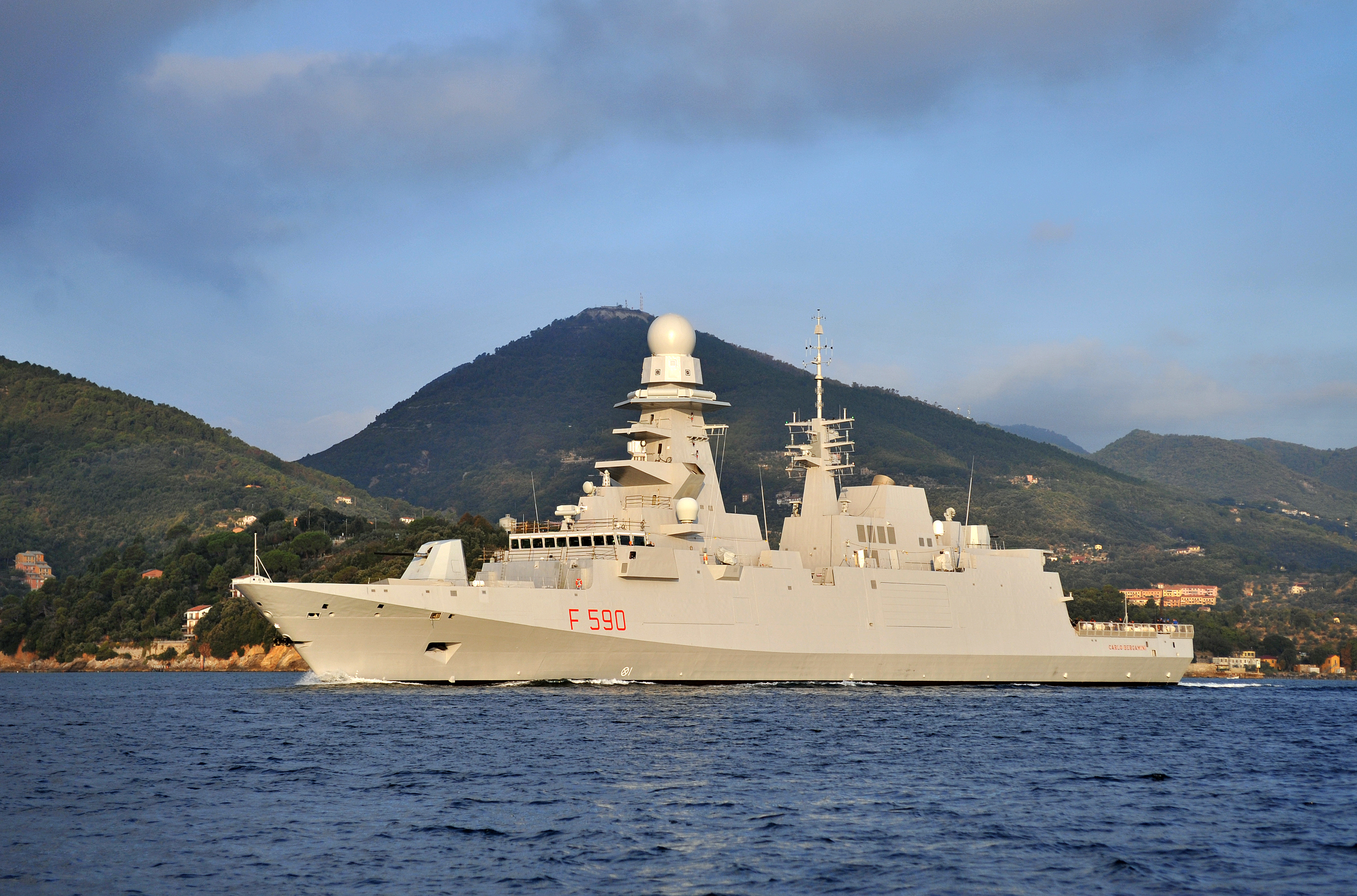
FREMM Multipurpose Frigate
Overview
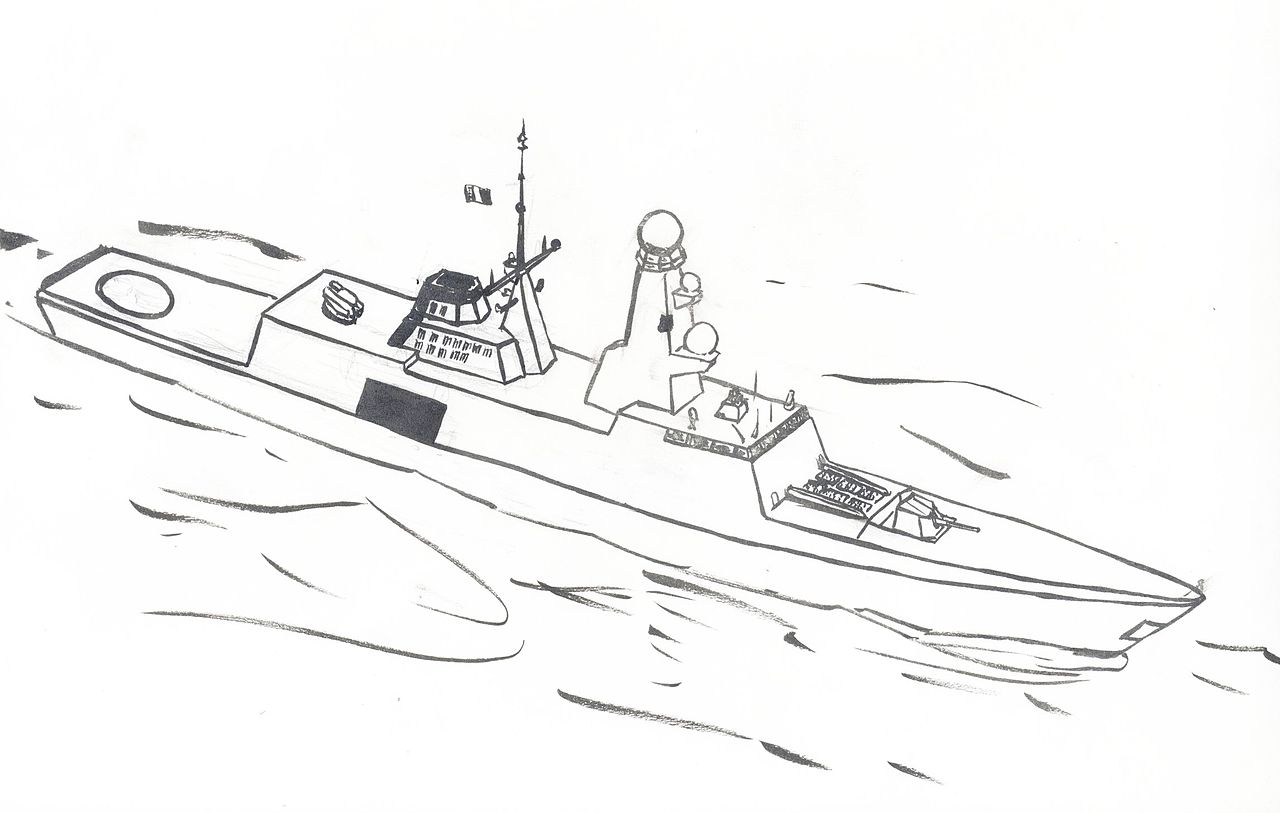
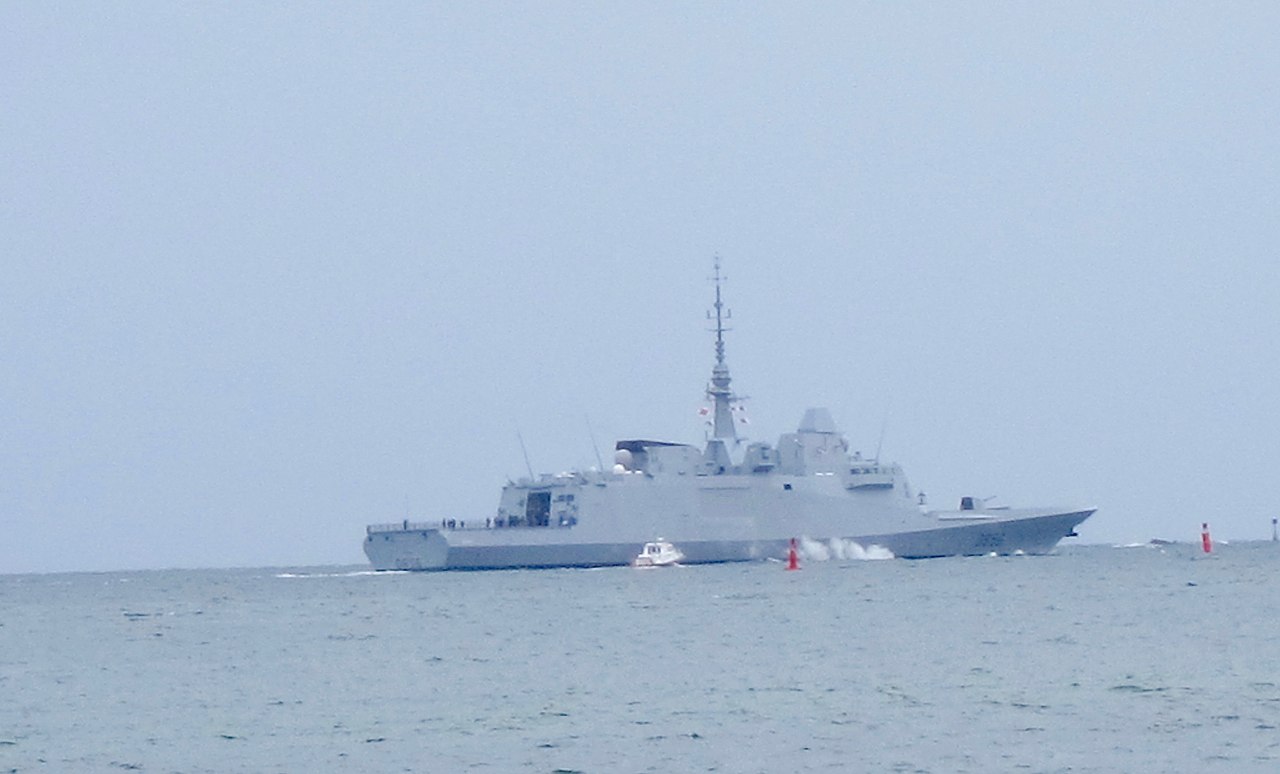
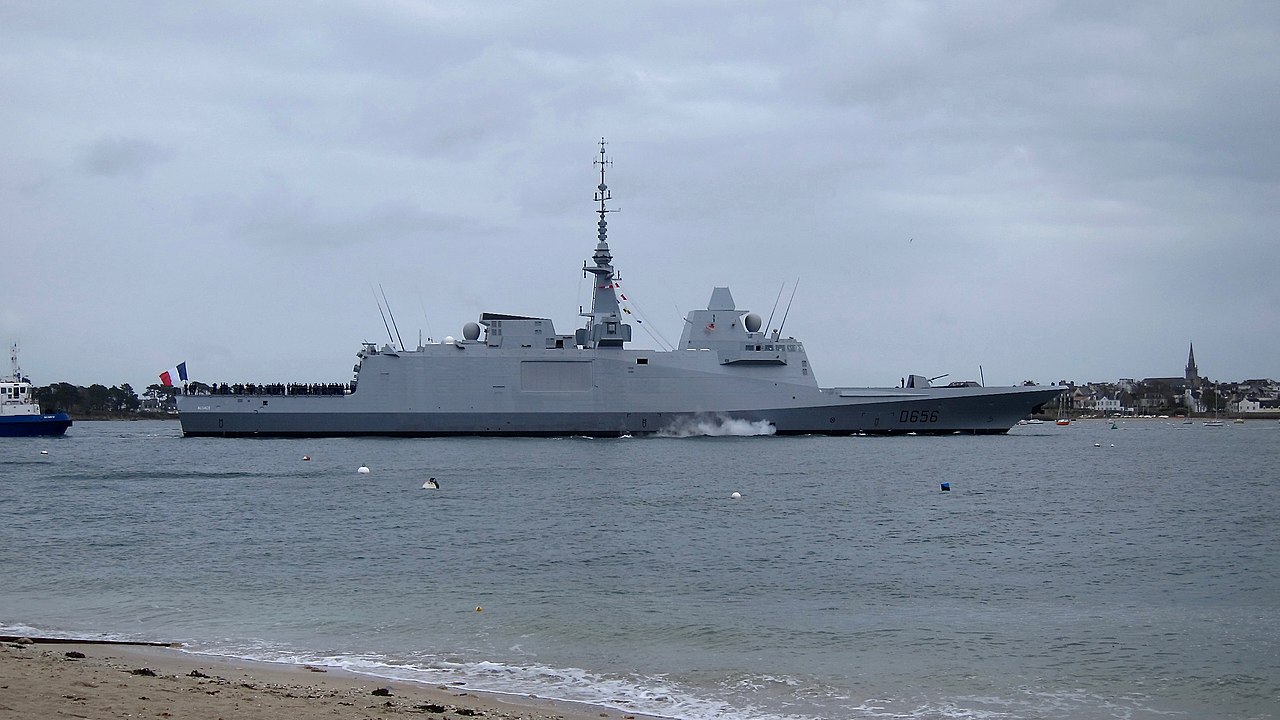
The FREMM (Frégate Européenne Multi-Mission) represents Europe's most capable surface combatant program of the 21st century, combining French and Italian naval expertise into a highly versatile frigate platform. Born from a joint Franco-Italian requirement to replace aging destroyer and frigate fleets, the FREMM program has delivered 20 vessels with sophisticated air defense, anti-submarine warfare, and land-attack capabilities that rival many destroyers in capability density. Strategically, FREMM fills the critical gap between corvette-sized patrol vessels and full-scale destroyers, providing European navies with blue-water capability at manageable cost. The design philosophy emphasizes modularity and mission flexibility, with variants optimized for ASW (Anti-Submarine Warfare) or GP (General Purpose) roles. The SCALP Naval cruise missile capability gives these frigates strategic strike potential previously reserved for much larger vessels. In today's threat environment, FREMM's advanced sonar suite and quiet propulsion make it particularly valuable for ASW operations against increasingly sophisticated submarine threats. The Aster 15/30 missile system provides credible area air defense, while the platform's stealth characteristics and electronic warfare suite enhance survivability. Most significantly, the US Navy's selection of the FREMM design as the basis for its FFG-62 Constellation-class validates the platform's technological maturity and operational effectiveness. Compared to peers like the German F125 Baden-Württemberg or British Type 26, FREMM offers superior weapons density and proven operational track record. However, it lacks the modular mission bay concepts of newer designs and has higher crew requirements than some competitors. The platform's real strength lies in its balanced capability set and the operational experience gained across multiple navies, making it a benchmark for modern frigate design.
Deployment Map
Home ports from known hull assignments. Operating areas reflect typical AORs — individual deployments will vary.
Timeline
Specifications
Armament
Active radar homing, anti-missile capable
French vessels only, GPS/terrain following guidance
Sea-skimming, active radar terminal guidance
Multi-role ammunition, 32 rounds/min
120 rounds/min, anti-missile capable
Advanced acoustic homing, 50+ knot speed
Doctrine & Employment
Role
Multi-domain escort and independent patrol operations within NATO's distributed maritime operations concept, providing area air defense and ASW screening for high-value units while maintaining sovereign presence in contested littorals.
Design Philosophy
Prioritized mission flexibility and growth potential over platform specialization, accepting higher unit costs to achieve destroyer-level capabilities in a more affordable frigate hull. The design sacrificed maximum speed (27-28 knots vs 30+ for contemporaries) and magazine depth compared to dedicated destroyers to optimize for multi-mission modularity and reduced crew requirements through extensive automation.
Employment
Typically employed as the primary escort for carrier strike groups or amphibious ready groups, providing layered air defense through PAAMS/Aster missiles and ASW prosecution via towed arrays and embarked helicopters. In lower-threat environments, operates independently or in small surface action groups for presence operations, maritime security, and power projection missions. Command relationships vary between integrated NATO task groups and national deployments, with robust C4ISR enabling seamless transition between roles.
Threat Context
Designed primarily for post-Cold War expeditionary operations against regional air threats and diesel submarines, with emphasis on littoral warfare and humanitarian missions. The threat environment has since evolved toward peer competition requiring enhanced electronic warfare, missile defense against hypersonic threats, and operations in contested electromagnetic environments that challenge the platform's original assumptions.
How to Compare
Compare primarily on sensor integration and mission module flexibility rather than raw VLS count or top speed—FREMM's value lies in its software-defined capabilities and upgrade potential. Assess magazine depth per displacement ton and helicopter facilities, as both navies prioritized sustained operations over burst capability.
Operational Patterns
Typical Deployment
Independent patrol missions, task group escort, NATO Maritime Groups, counter-piracy operations
Deployment Length
4 months
Typical Task Group
Operates independently or with 1-2 other frigates/corvettes, occasionally with carrier groups as ASW screen
Readiness
High availability rates reported by both French and Italian navies. Some early maintenance challenges with MT30 gas turbines resolved
Key Operating Areas
Peer Comparison Matrix
Type 26 emphasizes ASW with quieter design and mission bay flexibility, but FREMM offers proven track record and superior weapons density. Type 26 significantly more expensive per unit.
Video angle: European frigate philosophy comparison - proven capability vs future modularity
F125 optimized for constabulary missions with larger crew facilities and longer endurance, but lacks FREMM's combat systems integration and weapons diversity. Fundamentally different mission priorities.
Video angle: Combat frigate vs stabilization frigate - different approaches to 21st century naval missions
Gorshkov carries more VLS cells (32) and Kalibr cruise missiles, but FREMM has superior sensors and NATO interoperability. Gorshkov production limited by sanctions and industrial capacity.
Video angle: NATO vs Russian frigate capabilities - quality vs quantity in modern naval warfare
Type 054A produced in much larger numbers (40+) with 32 VLS cells, but FREMM has superior sensor integration and ASW capabilities. Chinese design prioritizes numbers over individual unit capability.
Video angle: Quality vs quantity - European precision engineering vs Chinese mass production
Shivalik incorporates some European systems but with reduced capability and stealth features. FREMM represents more mature systems integration and operational experience.
Video angle: Technology transfer vs indigenous development - different paths to frigate capability
Combat History
FREMM Aquitaine conducted pre-commissioning trials including combat system validation during Libya operations
First operational validation of FREMM combat systems under wartime conditions
French FREMM vessels Aquitaine and Provence conducted SCALP Naval strikes against ISIS targets in Syria
First combat use of SCALP Naval, validating long-range precision strike capability from sea
Multiple FREMM vessels conducted counter-piracy operations off Somalia, with Carlo Bergamini leading several convoy escorts
Demonstrated sustained blue-water operations and helicopter coordination in high-threat environment
Italian FREMM vessels conducted multiple migrant rescue operations in Mediterranean, including coordination of large-scale SAR missions
Validated command and control systems for complex multi-agency operations
Known Vulnerabilities
Air Defense Capacity
Limited to 16 VLS cells for air defense missiles, significantly less than comparable destroyers. Cannot sustain prolonged air defense operations without resupply
Context: Against massed drone/missile attacks like those seen in Ukraine conflict, magazine depth becomes critical limitation
Mitigation: Some consideration of additional point-defense systems, but fundamental VLS limitation remains
Electronic Warfare
Limited organic EW capability compared to larger platforms. Relies heavily on external support for contested electromagnetic environments
Context: Modern naval warfare increasingly dominated by EW, jamming, and cyber warfare capabilities
Mitigation: Mid-life updates include enhanced EW suite, but space and power constraints limit effectiveness
Crew-Intensive Operations
145-person crew requirement higher than newer automated designs, limiting operational tempo and increasing lifecycle costs
Context: European navies facing significant recruitment challenges and budget pressures
Mitigation: Some automation upgrades planned but fundamental manning philosophy difficult to change
Single Point Failures
EMPAR radar and SETIS combat system represent single points of failure. Limited redundancy compared to distributed systems on larger platforms
Context: High-intensity conflict scenarios where battle damage or system failures could be mission-critical
Mitigation: Robust design and maintenance protocols, but inherent limitation of frigate-sized platform
Variants
| Variant | Designation | Years | Count | Status | Key Changes |
|---|---|---|---|---|---|
| FREMM ASW | ASW variant | 2012-2019 | 10 | active | Enhanced sonar suite with SLASM towed array, ASW helicopter facilities, reduced VLS cells (16 vs potential 32) |
| FREMM GP | General Purpose variant | 2013-2021 | 10 | active | Land-attack focus, SCALP Naval capability (French units), enhanced command facilities |
| FFG-62 Constellation | FFG-62 to FFG-81 | 2026-2035 | 20 | building | US Navy modification with SPY-6(V)3 radar, Aegis Baseline 10, 32-cell Mk 41 VLS, US weapons fit |
Fleet Roster (20)
| Hull | Name | Variant | Commissioned | Home Port | Status |
|---|---|---|---|---|---|
| D650 | Aquitaine | ASW | 2012-11-23 | Brest | active |
| D651 | Provence | ASW | 2015-05-28 | Toulon | active |
| D652 | Languedoc | GP | 2016-11-18 | Brest | active |
| D653 | Auvergne | ASW | 2017-11-17 | Brest | active |
| D654 | Bretagne | GP | 2018-11-30 | Toulon | active |
| D655 | Normandie | ASW | 2019-11-08 | Cherbourg | active |
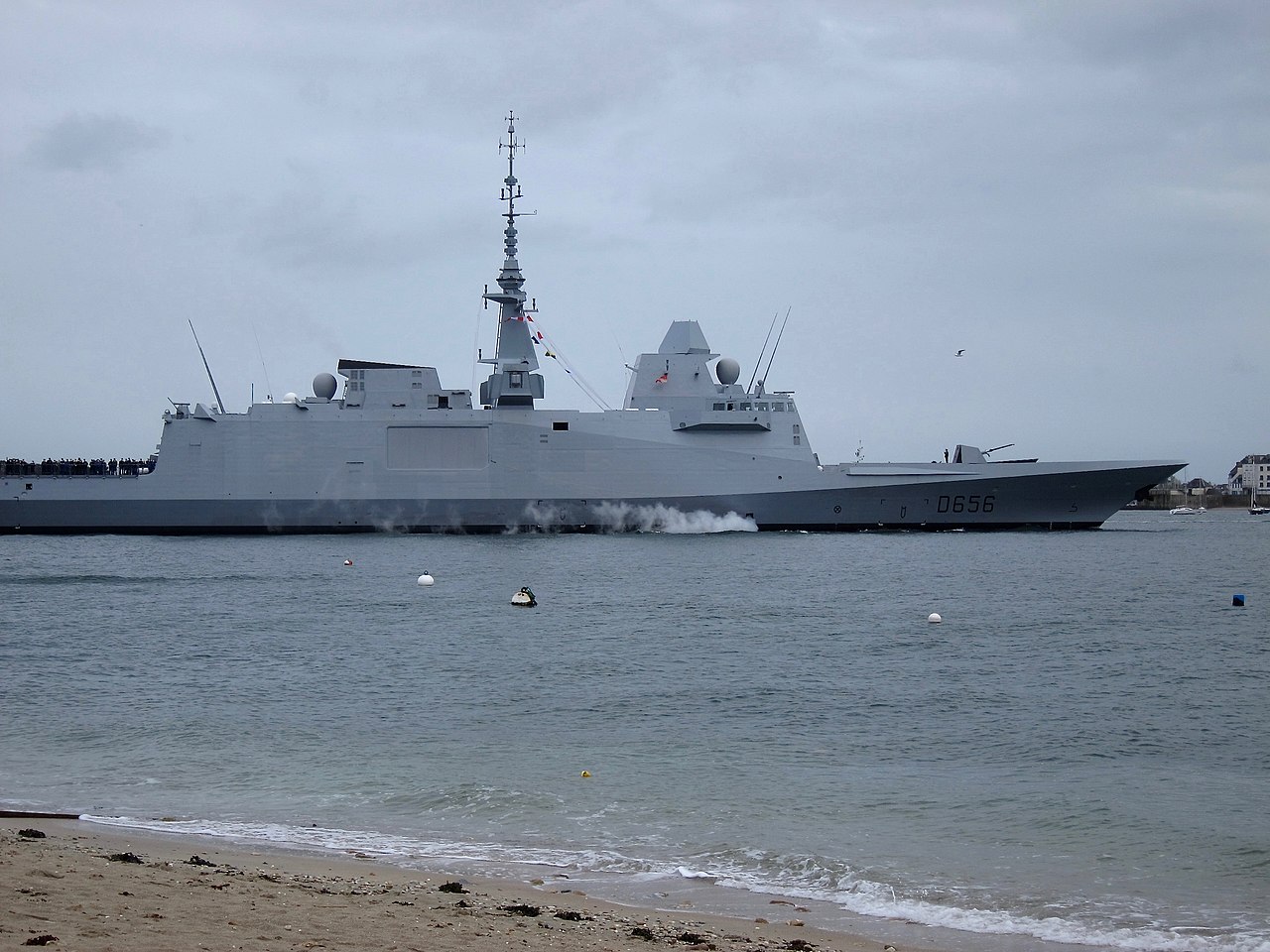
| D656 | Alsace | GP | 2021-04-23 | Toulon | active |
| D657 | Lorraine | ASW | 2022-09-16 | Brest | active |
| F590 | Carlo Bergamini | GP | 2013-05-11 | La Spezia | active |
| F591 | Virginio Fasan | ASW | 2013-12-21 | Taranto | active |
| F592 | Carlo Margottini | GP | 2014-02-03 | La Spezia | active |
| F593 | Carabiniere | ASW | 2015-03-20 | Taranto | active |
| F594 | Alpino | GP | 2016-09-29 | La Spezia | active |
| F595 | Luigi Rizzo | ASW | 2017-04-20 | Taranto | active |
| F596 | Federico Martinengo | GP | 2018-03-10 | La Spezia | active |
| F597 | Antonio Marceglia | ASW | 2018-11-09 | Taranto | active |
| F598 | Spartaco Schergat | GP | 2019-05-25 | La Spezia | active |
| F599 | Emilio Bianchi | ASW | 2020-04-28 | Taranto | active |
| 601 | Mohammed VI | GP | 2014-01-24 | Casablanca | active |
| 911 | Al Riyadh | GP | 2015-08-22 | Jeddah | active |
Modernization Programmes
FREMM Mid-Life Update
Upgrade to combat management systems, enhanced electronic warfare suite, integration of new-generation missiles including potential hypersonic weapons compatibility
Impact: Extends service life to 2040s and maintains capability edge against emerging threats
Enhanced ASW Suite
Installation of upgraded towed array sonar systems and improved acoustic processing capabilities on ASW variants
Impact: Significantly improves detection range against quiet diesel and AIP submarines
Constellation-class Development
US Navy adaptation featuring SPY-6(V)3 radar, Aegis Combat System, 32-cell Mk 41 VLS, and US weapon systems integration
Impact: Creates most capable FREMM variant with enhanced air defense and system interoperability
Images





Frequently Asked
How many FREMM Multipurpose Frigate are in service?
20 FREMM Multipurpose Frigate are currently in service with French Navy, Italian Navy, US Navy (Constellation-class).
When was the first FREMM Multipurpose Frigate commissioned?
The first FREMM Multipurpose Frigate entered service in 2012-11-23.
Who builds the FREMM Multipurpose Frigate?
The FREMM Multipurpose Frigate is built by Naval Group (France), Fincantieri (Italy).
What variants of the FREMM Multipurpose Frigate exist?
Known variants include: FREMM ASW, FREMM GP, FFG-62 Constellation.
How much does a FREMM Multipurpose Frigate cost?
Unit cost is approximately $700M per hull.
Curated Research
essential
Provides definitive technical analysis of FREMM's weapons systems integration and comparison with contemporary frigate designs.
Essential for understanding US Navy's selection of FREMM-derived design for Constellation-class and comparative analysis with international frigate programs.
recommended
Provides strategic context for European naval cooperation and comparative analysis of contemporary frigate designs.
Leading analyst for European naval programs with extensive FREMM coverage and technical insights from industry sources.
Strategic analysis of frigate requirements that informed US Navy's FFG(X) competition where FREMM design was selected.
reference
Comprehensive technical specifications and operational history database for all FREMM variants across French and Italian service.
Doctrinal context for FREMM's role within NATO's distributed maritime operations and collective defense missions.
Watch FREMM Multipurpose Frigate in Action
Iron Command produces in-depth comparison and analysis videos for military equipment.
Watch on YouTubeSources