
Lockheed Martin F-22 Raptor
Overview
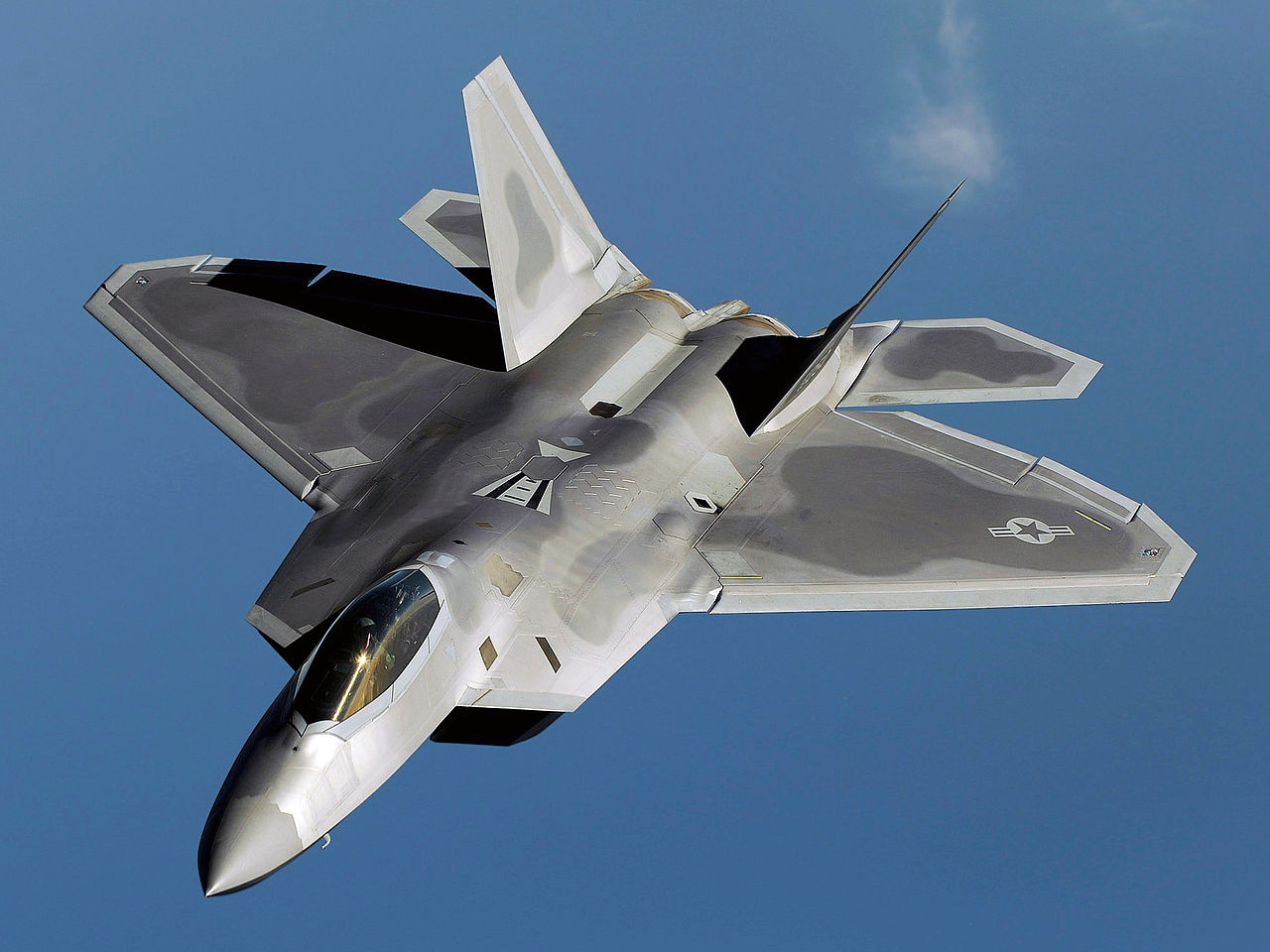
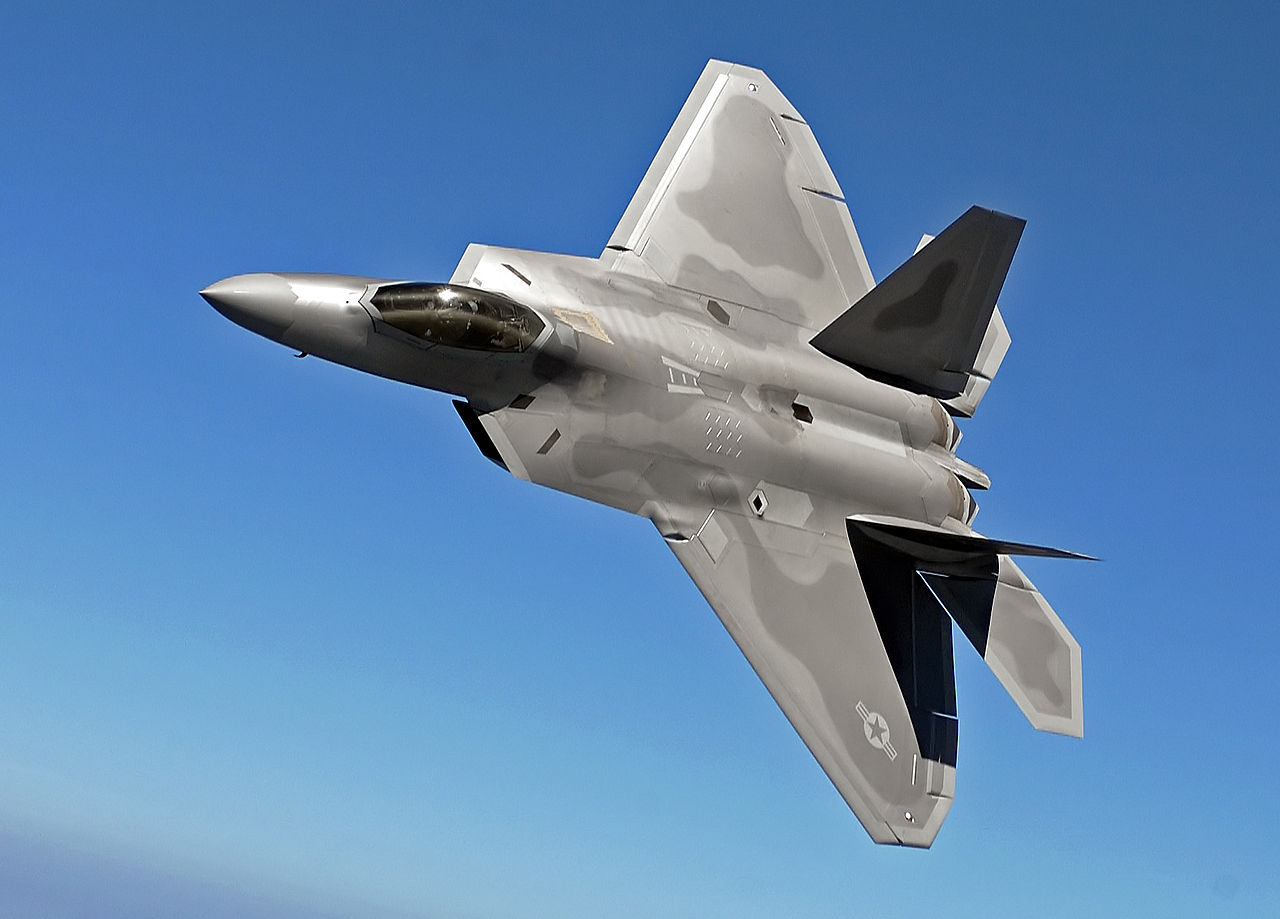
The F-22 Raptor represents the apex of fifth-generation air superiority fighters, combining stealth, supercruise, supermaneuverability, and integrated avionics into what remains the world's most advanced operational fighter aircraft. Developed during the Cold War's final phase to counter projected Soviet threats, the Raptor's design philosophy prioritized absolute air dominance through technological superiority rather than numerical advantage. Its unique combination of sustained supersonic flight without afterburners, all-aspect stealth, and thrust-vectoring engines creates capabilities unmatched by any operational fighter. Strategically, the F-22 serves as the tip of the spear for U.S. air operations, designed to establish air superiority by eliminating enemy fighters and air defenses before less-capable assets enter contested airspace. With only 195 aircraft built due to cost concerns and shifting strategic priorities, each Raptor is a irreplaceable national asset. The platform's export ban ensures the U.S. maintains an exclusive technological edge, though this limitation has complicated alliance relationships and industrial base sustainability. In the current threat environment, the F-22's relevance has been validated by the emergence of peer competitors like China's J-20 and Russia's Su-57, though its small fleet size raises questions about sustained operations against a peer adversary. While the Raptor remains technically superior to all deployed opposition fighters, its availability rates and modernization challenges reflect the complexity of maintaining such advanced systems. The aircraft's performance in Syria and other operations has demonstrated its tactical capabilities, but its true test would come against integrated air defenses and fifth-generation opponents. Compared to international peers, the F-22 maintains advantages in stealth signature, supercruise performance, and sensor fusion, though newer platforms like the F-35 have surpassed it in avionics architecture and multirole capability. Its position as the world's premier air superiority fighter remains unchallenged, but questions persist about whether 195 aircraft can fulfill America's global commitments against increasingly capable adversaries.
Deployment Map
Home ports from known hull assignments. Operating areas reflect typical AORs — individual deployments will vary.
Timeline
Specifications
Armament
Primary BVR weapon, carried in main weapons bay
Side weapons bays with thrust-vectoring launch rails
Internal mount, right wing root
1000 lb GPS-guided munition, replaces 4 AMRAAMs
Operational Patterns
Typical Deployment
Rotational deployments to forward bases for deterrence, integration with allied exercises, homeland defense alert
Deployment Length
4 months
Typical Task Group
Often operates independently or in small packages, coordinates with F-35s and legacy fighters
Readiness
Mission capable rates around 50-70%, well below USAF targets due to maintenance complexity and parts shortages
Key Operating Areas
Peer Comparison Matrix
J-20 optimized for long-range interception with larger weapons bay, less maneuverable but potentially better stealth from certain aspects. F-22 superior in dogfighting and supercruise performance.
Video angle: Stealth fighter showdown - comparing design philosophies and operational concepts between air superiority and interceptor roles
Su-57 emphasizes maneuverability over stealth, more multirole capable but less stealthy. F-22 has mature systems integration while Su-57 faces development challenges and limited production.
Video angle: Fifth-generation reality check - examining which stealth fighter concepts actually work in practice
F-35 prioritizes multirole capability and allied integration over pure air superiority. Better sensors and avionics but inferior kinematic performance and stealth optimization.
Video angle: High-low mix strategy - how F-22 and F-35 complement each other in U.S. air power doctrine
4.5 generation multirole fighter with excellent sensors and weapons integration but no stealth capability. More affordable and exportable than F-22.
Video angle: Stealth vs. versatility - examining whether fifth-generation capabilities justify the cost premium
Air superiority focused like F-22 but lacks stealth, relies on superior kinematic performance and advanced radar. More affordable but vulnerable to modern SAMs.
Video angle: The road not taken - comparing stealth vs. traditional air superiority fighter approaches
Combat History
First combat deployment over Syria, F-22s from 1st Fighter Wing conducted airstrikes against ISIS targets using GPS-guided bombs
First operational use demonstrated air-to-ground capability and validated stealth performance in contested airspace
F-22s provided air cover during Battle of Khasham, deterring Syrian and Russian aircraft during clash with Wagner mercenaries
Demonstrated deterrent effect against near-peer air forces in complex multi-actor environment
F-22s deployed to Al Udeid Air Base following Iranian shootdown of U.S. drone, conducted deterrence patrols
Showed rapid deployment capability and role in strategic deterrence against regional powers
Known Vulnerabilities
Low Observable Coatings Maintenance
Radar-absorbent materials require climate-controlled hangars and extensive maintenance after each flight, severely limiting sortie generation rates
Context: Against peer adversaries requiring sustained operations, maintenance burden could limit operational availability
Mitigation: USAF developing more durable coatings and streamlined maintenance procedures
Limited Datalink Capability
Lacks native Link 16 capability due to emissions control requirements, creating information sharing challenges with other platforms
Context: Modern air combat increasingly relies on distributed sensors and collaborative targeting
Mitigation: Talon HATE pod provides interim solution, software updates adding limited datalink capability
Small Fleet Size and Production Line Closure
Only 195 aircraft built with no option for additional production, limiting surge capacity and creating sustainment challenges
Context: Insufficient numbers for simultaneous major theater wars, high operational tempo stresses limited fleet
Mitigation: Next Generation Air Dominance program intended as follow-on, but timeline uncertain
Oxygen Generation System Issues
Chronic problems with OBOGS causing pilot hypoxia symptoms, resulting in flight restrictions and pilot safety concerns
Context: Pilot safety issues affect training and readiness, similar to F-35 ejection seat problems
Mitigation: Ongoing modifications to oxygen system, backup oxygen bottles installed
Variants
| Variant | Designation | Years | Count | Status | Key Changes |
|---|---|---|---|---|---|
| F-22A Block 20 | 04-4068 to 05-4109 | 2005-2009 | 149 | active | Initial operational configuration with basic air-to-air capability, limited synthetic aperture radar modes |
| F-22A Block 30/35 | 06-4110 to 12-5200 | 2009-2012 | 46 | active | Enhanced synthetic aperture radar, improved electronic warfare suite, air-to-ground capability with GPS-guided weapons |
Fleet Roster (2)
| Hull | Name | Variant | Commissioned | Home Port | Status |
|---|---|---|---|---|---|
| 91-4001 | YF-22 PAV-1 | Prototype | 1990-09-29 | Museum Display | retired |
| 04-4068 | First Production F-22A | Block 20 | 2005-12-15 | Various USAF Bases | active |
Modernization Programmes
Raptor Agile Capability Release (ACR)
Software-driven capability updates including Link 16 datalink improvements, new air-to-air missiles integration, and enhanced electronic warfare suite
Impact: Extends relevance against advanced threats, improves interoperability with allies
F-22 Service Life Extension Program (SLEP)
Structural modifications and component replacements to extend airframe life to 12,000+ hours, cockpit modernization
Impact: Keeps F-22 viable until Next Generation Air Dominance platform IOC around 2030
Talon HATE Pod Integration
External pod enabling real-time datalink with F-35 and other assets, sacrificing some stealth for connectivity
Impact: Addresses datalink limitations, enables F-22 to function as quarterback for distributed operations
Images





Frequently Asked
How many Lockheed Martin F-22 Raptor are in service?
1 Lockheed Martin F-22 Raptor are currently in service with United States Air Force.
When was the first Lockheed Martin F-22 Raptor commissioned?
The first Lockheed Martin F-22 Raptor entered service in 2005-12-15.
Who builds the Lockheed Martin F-22 Raptor?
The Lockheed Martin F-22 Raptor is built by Lockheed Martin.
What variants of the Lockheed Martin F-22 Raptor exist?
Known variants include: F-22A Block 20, F-22A Block 30/35.
How much does a Lockheed Martin F-22 Raptor cost?
Unit cost is approximately $377M per hull.
Watch Lockheed Martin F-22 Raptor in Action
Iron Command produces in-depth comparison and analysis videos for military equipment.
Watch on YouTube