
General Dynamics F-16 Fighting Falcon
Overview
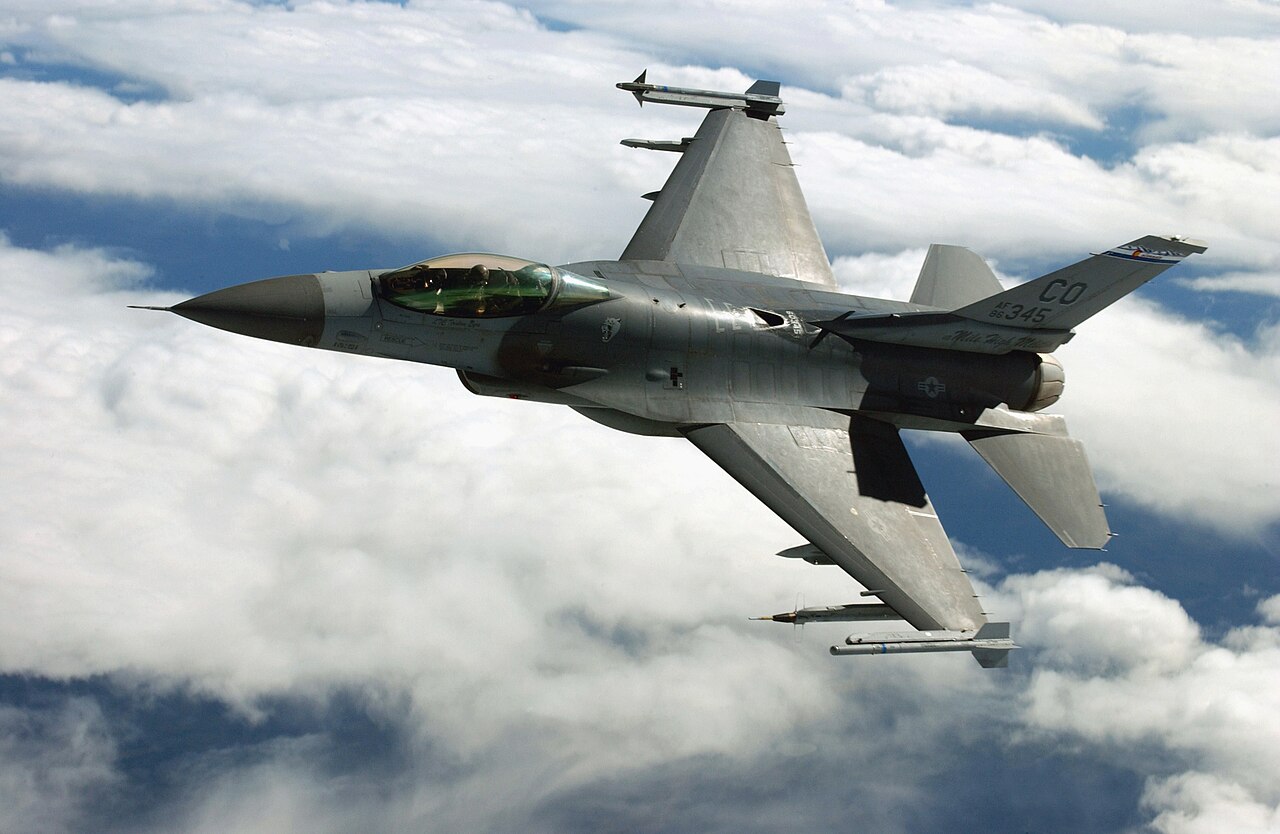
The F-16 Fighting Falcon represents one of the most successful fighter aircraft programs in aviation history, with over 4,600 aircraft delivered to 25+ nations since 1978. Originally conceived as a lightweight, affordable air superiority fighter under the Lightweight Fighter program, the F-16 has evolved into a true multirole platform capable of precision strike, SEAD/DEAD, and air-to-air missions. Its fly-by-wire flight controls, side-stick controller, and bubble canopy were revolutionary for their time and remain hallmarks of modern fighter design. Strategically, the F-16 serves as the backbone of NATO air power and forms the numerical foundation of allied air forces worldwide. Its relatively low acquisition and operating costs, combined with proven reliability and upgrade potential, made it the natural choice for countries seeking to modernize their air forces without the expense of fifth-generation platforms. The aircraft's open architecture has enabled continuous modernization, with current Block 70/72 variants featuring AESA radar, advanced EW systems, and Link 16 connectivity. In the current threat environment, the F-16 remains highly relevant despite being a fourth-generation design. Modern variants can carry standoff weapons like the AGM-158 JASSM and integrate with fifth-generation platforms as loyal wingmen. However, the proliferation of advanced SAM systems like the S-400 and emergence of fifth-generation adversary fighters presents increasing challenges for F-16 operations in contested airspace. Compared to peers like the F/A-18 Hornet, the F-16 offers superior sustained turn performance and lower operating costs, though it sacrifices payload capacity and lacks carrier capability. Against modern threats like the J-20 or Su-57, the F-16's lack of stealth and smaller radar aperture represent significant disadvantages, driving current operators toward F-35 procurement while extending F-16 service life through major upgrades.
Deployment Map
Home ports from known hull assignments. Operating areas reflect typical AORs — individual deployments will vary.
Timeline
Specifications
Armament
Internal mounting
Primary BVR weapon
Latest AIM-9X Block II capable
Wild Weasel mission
Block 50+ integration
Primary precision weapon
Operational Patterns
Typical Deployment
Forward deployment in 12-24 aircraft squadrons, often rotating through allied bases for presence missions
Deployment Length
6 months
Typical Task Group
Operates in packages with tankers, AWACS, and EW support. Often mixed with F-35s in high-threat environments
Readiness
Aging fleet requires increased maintenance, parts availability issues for older blocks. Mission capable rates average 70-75%
Key Operating Areas
Peer Comparison Matrix
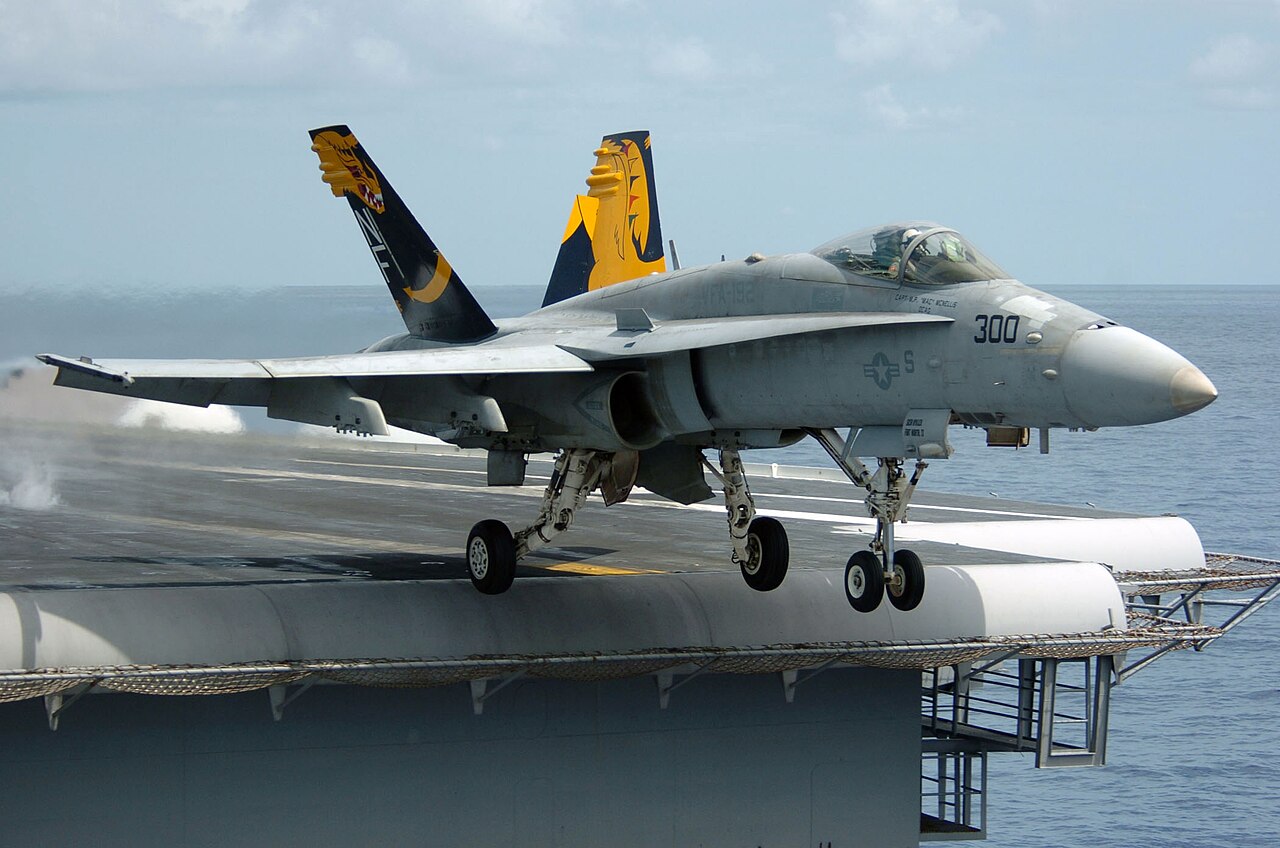
Super Hornet offers greater payload, range, and twin-engine reliability, but F-16 has superior sustained turn performance and lower operating costs. Hornet provides carrier capability.
Video angle: Backbone vs Workhorse: Why the Navy chose twin engines while the Air Force stayed single
Rafale features better multirole integration, longer range, and more advanced EW systems, but is significantly more expensive. Both emphasize agility and multirole capability.
Video angle: European sophistication vs American pragmatism in fighter design philosophy
Typhoon optimized for air superiority with superior climb rate and altitude performance, while F-16 emphasizes multirole capability and cost-effectiveness. Typhoon lacks mature air-to-ground systems.
Video angle: Specialized air superiority vs jack-of-all-trades design approaches
Gripen offers similar performance with lower operating costs and better short-field capability, but smaller production run means higher unit costs and limited upgrade potential.
Video angle: Small nation innovation vs superpower mass production in modern fighter development
J-10 shares similar design philosophy and performance envelope but uses delta-canard configuration. Latest variants feature AESA radar but lack combat experience and international support network.
Video angle: How China's J-10 copied and evolved the F-16 formula for domestic needs
Combat History
Israeli F-16As conducted precision strike against Iraqi Osirak nuclear reactor, demonstrating long-range strike capability and precision attack potential
First major combat use, proved F-16's multirole capability and strategic strike potential
USAF F-16s flew 13,450 sorties, primarily air-to-ground missions. Shot down Iraqi aircraft while conducting extensive SEAD and CAS operations
Validated multirole concept in high-intensity conflict, proved effectiveness against integrated air defenses
NATO F-16s conducted 4,800+ sorties over Kosovo. Notable shoot-down of F-16CG 88-0550 by SA-3 on March 27, pilot recovered
Highlighted vulnerability to modern SAMs while demonstrating sustained operations capability
USAF F-16CJs conducted initial SEAD strikes against Libyan air defenses, suppressing SA-5 and SA-2 sites
Demonstrated continued relevance of dedicated Wild Weasel variants against modern threats
F-16s conducted first strikes against ISIS in Syria, using precision munitions in urban environments with minimal collateral damage
Showcased precision strike capability and effectiveness of modern targeting pods
Known Vulnerabilities
Radar Cross Section
Large frontal RCS of approximately 5 square meters makes F-16 highly visible to modern radars, especially when carrying external stores.
Context: Advanced SAM systems like S-400 can detect and engage F-16s at maximum missile range, limiting operational effectiveness
Mitigation: Standoff weapons employment, EW systems, limited stealth treatments in Have Glass program
Single Engine Vulnerability
Single F100/F110 engine creates vulnerability to battle damage, bird strikes, or mechanical failure with no backup propulsion.
Context: Higher loss rates compared to twin-engine fighters in combat, particularly concerning over water or hostile territory
Mitigation: Improved engine reliability, ejection seat improvements, but inherent vulnerability remains
Limited Payload-Range
Small internal fuel capacity and single-engine efficiency limit combat radius with meaningful payload to approximately 340nm.
Context: Pacific theater distances and standoff weapon requirements often exceed F-16 unrefueled range
Mitigation: Conformal fuel tanks, aerial refueling, forward basing strategies
Electronic Warfare Susceptibility
Older variants lack advanced EW systems and digital RWR, making them vulnerable to modern jamming and deception techniques.
Context: Russian and Chinese EW capabilities can significantly degrade F-16 sensor effectiveness and situational awareness
Mitigation: F-16V upgrades include improved EW suite, but still behind dedicated EW platforms
Variants
| Variant | Designation | Years | Count | Status | Key Changes |
|---|---|---|---|---|---|
| Block 10/15 | F-16A/B | 1978-1985 | 674 | mostly retired | Initial production, F100-PW-200 engine, basic avionics |
| Block 25/30/32 | F-16C/D | 1984-1989 | 868 | active with upgrades | Enlarged intake, AGM-65 capability, improved radar |
| Block 40/42 | F-16CG/DG | 1988-1995 | 615 | active | Night attack capability, LANTIRN pods, F110 engine option |
| Block 50/52 | F-16CJ/DJ | 1991-2001 | 906 | active | Wild Weasel SEAD capability, improved EW systems, CFTs |
| Block 60 | F-16E/F Desert Falcon | 2003-2009 | 80 | active | AESA radar, CFTs standard, advanced EW suite - UAE only |
| Block 70/72 | F-16V Viper | 2015-present | 128 | building | APG-83 AESA radar, advanced mission computer, modern cockpit |
Fleet Roster (1)
| Hull | Name | Variant | Commissioned | Home Port | Status |
|---|---|---|---|---|---|
| 78-0001 | First F-16A | Block 1 | 1978-08-17 | Edwards AFB | retired |
Modernization Programmes
F-16V Upgrade Program
Retrofit existing F-16C/D aircraft with APG-83 AESA radar, modern mission computer, advanced cockpit displays, and Link 16. Over 1,600 aircraft planned for upgrade across multiple nations.
Impact: Extends F-16 relevance into 2040s, provides 5th generation sensor capability and network integration
Service Life Extension Program (SLEP)
Structural modifications to extend airframe life from 8,000 to 12,000 flight hours. Includes wing replacement, fuselage strengthening, and landing gear upgrades.
Impact: Allows F-16 operations into 2040s while F-35 production ramps up
Have Glass V
Radar signature reduction through specialized coatings and structural modifications. Classified program with limited public details.
Impact: Modest RCS reduction improving survivability against legacy radars
Automatic Ground Collision Avoidance System (Auto GCAS)
Automatic system prevents controlled flight into terrain by taking control from pilot when ground collision is imminent.
Impact: Significant safety improvement, has saved multiple aircraft and pilots
Images






Frequently Asked
How many General Dynamics F-16 Fighting Falcon are in service?
4604 General Dynamics F-16 Fighting Falcon are currently in service with United States Air Force.
When was the first General Dynamics F-16 Fighting Falcon commissioned?
The first General Dynamics F-16 Fighting Falcon entered service in 1978-08-17.
Who builds the General Dynamics F-16 Fighting Falcon?
The General Dynamics F-16 Fighting Falcon is built by General Dynamics (now Lockheed Martin).
What variants of the General Dynamics F-16 Fighting Falcon exist?
Known variants include: Block 10/15, Block 25/30/32, Block 40/42, Block 50/52, Block 60, Block 70/72.
How much does a General Dynamics F-16 Fighting Falcon cost?
Unit cost is approximately $34M per hull.
Watch General Dynamics F-16 Fighting Falcon in Action
Iron Command produces in-depth comparison and analysis videos for military equipment.
Watch on YouTubeSources