
Eurofighter Typhoon
Overview
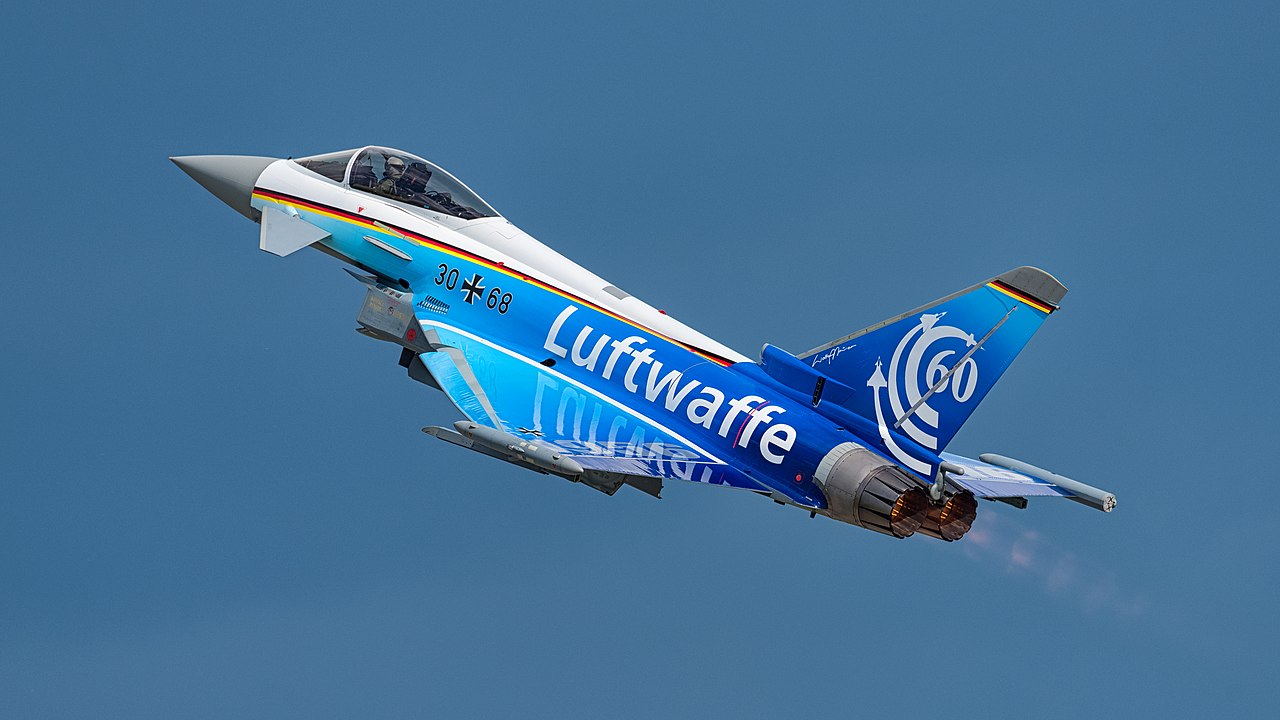
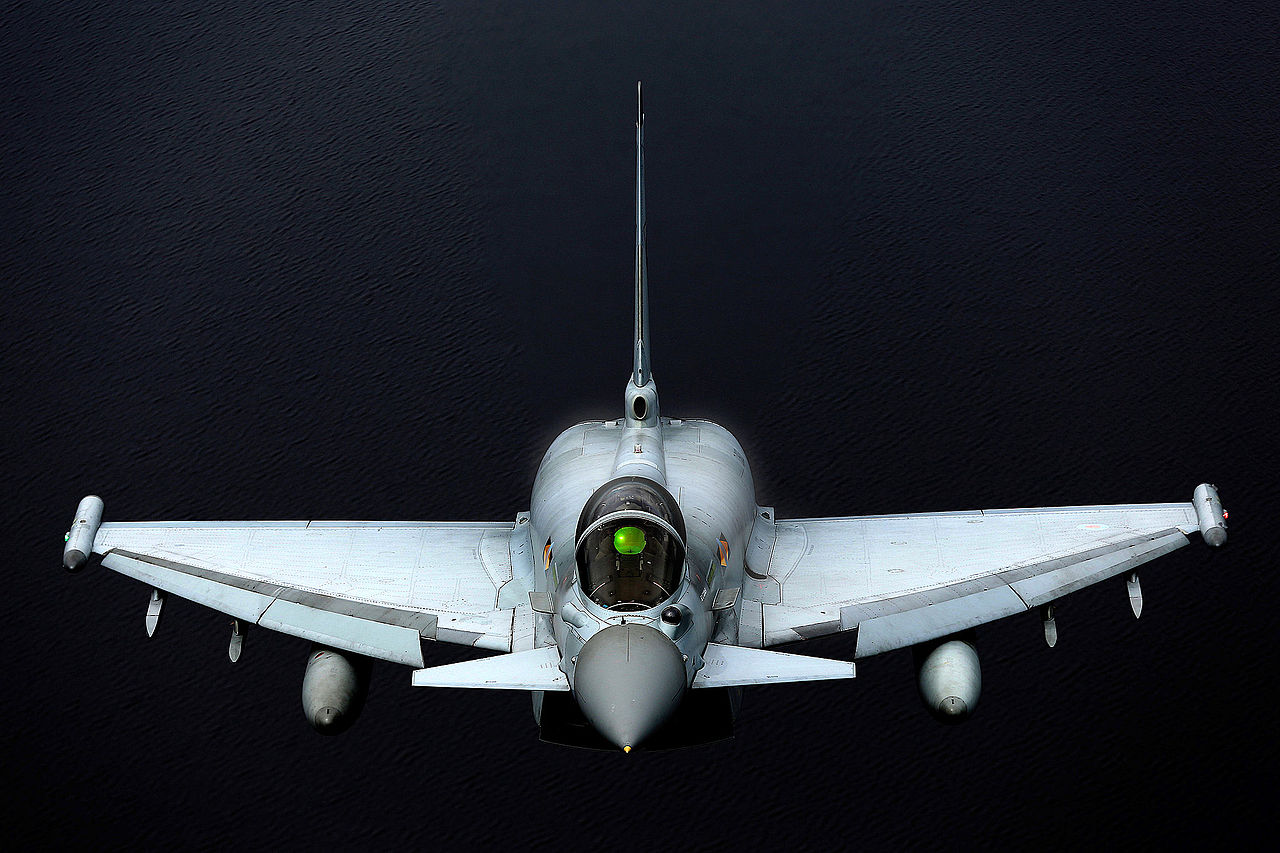
The Eurofighter Typhoon is a twin-engine, canard-delta wing, multirole fighter aircraft designed and built by a consortium of European aerospace companies. Born from the late Cold War requirement for air superiority over Central Europe, the Typhoon represents Europe's premier air combat capability and stands as one of the world's most advanced 4.5-generation fighters. Its design philosophy emphasizes supercruise capability, exceptional maneuverability, and advanced sensor fusion to dominate both air-to-air and precision ground attack missions. Strategically, the Typhoon serves as the backbone of European air defense and power projection, operating from bases across the continent to the Middle East. The aircraft's sophisticated CAPTOR-M AESA radar, Meteor beyond-visual-range missiles, and advanced electronic warfare suite make it a formidable opponent in contested airspace. Its ability to supercruise at Mach 1.5+ without afterburners gives it a significant tactical advantage in intercepting threats or conducting long-range missions with minimal fuel signature. In the current threat environment, the Typhoon fills a critical gap as European nations seek strategic autonomy from U.S. systems while facing renewed peer competition. Against Russian Su-35s over the Baltics or potential Chinese J-20s in contested regions, the Typhoon's combination of kinematic performance, sensor capability, and weapons integration provides European NATO allies with genuine air superiority capability. However, its high operational costs and complex multinational logistics chain present ongoing challenges. Compared to its primary competitors, the Typhoon trades some multirole versatility of the F-35 for superior air-to-air performance, while offering comparable or better kinematic performance than the Rafale. Against Russian Flanker variants, the Typhoon's superior radar, electronic warfare capabilities, and weapons range provide decisive advantages, though logistics and availability rates remain areas where American competitors excel.
Deployment Map
Home ports from known hull assignments. Operating areas reflect typical AORs — individual deployments will vary.
Timeline
Specifications
Armament
Ramjet-powered, no-escape zone > 60km
High off-boresight capability, thrust vectoring
Stealth cruise missile for deep strike
Millimetric wave radar guidance
150 rounds, 1700 rpm rate of fire
Dual-mode guidance, 227kg warhead
Operational Patterns
Typical Deployment
Quick Reaction Alert (QRA) intercept, NATO air policing rotations, expeditionary strike operations
Deployment Length
4 months
Typical Task Group
4-6 aircraft deployments, integrated with tanker and AEW&C support
Readiness
Availability rates vary by operator (UK ~60%, Germany ~40-50%), complex maintenance requirements limit surge capacity
Key Operating Areas
Peer Comparison Matrix
Typhoon superior in air-to-air kinematic performance and BVR capability, Rafale better multirole integration and carrier ops. Both AESA equipped.
Video angle: European air superiority showdown - which design philosophy works better?
F-35 has stealth and sensor fusion advantages, Typhoon superior in kinematic performance and air-to-air engagement. Cost per flight hour heavily favors Typhoon.
Video angle: 4.5 vs 5th gen: When does kinematic performance beat stealth?
Su-35 has thrust vectoring and longer range, Typhoon has superior radar, electronic warfare, and weapons. Typhoon significantly more reliable and maintainable.
Video angle: NATO vs Russian air superiority over Eastern Europe
Typhoon significantly more expensive but superior in air-to-air performance. F-16 better availability rates and lower operating costs.
Video angle: High-end capability vs practical affordability in NATO air forces
Gripen much lower cost and better availability, Typhoon superior performance and payload. Both designed for European operating environment.
Video angle: Nordic efficiency vs multinational ambition in European fighter design
Combat History
RAF and Italian Typhoons conducted air-to-ground missions over Libya, marking first combat use. Primarily Storm Shadow cruise missile strikes and reconnaissance missions.
Demonstrated multirole capability and integration with coalition forces, validating precision strike capability
RAF Typhoons conducted hundreds of strikes against ISIS targets in Iraq and Syria from Cyprus, using Paveway IV bombs and Brimstone missiles.
Proved sustained combat effectiveness and precision in complex COIN environment
RAF Typhoons fired Storm Shadow cruise missiles at Syrian chemical weapons facilities following Douma chemical attack.
Demonstrated precision deep strike capability and integration with U.S. and French forces
Multiple NATO Typhoon deployments intercepted Russian aircraft over Baltic Sea, including armed Bears and Flankers approaching NATO airspace.
Regular demonstration of air superiority capability against peer threats in contested environment
Enhanced NATO air policing missions and training with Ukrainian pilots, though no direct combat involvement.
Maintained deterrent presence while supporting allied training and readiness
Known Vulnerabilities
Logistics Complexity
Four-nation consortium creates complex spare parts chain, with availability rates often below 60% for some operators.
Context: Impacts sortie generation rates during high-intensity operations compared to U.S. counterparts
Mitigation: Consolidated logistics hubs and increased spare parts pooling between nations
Stealth Limitations
Large radar cross section compared to 5th generation fighters, estimated 0.5-1.0 m² frontal RCS.
Context: Vulnerable to detection by advanced integrated air defense systems at longer ranges than F-22/F-35
Mitigation: Enhanced electronic warfare capabilities and standoff weapons integration
Sensor Fusion
Less advanced sensor fusion and data links compared to F-35's distributed aperture system and advanced networking.
Context: Reduced situational awareness in heavily contested electromagnetic environments
Mitigation: PIRATE IRST improvements and enhanced data link integration in LTE program
Ground Attack Payload
Limited internal fuel capacity restricts payload-range performance compared to larger aircraft like F-15E.
Context: Requires more tanker support for long-range precision strike missions
Mitigation: Conformal fuel tanks under development, enhanced external tank configurations
Variants
| Variant | Designation | Years | Count | Status | Key Changes |
|---|---|---|---|---|---|
| Tranche 1 | DA1-DA7, IPA1-IPA7 | 2003-2008 | 148 | active | Initial operational capability, CAPTOR-M mechanically scanned radar, basic air-to-air configuration |
| Tranche 2 | Various by nation | 2008-2013 | 236 | active | Enhanced air-to-ground capability, Storm Shadow integration, improved defensive aids suite |
| Tranche 3A | Various by nation | 2013-2018 | 126 | active | CAPTOR-E AESA radar (select aircraft), Meteor missile integration, enhanced DASS |
| Tranche 4/5 | Future variants | 2025-2030 | 38 | building | CAPTOR-E standard, enhanced electronic warfare, SPEAR Cap 3 integration |
Fleet Roster (8)
| Hull | Name | Variant | Commissioned | Home Port | Status |
|---|---|---|---|---|---|
| Various | RAF Typhoon Fleet | Mixed Tranches | 2007 | RAF Coningsby, RAF Lossiemouth | active |
| Various | German Air Force Typhoons | Mixed Tranches | 2004 | Neuburg, Nörvenich, Laage | active |
| Various | Italian Air Force Typhoons | Mixed Tranches | 2004 | Grosseto, Gioia del Colle | active |
| Various | Spanish Air Force Typhoons | Mixed Tranches | 2004 | Morón, Albacete | active |
| Various | Austrian Air Force Typhoons | Tranche 1 | 2007 | Zeltweg | active |
| Various | Saudi Air Force Typhoons | Mixed Tranches | 2009 | Dhahran, Taif | active |
| Various | Qatari Air Force Typhoons | Tranche 3 | 2022 | Al Udeid | active |
| Various | Kuwaiti Air Force Typhoons | Tranche 3 | 2020 | Ali Al Salem | active |
Modernization Programmes
Project Centurion
Integration of Meteor BVRAAM and Storm Shadow Block IV for RAF Typhoons, enhanced DASS capabilities.
Impact: Dramatically increased beyond visual range engagement capability and survivability
CAPTOR-E AESA Retrofit
Replacement of mechanically scanned CAPTOR-M with CAPTOR-E AESA radar across fleet.
Impact: Enhanced detection range, multi-target engagement, and electronic attack resistance
Long Term Evolution (LTE)
Major avionics upgrade including new mission computer, enhanced EW suite, SPEAR Cap 3 integration, and improved human-machine interface.
Impact: Maintains relevance against 5th generation threats and improves multirole capability
ECRS Mk2 Radar
Next-generation AESA radar with integrated electronic attack capability and enhanced air-to-surface modes.
Impact: Provides electronic attack capability and improved ground target engagement
Images





Frequently Asked
How many Eurofighter Typhoon are in service?
8 Eurofighter Typhoon are currently in service with Multiple (RAF, Luftwaffe, Aeronautica Militare, EdA).
When was the first Eurofighter Typhoon commissioned?
The first Eurofighter Typhoon entered service in 2003-08-04.
Who builds the Eurofighter Typhoon?
The Eurofighter Typhoon is built by Eurofighter Jagdflugzeug GmbH (BAE Systems, Airbus Defence, Leonardo).
What variants of the Eurofighter Typhoon exist?
Known variants include: Tranche 1, Tranche 2, Tranche 3A, Tranche 4/5.
How much does a Eurofighter Typhoon cost?
Unit cost is approximately $124M per hull.
Watch Eurofighter Typhoon in Action
Iron Command produces in-depth comparison and analysis videos for military equipment.
Watch on YouTube