
Dosan Ahn Changho-class submarine
Compare with
Overview
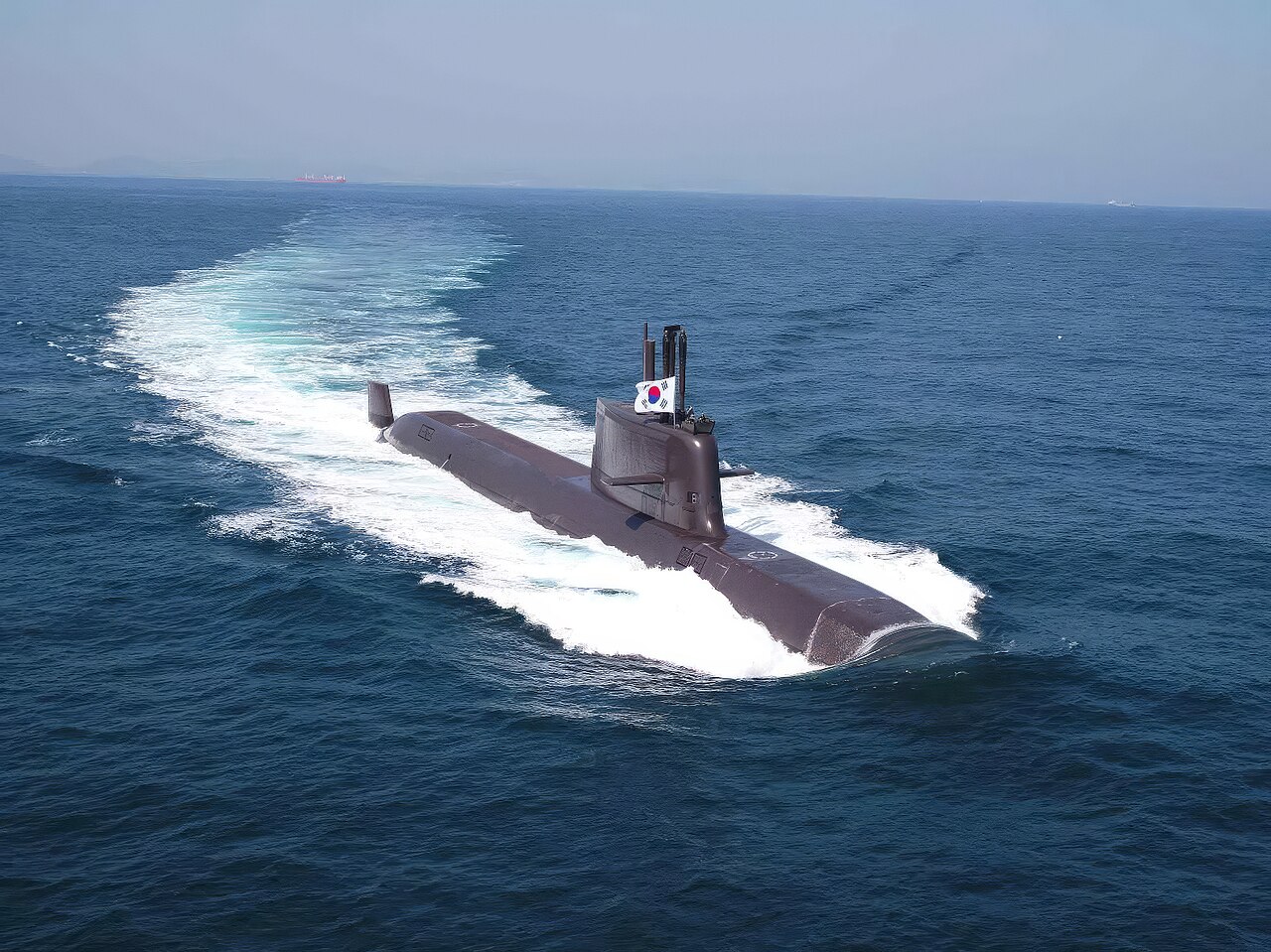
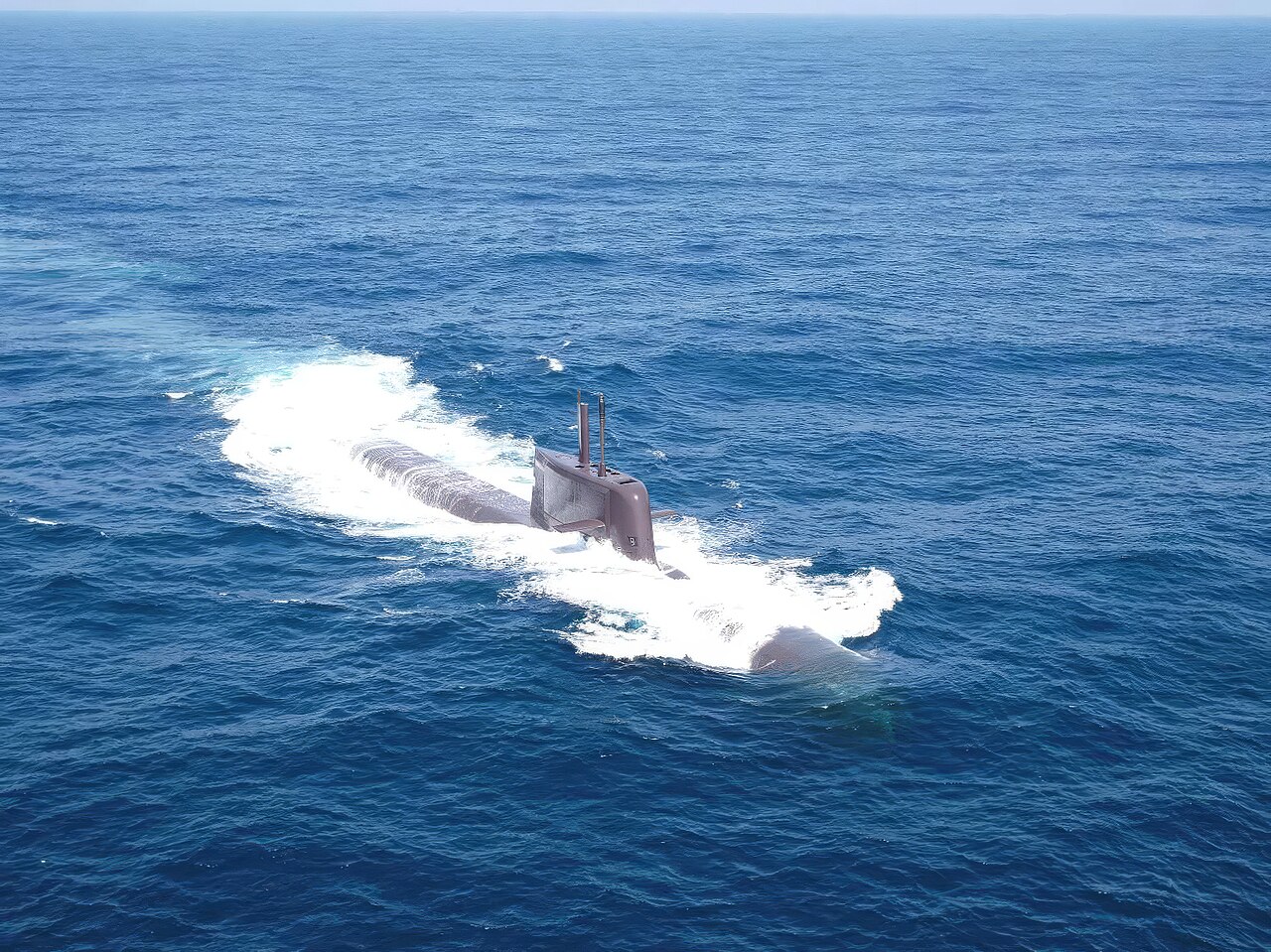
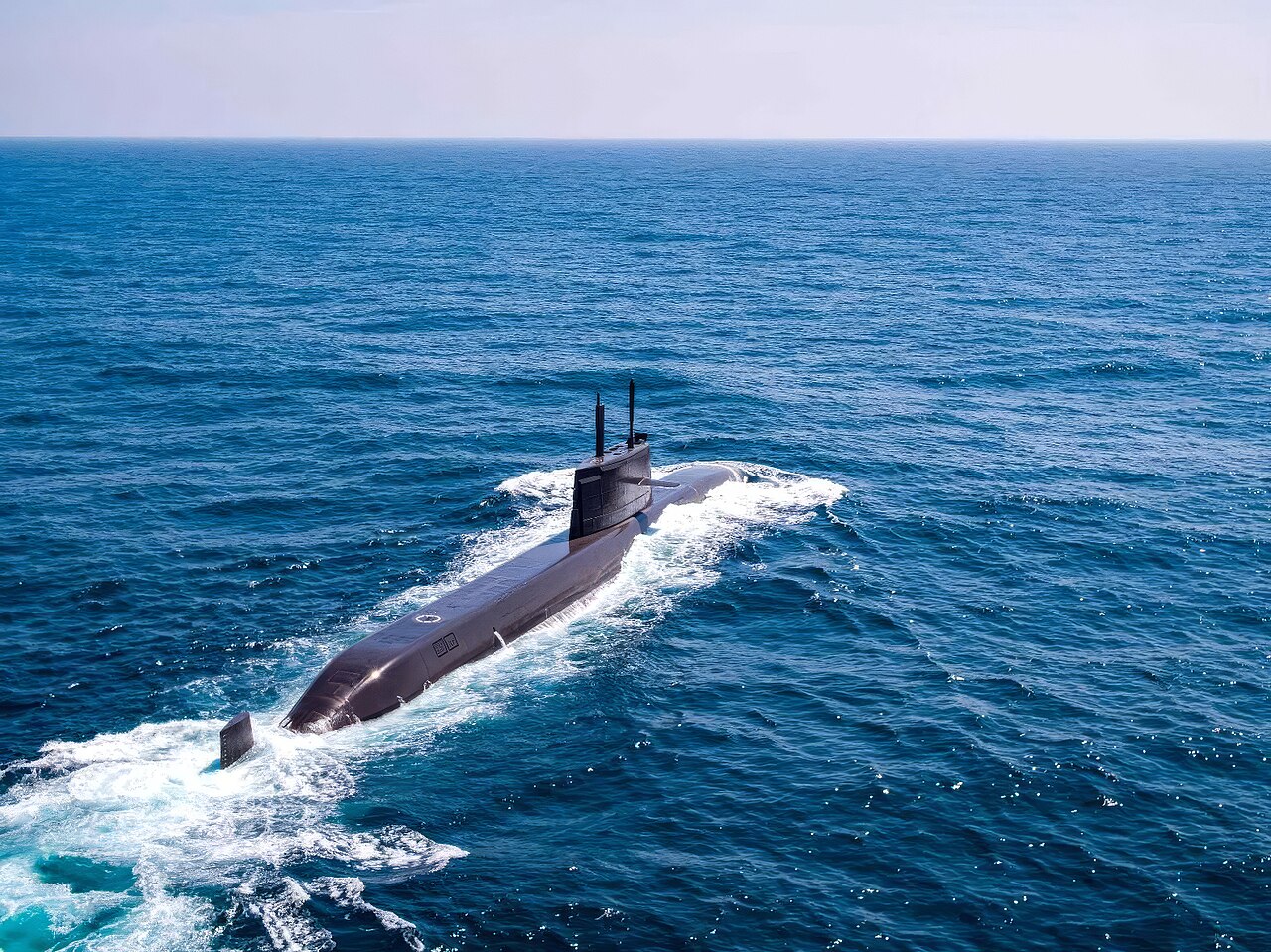
The Dosan Ahn Changho-class (KSS-III) represents South Korea's emergence as a major submarine power and its commitment to indigenous defense capabilities. These diesel-electric attack submarines are the largest ever built by South Korea, incorporating advanced air-independent propulsion (AIP) and sophisticated combat systems that rival European designs. The class serves as the backbone of the ROK Navy's submarine force modernization, designed specifically to counter North Korea's expanding submarine fleet and assert South Korean maritime dominance in the Yellow Sea and Korea Strait. Strategically, the KSS-III fills a critical capability gap in South Korea's defense posture. With their 6-cell vertical launch system capable of firing indigenous Hyunmoo-3C cruise missiles, these submarines provide South Korea with a credible second-strike capability and precision land-attack option against high-value targets. This represents a significant shift from purely defensive operations to power projection, particularly important given North Korea's nuclear program and China's growing naval presence in regional waters. The design philosophy emphasizes stealth, endurance, and multi-mission capability. The submarines feature an advanced hull design optimized for operations in the shallow, acoustically challenging waters around the Korean Peninsula. Their German-derived fuel cell AIP system provides extended submerged endurance crucial for covert operations and intelligence gathering missions near adversary coastlines. In the current threat environment, the Dosan Ahn Changho-class submarines provide South Korea with asymmetric advantages against numerically superior forces. They offer credible deterrence against North Korean provocations while demonstrating South Korea's technological sovereignty in critical defense sectors. Compared to regional peers like Japan's Soryu-class or China's Type 039A, the KSS-III represents a middle-tier capability with advanced indigenous systems but limited operational experience.
Deployment Map
Home ports from known hull assignments. Operating areas reflect typical AORs — individual deployments will vary.
Timeline
Specifications
Armament
Indigenous cruise missile with conventional warhead
Indigenous wire-guided torpedo
German heavyweight torpedo option
Alternative mission load
Doctrine & Employment
Role
Asymmetric sea denial and strategic deterrence within the Yellow Sea and Korea Strait, designed to counter North Korea's submarine threat while providing credible second-strike capability against regional adversaries.
Design Philosophy
Prioritized stealth and endurance over speed, incorporating fuel cell AIP to achieve 20+ day submerged endurance while sacrificing the higher transit speeds of nuclear boats. The designers chose a large hull form to accommodate both conventional torpedoes and future ballistic missile capabilities, trading away the smaller signature of European designs for magazine depth and growth potential.
Employment
Operates primarily in single-submarine patrols within South Korea's exclusive economic zone and approaches to major ports, with missions ranging from intelligence gathering along the DMZ maritime boundary to anti-submarine warfare against North Korean infiltration attempts. The submarines integrate with ROK Navy surface action groups during major exercises but maintain independent command authority for strategic deterrent missions. Their large size and endurance enable extended deployments in contested waters without surface support, particularly during periods of heightened tension on the Korean Peninsula.
Threat Context
Originally conceived to counter North Korea's expanding fleet of Romeo and Sang-O class submarines, but evolved to address China's growing submarine presence in the Yellow Sea and potential contingencies involving Taiwan Strait operations. The threat environment has shifted from coastal infiltration scenarios to great power competition, requiring longer-range sensors and strike capabilities.
How to Compare
Compare on submerged endurance and sensor integration rather than raw speed—all modern diesels accept 20+ knots as sufficient for their operational environment. Magazine capacity and future upgrade potential matter more than current weapons fit, as these boats are designed for 30+ year service lives in a rapidly evolving threat environment.
Operational Patterns
Typical Deployment
Patrol missions in Yellow Sea, Korea Strait surveillance, deterrent patrols near DPRK waters
Deployment Length
1 months
Typical Task Group
Single submarine operations, occasionally with ROK Navy frigates or US Navy units
Readiness
High readiness maintained due to persistent North Korean threat, limited by crew training pipeline
Key Operating Areas
Peer Comparison Matrix
Soryu has longer range and larger size but lacks VLS capability for land-attack missiles. KSS-III prioritizes strike capability over endurance.
Video angle: East Asian submarine arms race and different national priorities in submarine design
Yuan-class has greater numbers and operational experience but less sophisticated AIP and no confirmed VLS capability. KSS-III represents quality vs quantity approach.
Video angle: Technology gap analysis and implications for Korean Peninsula maritime balance
Type 212A provided fuel cell technology basis but KSS-III is larger with indigenous combat systems and VLS capability that 212A lacks.
Video angle: Technology transfer success story and indigenous capability development
Collins has longer range for Pacific operations but lacks AIP and VLS. Both represent middle-power submarine ambitions with mixed success.
Video angle: Middle power submarine programs and lessons learned from indigenous development
Scorpène has global operational record and proven export success, KSS-III offers more advanced AIP and indigenous missile integration.
Video angle: Emerging vs established submarine exporters and market competition
Combat History
Dosan Ahn Changho conducted successful test firing of submarine-launched ballistic missile from submerged position, demonstrating VLS capability
First successful SLBM test by South Korean submarine, proving indigenous VLS system functionality
Multiple KSS-III submarines participated in large-scale US-ROK joint exercises, conducting anti-submarine warfare training
Demonstrated integration with US Navy operations and multi-submarine coordination capabilities
Known Vulnerabilities
Limited operational experience
New platform with limited crew training and operational doctrine development compared to established submarine forces
Context: Potential performance gaps in complex scenarios against experienced adversaries like North Korean or Chinese submarine forces
Mitigation: Intensive training programs and exercises with US Navy partners
AIP system reliability
Fuel cell systems require complex maintenance and have historically shown reliability issues in other navies
Context: Extended patrol capability depends on AIP functionality in challenging Yellow Sea operating environment
Mitigation: Extensive shore-based training facilities and German technical support agreements
Limited VLS capacity
Only 6 VLS cells compared to Virginia-class with 12+ cells, limiting mission flexibility and engagement capacity
Context: Insufficient missile capacity for sustained operations against multiple high-value targets
Mitigation: Batch II planned expansion to 10 cells, coordination with surface combatants
Shallow water acoustics
Operating environment in Yellow Sea and Korea Strait presents challenging acoustic conditions affecting sonar performance
Context: Reduced detection ranges and increased vulnerability to counter-detection in primary operating areas
Mitigation: Advanced sonar processing algorithms and tactical doctrine adaptation
Variants
| Variant | Designation | Years | Count | Status | Key Changes |
|---|---|---|---|---|---|
| Batch I | SS-083 to SS-085 | 2021-2024 | 3 | active | Initial production variant with 6-cell VLS, fuel cell AIP, KCMS-21 combat system |
| Batch II | SS-086 to SS-089 | 2024-2028 | 4 | building | Enhanced sonar systems, improved AIP efficiency, possible 10-cell VLS configuration |
| KSS-III Block II | SS-090+ | 2030+ | 2 | planned | Nuclear propulsion consideration, enhanced combat systems, lithium-ion batteries |
Fleet Roster (4)
| Hull | Name | Variant | Commissioned | Home Port | Status |
|---|---|---|---|---|---|
| SS-083 | Dosan Ahn Changho | Batch I | 2021-08-13 | Jinhae Naval Base | active |
| SS-084 | Ryu Seongryong | Batch I | 2022-11-25 | Jinhae Naval Base | active |
| SS-085 | Shin Chaeho | Batch I | 2024-05-31 | Jinhae Naval Base | active |
| SS-086 | TBD | Batch II | 2025-estimated | TBD | building |
Modernization Programmes
KSS-III Batch II Enhancement
Improved fuel cell efficiency, enhanced sonar processing, possible expansion to 10 VLS cells, upgraded combat management system
Impact: Extended submerged endurance and improved multi-target engagement capability
Lithium-ion Battery Integration
Replacement of conventional lead-acid batteries with lithium-ion technology for improved underwater performance
Impact: Faster charging, higher underwater speed, reduced snorkel time requirements
KSS-III Block II Nuclear Study
Feasibility study for nuclear-powered variant to extend range and endurance for Pacific operations
Impact: Would provide blue-water capability and extended patrol duration
Images



Recent News
Frequently Asked
How many Dosan Ahn Changho-class submarine are in service?
3 Dosan Ahn Changho-class submarine are currently in service with Republic of Korea Navy, with 1 under construction.
When was the first Dosan Ahn Changho-class submarine commissioned?
The first Dosan Ahn Changho-class submarine entered service in 2021-08-13.
Who builds the Dosan Ahn Changho-class submarine?
The Dosan Ahn Changho-class submarine is built by Hanwha Ocean (formerly Daewoo Shipbuilding & Marine Engineering).
What variants of the Dosan Ahn Changho-class submarine exist?
Known variants include: Batch I, Batch II, KSS-III Block II.
How much does a Dosan Ahn Changho-class submarine cost?
Unit cost is approximately $700M per hull.
Curated Research
essential
Provides detailed technical specifications and combat systems integration for the KSS-III class within the broader context of Pacific submarine warfare.
CSIS analysis contextualizes the KSS-III program within South Korea's broader maritime strategy and defense industrial ambitions.
recommended
Leading open-source analyst for submarine developments with detailed coverage of ROK Navy submarine programs and North Korean submarine threats.
Professional submarine warfare publication frequently covering allied submarine developments and operational concepts relevant to KSS-III employment.
RAND analysis of ROK defense modernization including submarine force development and alliance implications for combined operations.
reference
Comprehensive technical database entry with specifications, sensors, and weapons systems for operational KSS-III submarines.
Authoritative reference for ROK Navy force structure and submarine specifications with annual updates on KSS-III program developments.
Academic analysis of submarine warfare in the Western Pacific with focus on allied submarine cooperation and regional threat assessments.
Watch Dosan Ahn Changho in Action
Iron Command produces in-depth comparison and analysis videos for military equipment.
Watch on YouTube