
Dassault Rafale
Overview
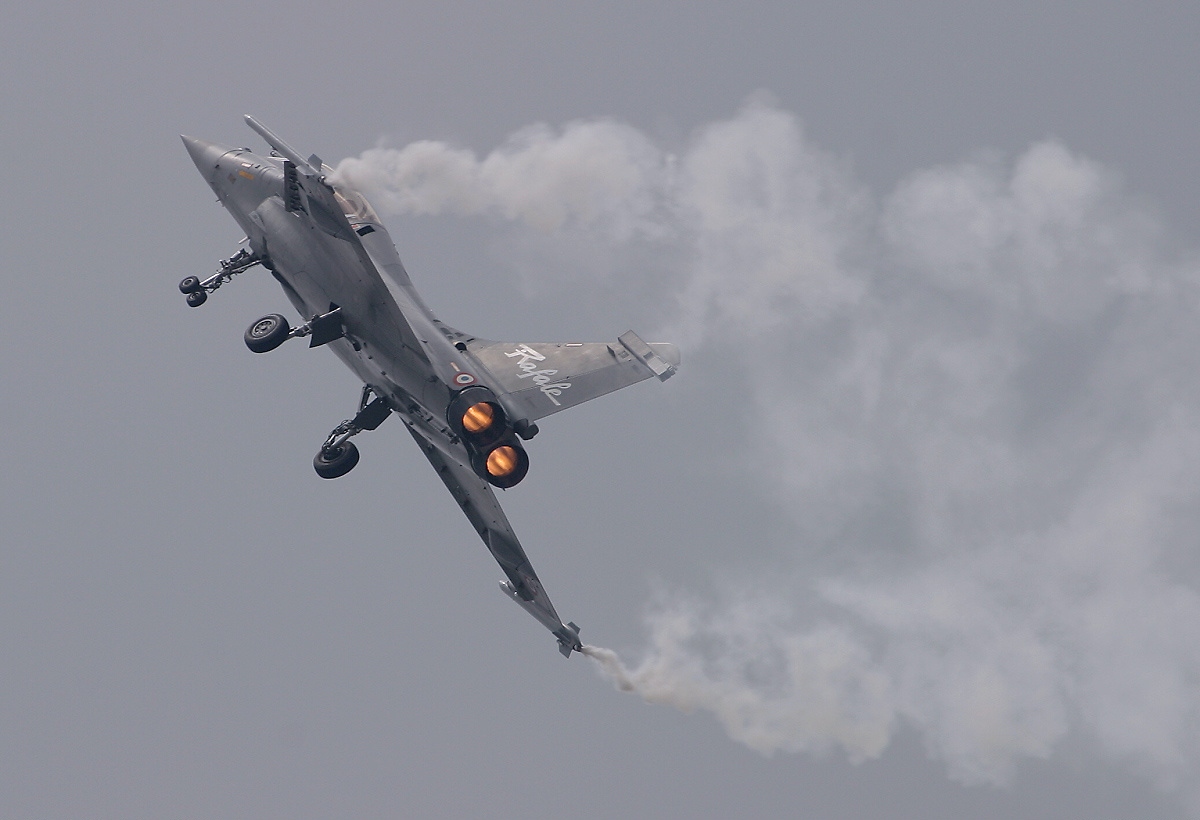
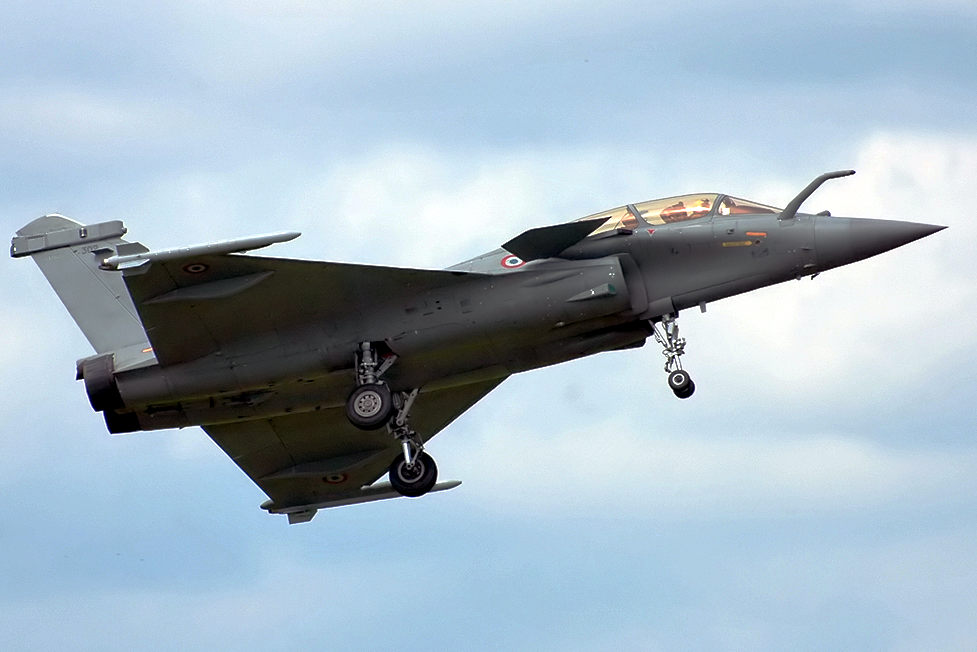
The Dassault Rafale is France's premier 4.5-generation multirole fighter aircraft, representing the pinnacle of European aerospace engineering and strategic autonomy. Designed as an "omnirole" fighter capable of air-to-air, air-to-ground, nuclear strike, and reconnaissance missions within a single sortie, the Rafale embodies France's philosophy of maintaining independent military capabilities. Its twin-engine, delta-wing canard configuration combines exceptional maneuverability with advanced sensor fusion through the integrated SPECTRA electronic warfare suite and RBE2-AA AESA radar. Strategically, the Rafale serves as both the backbone of French air power and a key export product that strengthens France's defense industrial base and diplomatic influence. Unlike American fighters tied to ITAR restrictions, the Rafale offers customers greater operational sovereignty and technology transfer opportunities. The aircraft has proven its combat effectiveness across multiple theaters, from Libya and Mali to recent operations against ISIS, demonstrating its ability to operate in contested environments with minimal external support. In the current threat environment, the Rafale's standout capabilities include its low observability features, advanced electronic warfare systems, and ability to carry the SCALP cruise missile for long-range precision strikes. The aircraft's METEOR beyond-visual-range air-to-air missile gives it a significant reach advantage over many competitors. However, it faces increasing pressure from emerging fifth-generation fighters and advanced air defense systems. Compared to peers like the Eurofighter Typhoon and F/A-18E/F Super Hornet, the Rafale offers superior multirole flexibility and lower radar cross-section, though at higher per-unit costs. Against fifth-generation threats like the F-35 or Su-57, the Rafale compensates for its larger radar signature with superior kinematic performance, advanced electronic warfare capabilities, and proven combat record. Its export success to India, Egypt, Qatar, Greece, and the UAE demonstrates its competitive position in the global fighter market.
Deployment Map
Home ports from known hull assignments. Operating areas reflect typical AORs — individual deployments will vary.
Timeline
Specifications
Armament
Ramjet-powered, no-escape zone advantage
IR and active radar variants
Storm Shadow variant, bunker-buster capability
GPS/INS/IIR guidance options
Naval variant primarily
French nuclear deterrent delivery system
125 rounds, 2500 rpm rate of fire
Operational Patterns
Typical Deployment
Air superiority, deep strike, nuclear deterrent patrol, carrier operations (M variant)
Deployment Length
4 months
Typical Task Group
Mixed formations with Mirage 2000, aerial refueling support, AWACS coordination
Readiness
High availability rates (~75%), but complex maintenance requirements for advanced systems
Key Operating Areas
Peer Comparison Matrix
Typhoon optimized for air-to-air with superior kinematic performance, Rafale better multirole integration and carrier capability. Rafale has better export success due to fewer political restrictions.
Video angle: European fighter rivalry: specialist vs generalist design philosophies and export competition
Super Hornet larger with more payload capacity and proven carrier operations, Rafale more advanced sensors and lower RCS. Both excellent multirole platforms with different industrial ecosystems.
Video angle: Atlantic alliance fighter comparison: American industrial scale vs European technological sophistication
F-35 true fifth-generation with superior stealth and sensor fusion, Rafale better kinematic performance and operational flexibility. Cost and availability favor different procurement strategies.
Video angle: 4.5 vs 5th gen: proven capability vs future technology, cost-effectiveness analysis
Gripen significantly lower operating costs and simpler logistics, Rafale superior performance and weapon capacity. Different approaches to European fighter independence and smaller nation requirements.
Video angle: European fighter economics: high-end capability vs cost-effective operations
Su-35 superior kinematic performance and payload, Rafale better avionics integration and precision strike capability. Represents different design philosophies and industrial capabilities.
Video angle: East vs West fighter design: Russian emphasis on raw performance vs Western system integration
Combat History
First combat deployment, conducted air-to-ground strikes and reconnaissance missions over Libya during NATO intervention
Combat debut demonstrated multirole capabilities and precision strike effectiveness
Rapid deployment from France to conduct close air support and precision strikes against insurgent forces
Proved long-range deployment capability and effectiveness in counterinsurgency operations
Conducted over 1,400 sorties against ISIS targets, including SCALP cruise missile strikes from significant standoff distances
Demonstrated sustained operations capability and precision in urban environments
Indian Rafales (first export customer) used for precision strikes across Pakistan border in response to terrorist attack
First combat use by export customer, validated aircraft's performance in high-tension environment
Continued operations in Sahel region supporting counterterrorism efforts across multiple countries
Ongoing demonstration of sustained deployment capabilities in harsh environments
Known Vulnerabilities
Radar Cross Section
While incorporating some low-observable features, Rafale has larger RCS than true fifth-generation fighters like F-35 or F-22
Context: Increasing deployment of advanced air defense systems makes stealth increasingly critical
Mitigation: SPECTRA electronic warfare suite provides active protection, F5 standard may include additional stealth improvements
Production Rate Limitations
Dassault can only produce 11-12 aircraft annually, limiting rapid fleet expansion or replacement after losses
Context: In high-intensity conflict, production bottlenecks could impact sustained operations
Mitigation: France planning to increase production rate, but industrial base remains relatively small
Logistics Complexity
Advanced systems require sophisticated maintenance infrastructure and specialized personnel training
Context: Deployed operations may be limited by support requirements, especially for smaller export customers
Mitigation: Dassault provides comprehensive support packages, but dependency on French industrial base remains
Electronic Warfare Dependence
Survivability increasingly relies on SPECTRA system effectiveness against evolving threats
Context: Peer adversaries developing AI-driven electronic warfare capabilities that may overcome current systems
Mitigation: Continuous SPECTRA upgrades and F4/F5 standard improvements address evolving threats
Variants
| Variant | Designation | Years | Count | Status | Key Changes |
|---|---|---|---|---|---|
| Rafale A | Technology Demonstrator | 1986-1994 | 1 | retired | Technology demonstrator, larger than production aircraft, different engine |
| Rafale C | Single-seat Air Force | 2006-present | 102 | active | Production single-seat variant for French Air Force |
| Rafale B | Two-seat Air Force | 2006-present | 110 | active | Two-seat trainer/multirole variant, slightly reduced fuel capacity |
| Rafale M | Naval variant | 2001-present | 42 | active | Carrier-capable with reinforced landing gear, tailhook, folding wings |
| Rafale F4 | Latest standard | 2022-present | 12 | active | Enhanced connectivity, improved SPECTRA, satellite communication, helmet-mounted display |
Fleet Roster (2)
| Hull | Name | Variant | Commissioned | Home Port | Status |
|---|---|---|---|---|---|
| N/A | French Air and Space Force Fleet | B/C variants | 2006-present | Multiple bases (Saint-Dizier, Luxeuil, etc.) | active |
| N/A | French Navy Fleet | Rafale M | 2001-present | Landivisiau Naval Air Base | active |
Modernization Programmes
Rafale F4 Standard
Major upgrade including enhanced RBE2-AA radar, improved SPECTRA EW suite, satellite communications, helmet-mounted display system, and enhanced connectivity for collaborative combat
Impact: Significantly improves situational awareness, sensor fusion, and network-centric warfare capabilities
F5 Standard Development
Next major standard focusing on AI integration, advanced sensors, improved stealth features, and enhanced electronic warfare capabilities
Impact: Will maintain relevance against emerging fifth-generation threats and advanced air defenses
METEOR Integration
Integration of METEOR beyond-visual-range air-to-air missile across all variants
Impact: Provides significant air-to-air engagement advantage with 100km+ range
Talios Pod Integration
New targeting pod with improved sensors and laser designation capabilities
Impact: Enhanced precision strike capabilities and intelligence gathering
Images




Frequently Asked
How many Dassault Rafale are in service?
2 Dassault Rafale are currently in service with French Air and Space Force, French Navy.
When was the first Dassault Rafale commissioned?
The first Dassault Rafale entered service in 2001-05-18.
Who builds the Dassault Rafale?
The Dassault Rafale is built by Dassault Aviation.
What variants of the Dassault Rafale exist?
Known variants include: Rafale A, Rafale C, Rafale B, Rafale M, Rafale F4.
How much does a Dassault Rafale cost?
Unit cost is approximately $85M per hull.
Watch Dassault Rafale in Action
Iron Command produces in-depth comparison and analysis videos for military equipment.
Watch on YouTube