Combat Vehicle 90
Compare with
Overview
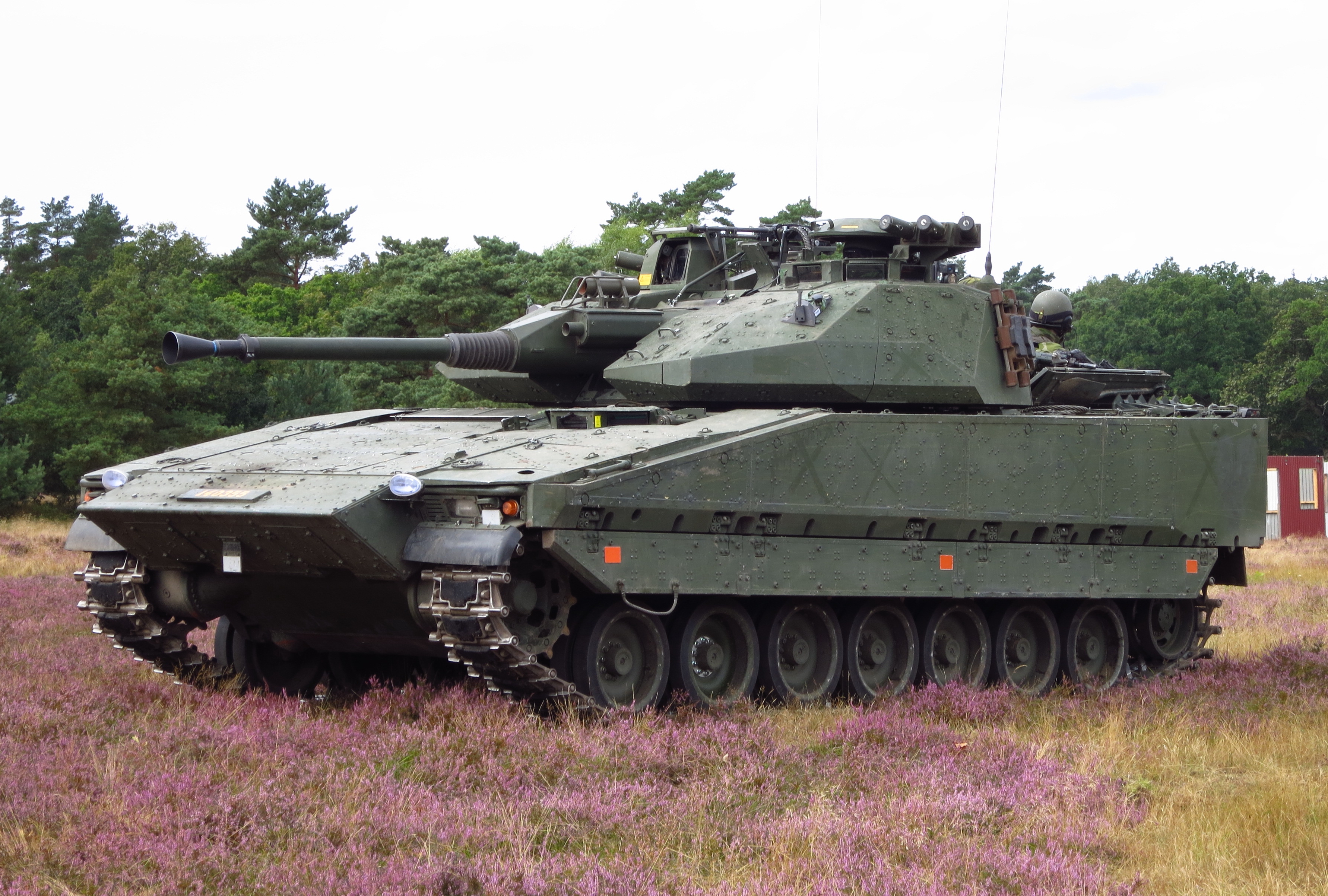
The Combat Vehicle 90 (CV90) represents Sweden's approach to creating a modular, survivable infantry fighting vehicle optimized for Nordic conditions while maintaining global export appeal. Developed by Hägglunds (now BAE Systems Hägglunds) in the late 1980s, the CV90 family has become one of Europe's most successful IFV export programs, serving with nine nations and continuously evolving through multiple variants and capability upgrades. The CV90's design philosophy centers on modularity, crew survivability, and adaptability to different mission requirements. Unlike heavier platforms like the Bradley or Puma, the CV90 prioritizes strategic mobility and rapid deployment while maintaining effective protection against contemporary threats. Its relatively light weight (35-37 tonnes depending on variant) allows for air transport and operation in soft terrain, making it particularly valuable for expeditionary operations and nations with extensive forested or marshy terrain. In the current threat environment, the CV90 has proven its combat effectiveness in Afghanistan with Norwegian, Danish, and Dutch forces, demonstrating reliable performance in asymmetric warfare scenarios. The platform's modular armor system and continuous upgrade path have kept it relevant against evolving threats, with the latest Mk IV variant incorporating active protection systems and enhanced C4I capabilities. The CV90's 30mm or 35mm main armament provides effective firepower against light armor and fortified positions while remaining cost-effective compared to larger caliber systems. Against peer competitors like the German Puma, Russian BMP-3, or American Bradley, the CV90 offers a compelling balance of protection, firepower, and mobility at a lower lifecycle cost. Its export success reflects this value proposition, with operators appreciating the platform's reliability, ease of maintenance, and the manufacturer's willingness to incorporate customer-specific modifications. The CV90's continued development, including the Mk IV and planned Mk V variants, positions it as a relevant platform well into the 2040s.
Deployment Map
Home ports from known hull assignments. Operating areas reflect typical AORs — individual deployments will vary.
Timeline
Specifications
Armament
Standard on most variants, 160 rounds ready
Netherlands CV9035NL variant, programmable ammunition
Optional twin launcher, some variants
Israeli system on some export variants
Coaxially mounted with main gun
Operational Patterns
Typical Deployment
Battalion-level mechanized infantry formations, often integrated with main battle tanks in combined arms operations
Deployment Length
6 months
Typical Task Group
Operates as part of mechanized infantry company (usually 4 vehicles) with supporting elements
Readiness
High mechanical reliability reported by operators, simplified maintenance compared to tracked alternatives
Key Operating Areas
Peer Comparison Matrix
Bradley offers heavier protection and TOW standard, but CV90 provides better strategic mobility and lower lifecycle costs. Bradley's tracked design offers superior cross-country mobility but higher maintenance requirements.
Video angle: European vs American IFV philosophy - strategic mobility vs maximum protection comparison
Puma represents high-end European approach with maximum protection and advanced systems, while CV90 prioritizes cost-effectiveness and deployability. Puma significantly heavier (43+ tonnes) and more expensive.
Video angle: Cost vs capability analysis - when is 'good enough' better than 'best possible'
BMP-3 emphasizes firepower with 100mm gun but minimal protection. CV90 represents Western approach prioritizing crew survival over maximum offensive capability.
Video angle: East vs West IFV philosophy - survivability vs firepower trade-offs in modern warfare
AMV uses wheeled configuration for higher strategic mobility but lower cross-country performance. Both designed for Nordic conditions but different mobility solutions.
Video angle: Wheels vs tracks debate in modern IFV design - terrain vs speed analysis
Combat History
Norwegian CV9030N vehicles deployed with Telemark Battalion, conducted convoy escort and base security operations in Faryab Province. Vehicles demonstrated reliability in harsh conditions but limited urban combat exposure.
First sustained combat deployment proved mechanical reliability and crew protection, validating design for expeditionary operations
Danish CV9035DK operated in Helmand Province, engaged Taliban forces with 35mm cannon and provided fire support for dismounted infantry operations.
Combat use validated 35mm cannon effectiveness against fortified positions and demonstrated platform's utility in asymmetric warfare
Dutch CV9035NL vehicles operated in Uruzgan Province, extensive patrol and convoy operations. Several vehicles damaged by IEDs but crew survivability remained high.
IED encounters led to armor upgrades and demonstrated need for modular protection systems, influencing Mk IV development
Known Vulnerabilities
Side and rear armor protection
Base armor provides limited protection against modern RPGs and ATGMs from flank attacks. Side armor vulnerable to 14.5mm AP at close range.
Context: Modern battlefield features multi-directional threats and precision-guided munitions that can exploit thinner side armor
Mitigation: Modular armor packages and APS systems address this, but increase weight and cost significantly
Urban warfare limitations
Limited elevation/depression angles restrict effectiveness in dense urban environments. Turret design optimized for open terrain engagement.
Context: Urban warfare increasingly dominant in contemporary conflicts, platform shows limitations compared to specialized urban combat vehicles
Mitigation: Mk IV turret design partially addresses this with improved gun angles, but fundamental limitations remain
Strategic mobility vs protection trade-off
Weight constraints to maintain air transportability limit maximum protection levels compared to heavier IFVs like Puma or Bradley A4.
Context: Peer adversaries fielding increasingly sophisticated anti-armor weapons that challenge medium-weight vehicle protection schemes
Mitigation: APS systems and reactive armor help, but fundamental physics limitations require operational adaptation
Variants
| Variant | Designation | Years | Count | Status | Key Changes |
|---|---|---|---|---|---|
| CV9040B | Original Swedish variant | 1993-2000 | 354 | active | Initial production variant with 40mm Bofors gun, later retrofitted to 35mm Bushmaster III |
| CV9030N | Norwegian variant | 1999-2001 | 104 | active | 30mm Bushmaster II, enhanced armor, climate control for Arctic operations |
| CV9035DK | Danish variant | 2007-2009 | 45 | active | 35mm gun, enhanced protection package, battlefield management system |
| CV9035NL | Netherlands variant | 2009-2013 | 200 | active | 35mm gun with AHEAD ammunition, modular armor system, advanced FCS |
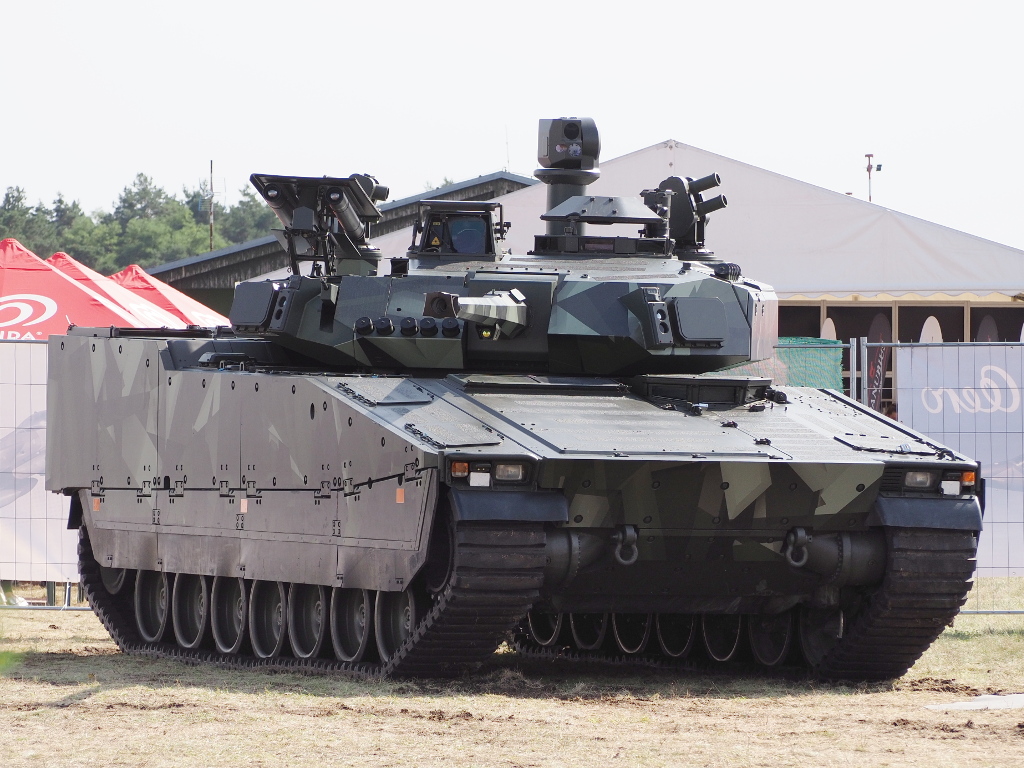
| CV90 Mk IV | Latest generation | 2018-present | 87 | active | New turret design, Iron Fist APS option, digital architecture, weight reduction |
Fleet Roster (4)
| Hull | Name | Variant | Commissioned | Home Port | Status |
|---|---|---|---|---|---|
| N/A | Swedish Army CV9040C | CV9040C | 1993 | Various Swedish bases | active |
| N/A | Norwegian Army CV9030N | CV9030N | 1999 | Rena, Norway | active |
| N/A | Danish CV9035DK | CV9035DK | 2007 | Oksbøl, Denmark | active |
| N/A | Dutch CV9035NL | CV9035NL | 2009 | Bergen-Hohne, Germany | active |
Modernization Programmes
CV90 Mk IV Development
Complete redesign featuring new turret, digital backbone, modular armor system, and weight reduction. Incorporates lessons from Afghanistan deployments.
Impact: Represents generational leap in capability while maintaining platform commonality
Active Protection System Integration
Integration of Elbit Iron Fist APS on CV90 Mk IV, providing hard-kill protection against RPGs and ATGMs. Currently in testing phase.
Impact: Significantly enhances survivability against modern anti-tank threats
Mid-Life Upgrade (MLU)
Upgrading older CV90 variants with new fire control systems, digital architecture, and modular armor. Sweden upgrading 300+ vehicles.
Impact: Extends service life to 2040+ and maintains interoperability with newer variants
Images



Frequently Asked
How many Combat Vehicle 90 are in service?
4 Combat Vehicle 90 are currently in service with Sweden.
When was the first Combat Vehicle 90 commissioned?
The first Combat Vehicle 90 entered service in 1993.
Who builds the Combat Vehicle 90?
The Combat Vehicle 90 is built by BAE Systems Hägglunds.
What variants of the Combat Vehicle 90 exist?
Known variants include: CV9040B, CV9030N, CV9035DK, CV9035NL, CV90 Mk IV.
How much does a Combat Vehicle 90 cost?
Unit cost is approximately $5M per hull.
Watch Combat Vehicle 90 in Action
Iron Command produces in-depth comparison and analysis videos for military equipment.
Watch on YouTube