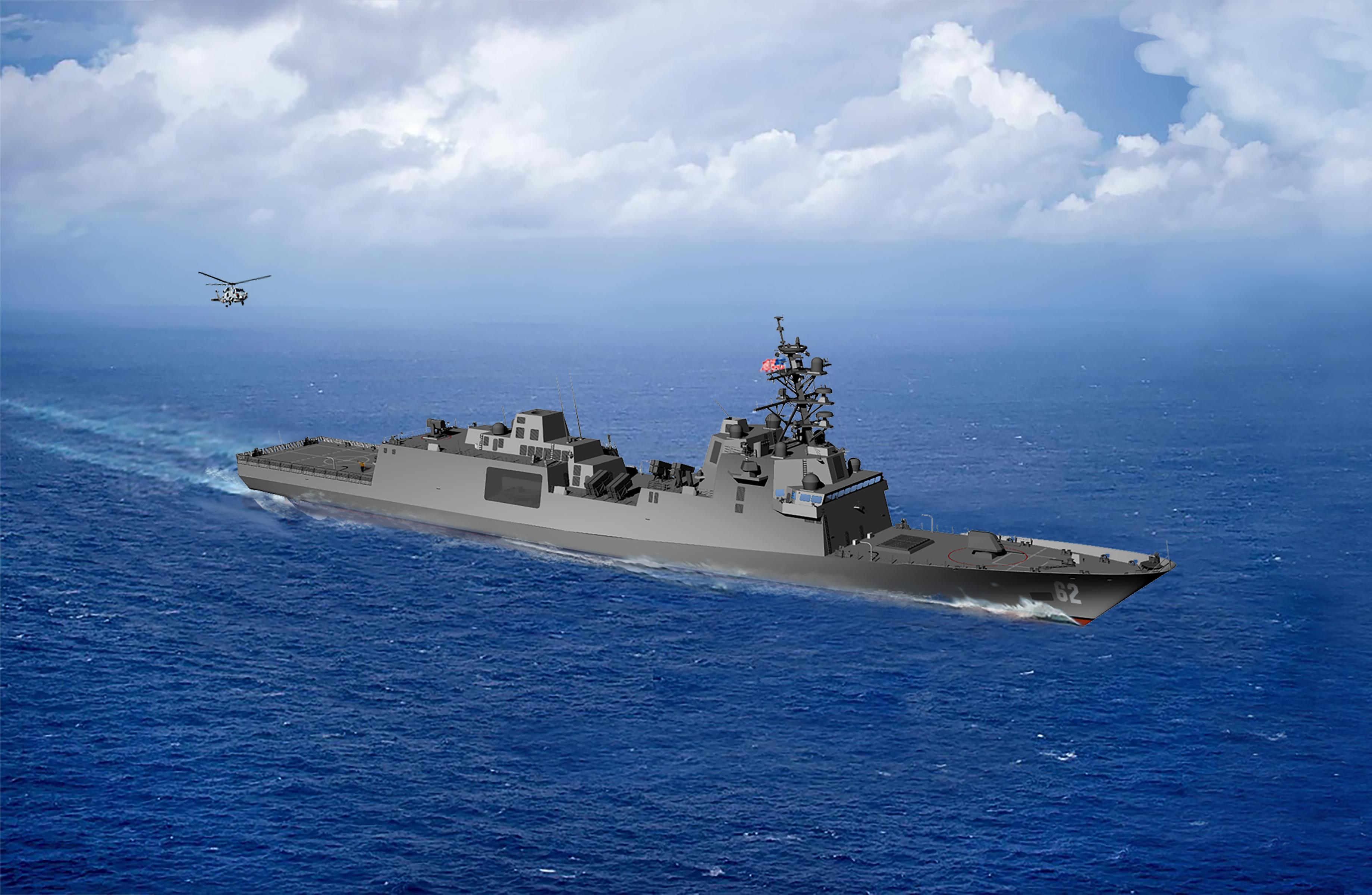
Constellation-class frigate
Overview
The Constellation-class frigate (FFG-62) represents the U.S. Navy's return to blue-water frigate operations after a 13-year gap following the retirement of the Oliver Hazard Perry-class. Based on the FREMM multipurpose frigate design by Fincantieri, the Constellation class is designed to fill the critical capability gap between high-end destroyers and the failed Littoral Combat Ship program. These frigates are optimized for anti-submarine warfare, surface warfare, and electromagnetic spectrum operations in contested environments. Strategically, the Constellation class addresses the Navy's urgent need for affordable, numerous surface combatants capable of distributed maritime operations across multiple theaters. With a planned procurement of 20 hulls, these frigates will serve as the backbone of convoy escort operations, theater security cooperation, and lower-tier air defense missions. The design emphasizes reliability, maintenance accessibility, and interoperability with NATO allies—lessons learned from the LCS program's operational failures. The frigate's combat systems center around the AN/SPY-6(V)3 Enterprise Air Surveillance Radar and a 32-cell Mk 41 VLS, providing credible anti-air and anti-surface capabilities while maintaining the acoustic quieting necessary for ASW operations. Unlike the LCS, the Constellation class features a traditional steel hull optimized for blue-water operations rather than littoral speed, reflecting the Navy's pivot back to great power competition. In the current threat environment, the Constellation class fills a critical role as the 'low' end of the Navy's high-low frigate-destroyer mix. While lacking the sophisticated air defense capabilities of Flight III Arleigh Burke destroyers, these frigates can perform presence operations, escort duties, and ASW missions that would otherwise tie up more expensive capital ships. Their greatest strategic value lies in their numbers—providing the distributed lethality that current Navy doctrine demands but cannot achieve with a destroyer-heavy surface fleet.
Deployment Map
Home ports from known hull assignments. Operating areas reflect typical AORs — individual deployments will vary.
Timeline
Specifications
Armament
SM-2, SM-6, ESSM, Tomahawk capable
Dual-purpose gun for surface and air targets
Close-in air defense
Mk 54 lightweight torpedoes
Over-the-horizon anti-ship capability
Doctrine & Employment
Role
Restore distributed lethality across a larger fleet of blue-water combatants capable of operating independently or in task groups against peer adversaries. Fill the critical capability gap between high-end destroyers and failed littoral platforms to enable contested sea control operations.
Design Philosophy
Prioritized proven European technology and rapid fielding over developmental systems to restore frigate capacity quickly. Sacrificed speed (27 knots vs 30+ knot destroyers) and magazine depth for multi-mission flexibility and cost control. Emphasized reliability and maintainability over maximum performance to support sustained forward presence operations.
Employment
Deployed in surface action groups with destroyers for distributed maritime operations, or as independent escorts for supply convoys and amphibious forces. Optimized for anti-submarine warfare in the forward edge of contested zones, particularly in the Western Pacific first island chain. Integrates into carrier strike groups as additional missile capacity and ASW screening, while capable of autonomous operations that preserve high-value units for primary missions.
Threat Context
Designed specifically for great power competition against China's expanding submarine force and integrated air-sea denial capabilities. Addresses the capability gap exposed by LCS failures against peer threats requiring blue-water endurance and sophisticated sensors. Threat evolution toward hypersonic missiles and advanced submarines has reinforced the emphasis on distributed operations and survivable platforms.
How to Compare
Compare primarily on cost-per-VLS-cell and ASW capability against peer frigates, not absolute performance metrics. Magazine depth and sensor integration matter more than top speed since all modern frigates accept 27-30 knots as sufficient. Focus on maintenance requirements and forward presence sustainability rather than single-mission optimization.
Operational Patterns
Typical Deployment
Independent patrol operations, convoy escort, theater security cooperation, ASW screen for high-value units
Deployment Length
6 months
Typical Task Group
Independent operations or as escort for amphibious ready groups, logistics vessels
Readiness
New class with unproven maintenance requirements; designed for higher operational availability than LCS
Key Operating Areas
Peer Comparison Matrix
Similar displacement and role but Chinese design emphasizes longer-range air defense missiles (HQ-16) while Constellation focuses on ASW and multi-mission flexibility. Type 054A has 32 VLS cells but different missile options.
Video angle: New American frigate vs proven Chinese design - quantity vs quality in frigate warfare
Russian design emphasizes heavy anti-ship firepower (Kalibr/Oniks) and area air defense while Constellation prioritizes ASW and NATO interoperability. Gorshkov class more heavily armed but less reliable.
Video angle: Western NATO-standard frigate vs Russian 'super-frigate' - different philosophies of naval warfare
Constellation based on FREMM design but Americanized with SPY-6 radar, different combat system, and optimized for U.S. Navy operations. Very similar capabilities but different sensors and weapons fit.
Video angle: How America adapted Europe's most successful frigate design for Pacific operations
Both emphasize ASW but Type 26 is larger (8000+ tons) with more sophisticated ASW sensors and 48 VLS cells. UK design prioritizes ASW excellence while Constellation balances multiple missions.
Video angle: Anglo-American frigate showdown - specialized vs multi-mission design philosophy
Japanese design emphasizes mine warfare and compact crew (90 vs 200) while Constellation focuses on traditional blue-water missions. Both incorporate advanced radar and similar displacement.
Video angle: Pacific allies' frigate face-off - Japanese automation vs American traditional crewing
Known Vulnerabilities
VLS Cell Count
Only 32 VLS cells compared to 96+ on destroyers limits magazine depth for extended operations
Context: In high-intensity conflict, frigate would quickly exhaust missile inventory
Mitigation: Designed for operations closer to logistics hubs; emphasis on reloading capabilities at sea
Air Defense Capability
Limited area air defense compared to Aegis destroyers; primarily self-defense focused
Context: Cannot provide area air defense for high-value units or task groups in contested airspace
Mitigation: Designed to operate under destroyer/cruiser air defense umbrella
Program Schedule Risk
First-in-class delivery delays and cost overruns typical of new shipbuilding programs
Context: Navy desperately needs these hulls to replace aging fleet; delays impact overall fleet size
Mitigation: Use of proven FREMM baseline design intended to reduce technical risk
Single Point Failures
CODLAG propulsion system complexity and single gas turbine create potential mobility vulnerabilities
Context: Loss of main gas turbine significantly reduces operational capability
Mitigation: Diesel generators provide backup propulsion at reduced speed
Variants
| Variant | Designation | Years | Count | Status | Key Changes |
|---|---|---|---|---|---|
| Baseline | FFG-62 to FFG-81 | 2026-2035 | 20 | building | Initial production configuration with AN/SPY-6(V)3 radar, 32-cell VLS, NSM anti-ship missiles |
Fleet Roster (4)
| Hull | Name | Variant | Commissioned | Home Port | Status |
|---|---|---|---|---|---|
| FFG-62 | USS Constellation | Baseline | 2026-12-01 | TBD | building |
| FFG-63 | USS Congress | Baseline | 2028-06-01 | TBD | building |
| FFG-64 | USS Chesapeake | Baseline | 2029-01-01 | TBD | building |
| FFG-65 | USS Stalingrad | Baseline | 2029-08-01 | TBD | building |
Modernization Programmes
Constellation Flight II Planning
Potential upgrades including enhanced VLS cell count, improved electronic warfare systems, and integrated directed energy weapons
Impact: Would address VLS cell count limitations and improve survivability in high-threat environments
SEWIP Block III Integration
Integration of advanced electronic warfare capabilities including offensive jamming systems
Impact: Significantly enhances electronic warfare and survivability capabilities
Images




Recent News
Frequently Asked
How many Constellation-class frigate are in service?
1 Constellation-class frigate are currently in service with United States Navy, with 4 under construction.
When was the first Constellation-class frigate commissioned?
The first Constellation-class frigate entered service in 2026.
Who builds the Constellation-class frigate?
The Constellation-class frigate is built by Fincantieri Marinette Marine.
How much does a Constellation-class frigate cost?
Unit cost is approximately $1.3B per hull.
Curated Research
essential
Comprehensive analysis of the FFG(X) program development, requirements, and Congressional oversight issues.
Definitive technical and historical analysis of U.S. Navy surface combatant design philosophy and evolution.
recommended
Strategic context for distributed maritime operations and the role of frigates in future fleet architecture.
Leading analyst on U.S. Navy distributed lethality concepts and surface combatant requirements.
Analysis of how frigates fit into overall Navy force structure planning and great power competition.
reference
Technical specifications and program timeline for the Constellation-class frigate development.
Professional military journal with ongoing analysis of surface warfare doctrine and frigate employment.
Watch Constellation in Action
Iron Command produces in-depth comparison and analysis videos for military equipment.
Watch on YouTubeSources