
Columbia-class ballistic missile submarine
Overview
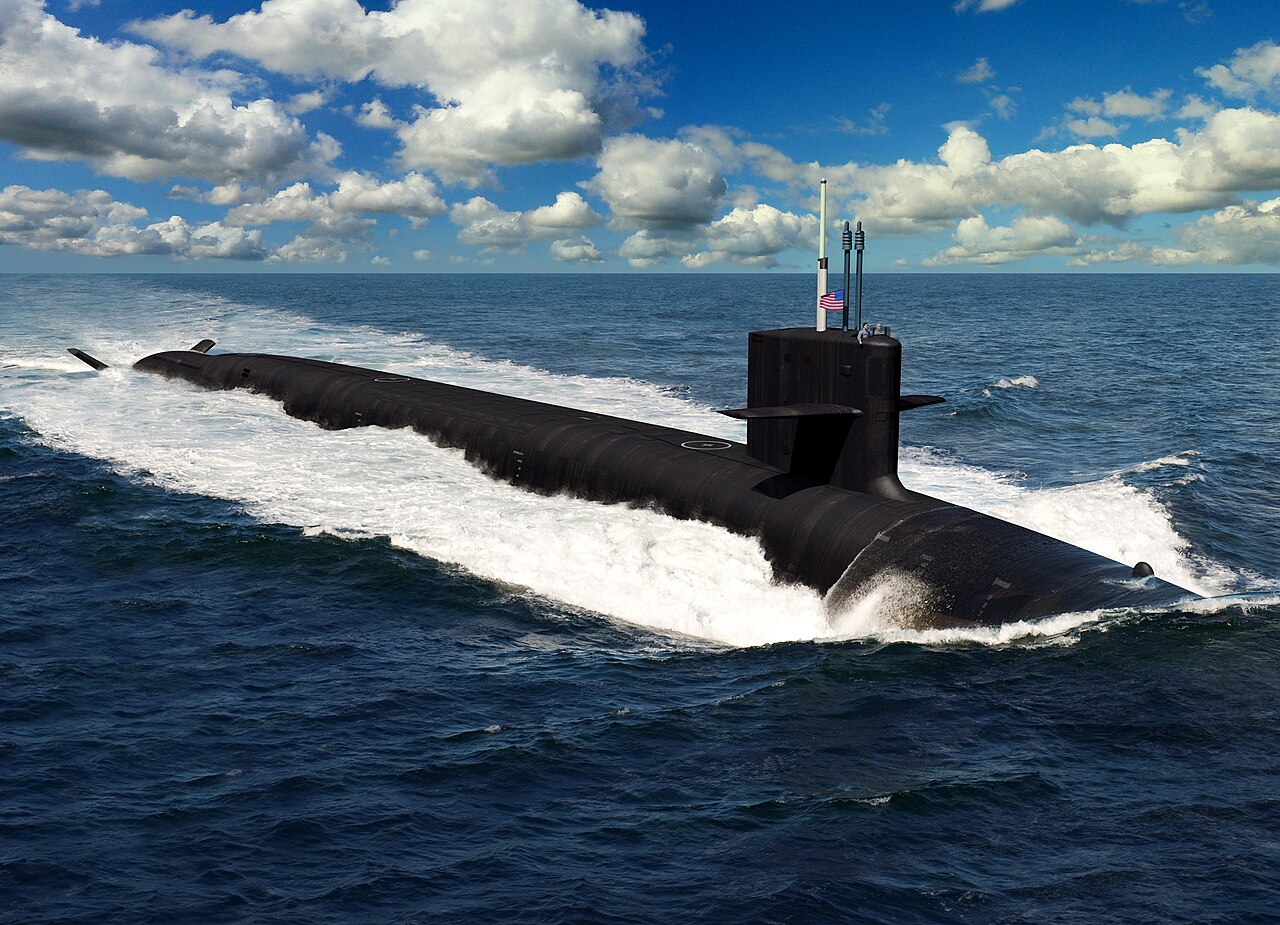
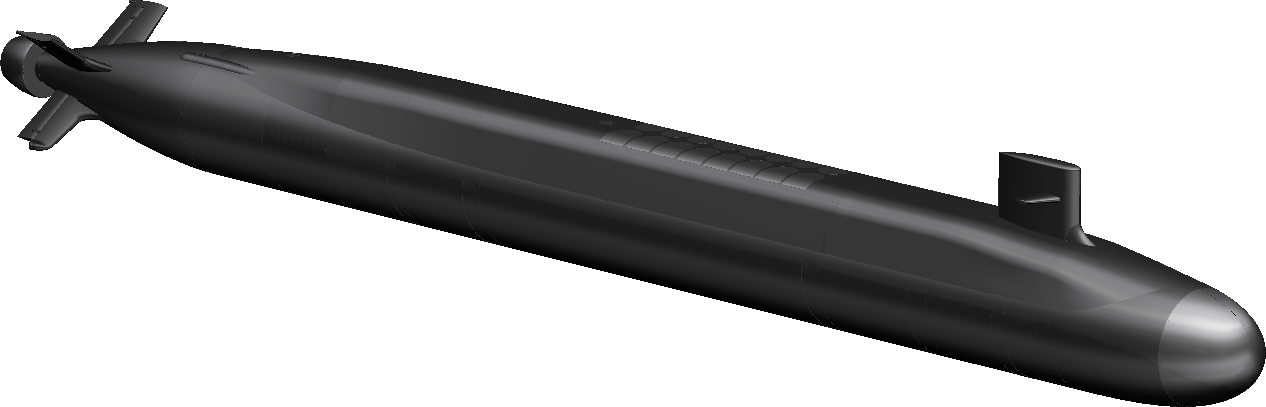
The Columbia-class submarine represents the United States Navy's next-generation ballistic missile submarine (SSBN), designed to replace the aging Ohio-class boats that have formed the sea-based leg of America's nuclear triad since the 1980s. With the first boat scheduled for commissioning in 2031, the Columbia class is arguably the most critical naval program of the 21st century, carrying the responsibility for maintaining America's strategic nuclear deterrent through the 2080s and beyond. The design philosophy centers on maintaining technological superiority while managing costs in an era of great power competition. Each Columbia-class submarine will carry 16 Trident II D5 submarine-launched ballistic missiles (SLBMs) — four fewer than the Ohio class — but incorporates advanced stealth technology, a new reactor design, and enhanced survivability features. The reduction in missile tubes was a deliberate trade-off to accommodate improved quieting systems and maintain the platform's invulnerability, which is the cornerstone of effective nuclear deterrence. In the current threat environment, the Columbia class faces unprecedented challenges. Russia's Status-6/Poseidon nuclear torpedoes, China's expanding anti-submarine warfare capabilities, and advances in underwater detection technology all threaten the traditional sanctuary of the deep ocean. The program's emphasis on acoustic stealth, including a new electric drive propulsion system and advanced anechoic coatings, directly addresses these emerging threats while maintaining the strategic mobility that makes sea-based deterrence uniquely survivable. Compared to international peers like Russia's Borei-class or China's Jin-class submarines, the Columbia class prioritizes stealth over payload. While the Russian Borei carries 16-20 missiles and the Chinese Jin carries 12, the Columbia's design reflects American confidence in missile accuracy and warhead effectiveness, allowing for fewer but more capable weapons. The program's $128 billion total cost makes it the most expensive shipbuilding program in Navy history, but one deemed essential for maintaining strategic stability in an increasingly multipolar world.
Deployment Map
Home ports from known hull assignments. Operating areas reflect typical AORs — individual deployments will vary.
Timeline
Specifications
Armament
Up to 8 MIRV warheads per missile
Self-defense capability only
Doctrine & Employment
Role
Strategic nuclear deterrence through assured second-strike capability, ensuring the survivability of America's nuclear triad against peer adversaries with advanced anti-submarine warfare capabilities.
Design Philosophy
The Columbia class prioritizes stealth and reliability over speed and multi-mission capability, accepting a slower maximum speed than Virginia-class boats in exchange for reduced acoustic signature and increased missile capacity. Designers sacrificed operational flexibility by eliminating torpedo room berthing and reducing conventional weapons capacity to maximize ballistic missile load and improve crew habitability for extended deterrent patrols.
Employment
Columbia-class SSBNs will operate in dispersed patrol areas across the Atlantic and Pacific, maintaining continuous at-sea deterrent presence with approximately 10-12 boats operational at any given time. Each submarine operates independently under STRATCOM guidance, maintaining radio silence while on patrol except for emergency communications or strategic messaging requirements. Command authority flows directly from the National Command Authority through STRATCOM to individual submarine commanders, bypassing traditional naval task group structures.
Threat Context
Designed to counter increasingly sophisticated Chinese and Russian submarine detection capabilities, including advanced sonar arrays, underwater sensor networks, and AI-enhanced pattern recognition systems that threaten the survivability of 1980s-era Ohio-class boats. The threat environment has evolved to include space-based surveillance, quantum computing applications to sonar processing, and coordinated multi-domain ASW campaigns.
How to Compare
Compare Columbia-class boats primarily on acoustic stealth metrics and missile capacity rather than speed or multi-mission flexibility, as strategic deterrence depends on remaining undetected rather than tactical maneuverability. Secondary comparisons should focus on patrol endurance, crew habitability for extended missions, and systems redundancy for mission-critical components.
Operational Patterns
Typical Deployment
Strategic deterrent patrols in assigned patrol areas
Deployment Length
3 months
Typical Task Group
Solo operations, no escorts
Readiness
Designed for 77-day patrols with higher availability rate than Ohio-class
Key Operating Areas
Peer Comparison Matrix
Borei carries more missiles (16-20 vs 16) but is significantly noisier. Columbia prioritizes stealth over payload with advanced quieting technology and electric drive propulsion.
Video angle: East vs West submarine philosophy: Russian payload emphasis vs American stealth priority
Jin is considerably noisier and carries fewer missiles (12 vs 16). Columbia represents generational advancement in stealth technology and reactor design compared to Chinese capabilities.
Video angle: How Columbia-class maintains American underwater dominance against rising Chinese naval power
Columbia has fewer missile tubes (16 vs 24) but improved stealth, reactor life, and maintainability. Electric drive vs mechanical reduction gears represents major technological leap.
Video angle: Evolution of American nuclear deterrence: what the Navy learned from 40 years of Ohio-class operations
Shares Common Missile Compartment but different reactor and hull design. UK version carries 12 missiles vs 16 for Columbia, reflecting smaller nuclear arsenal requirements.
Video angle: Special relationship underwater: how US-UK cooperation shapes next-generation nuclear submarines
Attack submarine vs ballistic missile submarine, but represents French independent nuclear submarine capability. Different design philosophy emphasizing national industrial independence.
Video angle: Nuclear submarine club: comparing American, British, and French approaches to underwater nuclear deterrence
Known Vulnerabilities
Schedule Risk
First boat delivery already delayed by one year, with potential for further delays affecting nuclear triad timing
Context: Ohio-class submarines reaching end of service life with limited extension capability
Mitigation: Navy has designated program as highest acquisition priority with protected funding
Industrial Base Limitations
Electric Boat is sole source builder with limited surge capacity and skilled workforce shortages
Context: Concurrent Virginia-class production competing for same facilities and personnel
Mitigation: Significant facility expansion and workforce development programs underway
Cost Growth
Program cost has grown from $109B to $128B, with potential for further increases affecting fleet size
Context: Congressional pressure may force reduction from 12 to fewer boats
Mitigation: Navy has implemented cost control measures and design stability requirements
Technology Risk
First-of-class integration of multiple new technologies including electric drive and new reactor design
Context: Limited ability to test integration until first boat completion
Mitigation: Extensive shore-based testing facilities and prototype programs
Variants
| Variant | Designation | Years | Count | Status | Key Changes |
|---|---|---|---|---|---|
| Block I | SSBN-826 to SSBN-837 | 2031-2042 | 12 | building | Initial production configuration with S1B reactor, electric drive, and 16 missile tubes |
Fleet Roster (12)
| Hull | Name | Variant | Commissioned | Home Port | Status |
|---|---|---|---|---|---|
| SSBN-826 | USS Columbia | Block I | 2031 | TBD | under construction |
| SSBN-827 | USS Wisconsin | Block I | 2033 | TBD | under construction |
| SSBN-828 | TBD | Block I | 2034 | TBD | planned |
| SSBN-829 | TBD | Block I | 2035 | TBD | planned |
| SSBN-830 | TBD | Block I | 2036 | TBD | planned |
| SSBN-831 | TBD | Block I | 2037 | TBD | planned |
| SSBN-832 | TBD | Block I | 2038 | TBD | planned |
| SSBN-833 | TBD | Block I | 2039 | TBD | planned |
| SSBN-834 | TBD | Block I | 2040 | TBD | planned |
| SSBN-835 | TBD | Block I | 2041 | TBD | planned |
| SSBN-836 | TBD | Block I | 2042 | TBD | planned |
| SSBN-837 | TBD | Block I | 2042 | TBD | planned |
Modernization Programmes
Common Missile Compartment (CMC)
Joint development with UK Royal Navy for shared missile compartment design, reducing costs and improving interoperability
Impact: Enables industrial base sharing and reduces per-unit costs through economies of scale
Electric Drive Integration
First US submarine to eliminate reduction gears, using permanent magnet motor for improved stealth
Impact: Significantly reduces acoustic signature and mechanical complexity
Trident II D5 Life Extension
Modernization of existing Trident missiles to serve through Columbia-class service life
Impact: Maintains nuclear deterrent capability without developing new missile system
Images



Frequently Asked
How many Columbia-class ballistic missile submarine are in service?
12 Columbia-class ballistic missile submarine are currently in service with United States Navy.
When was the first Columbia-class ballistic missile submarine commissioned?
The first Columbia-class ballistic missile submarine entered service in 2031.
Who builds the Columbia-class ballistic missile submarine?
The Columbia-class ballistic missile submarine is built by General Dynamics Electric Boat.
How much does a Columbia-class ballistic missile submarine cost?
Unit cost is approximately $9.5B per hull.
Curated Research
essential
Comprehensive Congressional Research Service analysis covering program costs, schedule, and strategic implications of the Columbia-class replacement program.
Strategic analysis of how Columbia-class submarines fit into broader nuclear modernization and deterrence strategy against peer competitors.
recommended
Authoritative technical and doctrinal evolution of U.S. submarine design philosophy from Cold War through Columbia-class development.
Leading open-source analyst for submarine technical specifications and comparative analysis of global SSBN capabilities.
Analysis of sea-based nuclear deterrence challenges and strategic submarine operations in contested environments.
reference
Detailed technical specifications and program timeline information for Columbia-class development and production.
Comprehensive comparative data on global submarine capabilities including technical specifications and operational context.
Watch Columbia in Action
Iron Command produces in-depth comparison and analysis videos for military equipment.
Watch on YouTube