
Challenger 3 Main Battle Tank
Overview
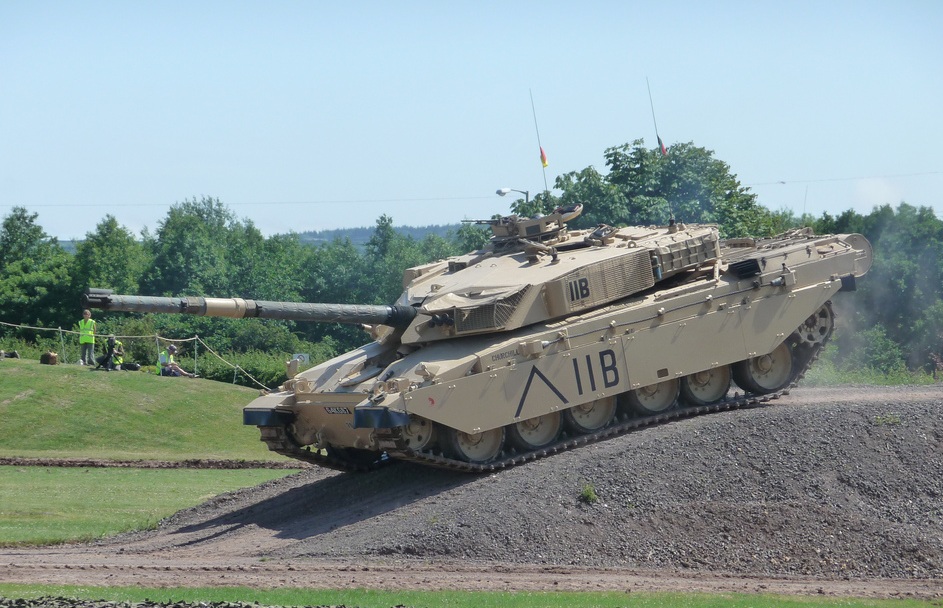
The Challenger 3 represents the British Army's most ambitious main battle tank modernization program, fundamentally transforming the Challenger 2 platform for 21st-century warfare. Built by Rheinmetall BAE Systems Land, the CR3 centers around the integration of the German Rheinmetall L55A1 120mm smoothbore gun, replacing the rifled L30A1 that defined British tank gunnery for decades. This shift to NATO-standard ammunition represents a strategic pivot toward interoperability while maintaining Britain's reputation for producing world-class heavy armor. The Challenger 3's design philosophy emphasizes survivability through advanced armor packages, digital integration through the AJAX-derived situational awareness systems, and lethality via modern fire control systems. The platform incorporates lessons learned from recent conflicts in Ukraine and the Middle East, with particular attention to urban warfare capabilities and protection against top-attack munitions. The tank features modular armor designed to counter both kinetic energy penetrators and tandem-charge anti-tank guided missiles. Strategically, the CR3 serves as Britain's commitment to NATO armor interoperability while preserving sovereign tank capabilities. Unlike complete platform replacements pursued by other nations, the Challenger 3 program demonstrates cost-effective modernization of proven platforms. In the current threat environment dominated by advanced anti-tank systems and drone warfare, the CR3's active protection systems and enhanced situational awareness represent critical evolutionary steps. Compared to contemporaries like the Leopard 2A8 or M1A2 SEPv4, the Challenger 3 emphasizes crew survivability and defensive systems over raw mobility. Its 1,200hp+ powerpack provides adequate strategic mobility while maintaining the Challenger family's reputation for exceptional armor protection. The platform enters service as NATO faces renewed conventional warfare threats, making its interoperable ammunition and proven survivability particularly relevant to European defense planning.
Deployment Map
Home ports from known hull assignments. Operating areas reflect typical AORs — individual deployments will vary.
Timeline
Specifications
Armament
NATO-standard ammunition, improved penetration over L30A1
Coaxial mount, 2000 rounds
Commander's cupola mount
Planned integration, intercepts incoming projectiles
L8A1 smoke grenades
Operational Patterns
Typical Deployment
Squadron-level deployments as part of Armoured Infantry Brigade Combat Teams, NATO enhanced forward presence rotations
Deployment Length
6 months
Typical Task Group
Operates within combined arms battlegroups alongside Warrior IFVs, Ajax reconnaissance vehicles, and supporting artillery
Readiness
Production delays and training pipeline development may impact initial operational readiness through 2030
Key Operating Areas
Peer Comparison Matrix
Leopard 2A8 offers superior mobility and proven logistics train, while Challenger 3 emphasizes crew survivability and armor protection. Both use similar Rheinmetall gun systems but different fire control architectures.
Video angle: European MBT philosophy comparison: German mobility vs British survivability approaches to modern tank warfare
Abrams emphasizes technological superiority and network integration while consuming significantly more fuel. Challenger 3 offers comparable firepower with better fuel efficiency but less advanced electronics suite.
Video angle: Atlantic alliance tank comparison: American tech dominance vs British pragmatic modernization
T-90M offers superior strategic mobility and lower cost per unit but significantly inferior crew survivability and armor protection. Challenger 3 prioritizes crew survival over platform numbers.
Video angle: East vs West tank philosophy: Russian quantity and mobility vs Western survivability and technology
Leclerc offers superior mobility and autoloader efficiency while Challenger 3 provides better armor protection and ammunition compatibility. Represents different European approaches to MBT design.
Video angle: European tank rivalry: French innovation vs British evolution in MBT modernization
K2 incorporates more advanced active suspension and fire control systems while Challenger 3 offers superior armor protection. K2 represents new-build philosophy vs CR3 modernization approach.
Video angle: Old vs new school: Korean clean-sheet design vs British platform evolution approaches
Combat History
Challenger 3 prototype completed firing trials at Lulworth ranges, demonstrating improved accuracy with NATO-standard 120mm ammunition compared to legacy Challenger 2 L30A1 rifled gun performance.
Validated the controversial decision to abandon the unique rifled gun system, proving interoperability benefits outweigh traditional advantages
Known Vulnerabilities
Logistics and Maintenance Complexity
Challenger 3 introduces German gun systems and components into British supply chains, creating potential logistical vulnerabilities and maintenance training requirements. Mixed British-German component sourcing complicates field maintenance.
Context: Ukraine conflict demonstrates critical importance of simplified logistics and field-maintainable systems in sustained operations
Mitigation: RBSL developing integrated training programs and establishing UK-based component manufacturing capabilities
Limited Production Numbers
With only 148 units planned, Challenger 3 represents a relatively small fleet compared to peer nations' MBT inventories. Limited numbers reduce strategic depth and complicate loss replacement in extended conflicts.
Context: Ukraine demonstrates high attrition rates for MBTs in peer conflicts, making numerical superiority increasingly important
Mitigation: Enhanced survivability systems and focus on crew preservation to maintain operational capability despite numerical limitations
Weight and Mobility Constraints
At 66+ tonnes, Challenger 3 faces strategic mobility limitations including bridge weight restrictions, transport aircraft limitations, and ground pressure issues in soft terrain common in potential Eastern European operating environments.
Context: Modern conflicts emphasize rapid deployment and maneuver warfare where weight becomes a significant tactical constraint
Mitigation: Improved powerpack provides better power-to-weight ratio, but fundamental weight issues remain unaddressed
Variants
| Variant | Designation | Years | Count | Status | Key Changes |
|---|---|---|---|---|---|
| Challenger 3 | CR3 | 2030-present | 148 | building | New Rheinmetall L55A1 120mm gun, upgraded armor package, digital fire control system, improved powerpack, modular armor design |
Fleet Roster (1)
| Hull | Name | Variant | Commissioned | Home Port | Status |
|---|---|---|---|---|---|
| Prototype 1 | Challenger 3 Prototype | CR3 | 2023-03-01 | Bovington Tank Museum | testing |
Modernization Programmes
Challenger 3 Main Production
Full-rate production of 148 Challenger 3 tanks converted from existing Challenger 2 hulls. Integration of Rheinmetall gun systems, upgraded armor, and digital fire control systems.
Impact: Transforms British armored capability with NATO ammunition compatibility and modern fire control systems
Iron Fist APS Integration
Integration of Elbit Iron Fist Light Decoupled active protection system to counter modern anti-tank threats including RPGs and ATGMs.
Impact: Significantly improves survivability against top-attack and tandem-charge warheads prevalent in modern conflicts
Digital Architecture Upgrade
Implementation of AJAX program-derived digital systems for enhanced situational awareness, communication, and fire control integration with British Army network architecture.
Impact: Enables network-centric warfare capabilities and improved tactical coordination
Images



Frequently Asked
How many Challenger 3 Main Battle Tank are in service?
148 Challenger 3 Main Battle Tank are currently in service with British Army.
When was the first Challenger 3 Main Battle Tank commissioned?
The first Challenger 3 Main Battle Tank entered service in 2030.
Who builds the Challenger 3 Main Battle Tank?
The Challenger 3 Main Battle Tank is built by Rheinmetall BAE Systems Land (RBSL).
How much does a Challenger 3 Main Battle Tank cost?
Unit cost is approximately $7M per hull.
Watch Challenger 3 Main Battle Tank in Action
Iron Command produces in-depth comparison and analysis videos for military equipment.
Watch on YouTubeSources