Buyan-M class corvette
Compare with
Overview
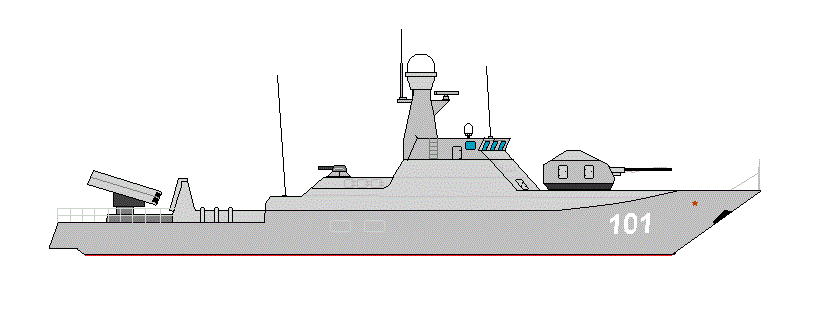
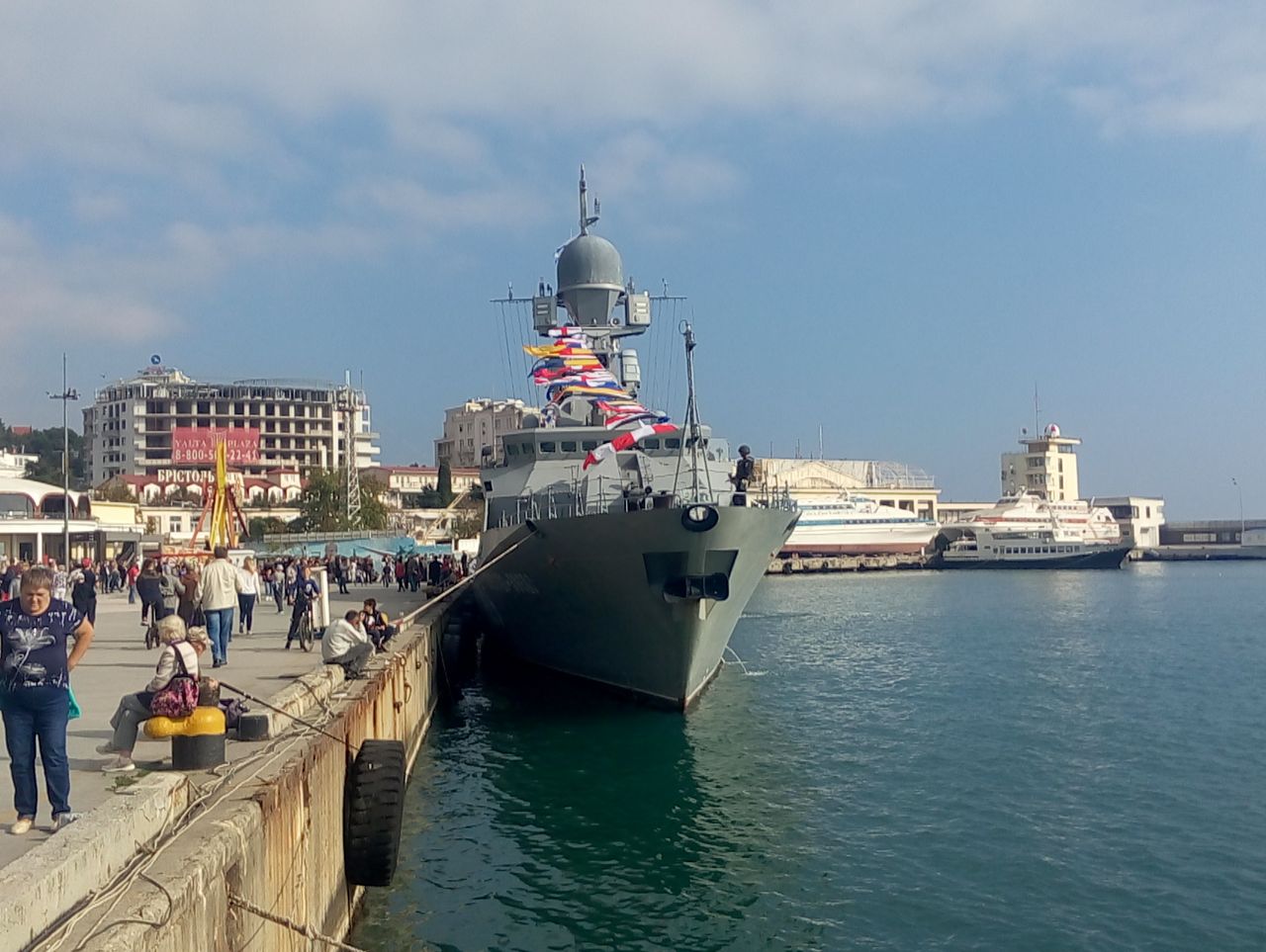
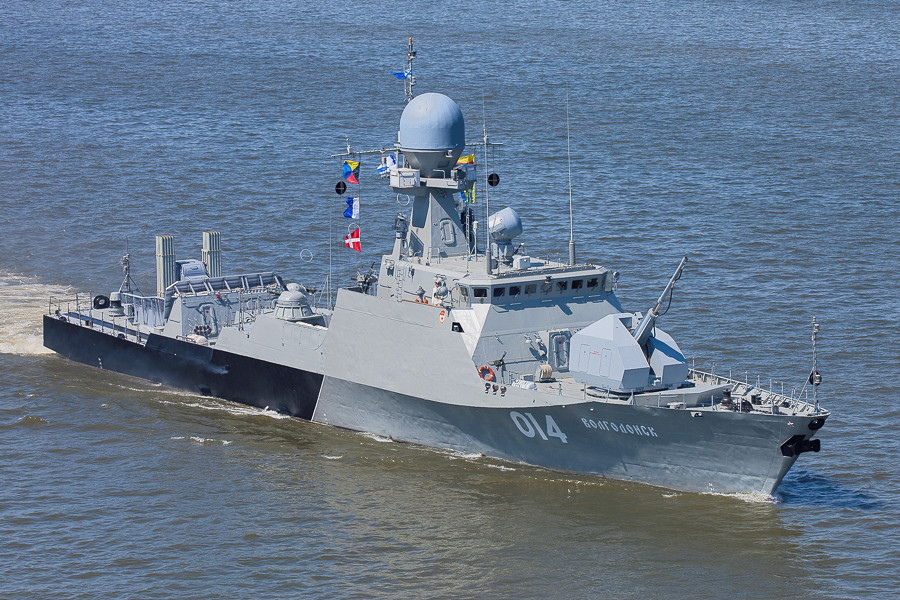
The Buyan-M class (Project 21631) corvette represents Russia's attempt to pack significant long-range strike capability into a compact, shallow-draft platform suitable for littoral operations. At just 949 tons displacement, these vessels carry eight Kalibr cruise missiles—giving Russia the ability to conduct precision strikes up to 2,500km from relatively small platforms that can operate in rivers, coastal waters, and inland seas where larger warships cannot venture. Designed primarily for the Caspian Flotilla and operations in shallow waters, the Buyan-M gained international attention in 2015 when Caspian-based vessels launched Kalibr missiles at Syrian targets—demonstrating Russia's ability to project power from unexpected locations. The class embodies Russian naval philosophy of asymmetric warfare: using smaller, distributed platforms to threaten high-value targets rather than attempting to match Western navies ship-for-ship. The platform's strategic significance lies not in its ability to control sea lanes, but in its capacity to complicate NATO planning by placing long-range precision strike capability in waters previously considered militarily irrelevant. However, the design represents clear trade-offs—minimal air defense, limited endurance, and vulnerability to modern anti-ship weapons reflect the constraints of packing cruise missiles into such a small hull. Compared to Western corvettes like the Israeli Sa'ar 6 or German K130 Braunschweig class, the Buyan-M sacrifices survivability and multi-mission capability for raw strike power. This makes it effective for Russia's current operational requirements but limits its utility in contested environments against peer adversaries with advanced ISR and precision strike capabilities.
Deployment Map
Home ports from known hull assignments. Operating areas reflect typical AORs — individual deployments will vary.
Timeline
Specifications
Armament
Land attack and anti-ship variants
Automatic, dual-purpose
6-barrel rotary cannon
Harbor defense only
Doctrine & Employment
Role
Projecting long-range precision strike power from contested littoral areas where larger warships cannot operate, enabling Russia to threaten NATO logistics and infrastructure from rivers, coastal waters, and enclosed seas like the Caspian and Black Sea.
Design Philosophy
Designers prioritized maximum firepower-to-displacement ratio and shallow-draft accessibility over survivability and endurance. Sacrificed sophisticated air defence systems, helicopter facilities, and blue-water seakeeping for Kalibr magazine capacity and the ability to operate in 2.5-meter depths. Accepted vulnerability to air attack in exchange for access to areas larger warships cannot reach.
Employment
Typically deployed in pairs or small groups to maximize magazine depth while maintaining redundancy. Operates under shore-based air defence umbrella in the Caspian Sea, Black Sea, and Baltic approaches. Primary mission profiles include land-attack against critical infrastructure, port facilities, and logistics nodes up to 2,500km inland. Command relationship varies between fleet headquarters for strategic strikes and regional commands for tactical missions.
Threat Context
Designed for a threat environment where NATO's superior naval forces could deny Russia access to open oceans, requiring strike capability from inland waterways and shallow coastal areas. The threat has evolved to include more sophisticated Western ISR and precision strike capabilities that can target these platforms even in previously safe rear areas.
How to Compare
Compare primarily on strike range and magazine depth versus displacement, not traditional naval metrics like air defence or ASW capability. The key dimension is firepower accessibility ratio—how much long-range strike power can be deployed to areas larger platforms cannot reach. Speed and endurance matter less than shallow-draft capability and cost per missile delivered.
Operational Patterns
Typical Deployment
Regional patrol and presence missions in assigned fleet areas, ready for rapid precision strike tasking
Deployment Length
3 months
Typical Task Group
Operates independently or with one other Buyan-M, occasionally integrated with larger surface action groups
Readiness
High mechanical reliability but limited by crew training and maintenance support availability in forward areas
Key Operating Areas
Peer Comparison Matrix
Sa'ar 6 emphasizes air defense and multi-mission capability with advanced radar and VLS SAMs, while Buyan-M focuses solely on land attack. Sa'ar 6 is more survivable but lacks long-range strike capability.
Video angle: David vs Goliath: Small navy multi-mission platform vs Russian strike specialist
German K130 designed for sea control and patrol with anti-ship missiles and better sensors, lacks land attack capability. More balanced but less striking power than Buyan-M.
Video angle: NATO vs Russian corvette philosophy: Balanced capability vs specialized strike power
Type 056 focuses on patrol and ASW with better endurance and crew accommodations, but lacks long-range land attack missiles. More ships built (70+) vs 12 Buyan-M.
Video angle: Quantity vs quality: China's patrol corvette swarm vs Russia's precision strike specialists
Visby emphasizes stealth and survivability with advanced signature reduction, anti-ship and some air defense capability, but no land attack missiles. Much more expensive and complex.
Video angle: Stealth vs firepower: Swedish invisibility vs Russian striking power
Milgem larger and more capable in anti-air and ASW roles, designed for blue-water operations with better seakeeping. Turkish design emphasizes NATO interoperability vs Russian independence.
Video angle: NATO vs Russian small combatant design: Alliance integration vs independent strike capability
Combat History
Four Caspian Flotilla Buyan-M corvettes (Grad Sviyazhsk, Uglich, Veliky Ustyug, Dagestan) launched 26 Kalibr cruise missiles at ISIS targets in Syria from the Caspian Sea, traversing Iran and Iraq airspace
First combat use of Kalibr missiles, demonstrated Russia's long-range precision strike capability from previously non-threatening platforms and unexpected locations
Serpukhov and Zeleny Dol launched Kalibr missiles from the Mediterranean at ISIS positions in Palmyra region
Showed operational deployment capability beyond home waters and sustained precision strike operations
Multiple Buyan-M class vessels participated in coordinated missile strikes following alleged Syrian chemical weapons use
Demonstrated integration into larger strike packages and political signaling through force projection
Known Vulnerabilities
Air defense
Minimal air defense capability with only short-range CIWS guns, no medium or long-range SAM systems
Context: Extremely vulnerable to air attack from modern fighters or attack helicopters in contested environments
Mitigation: Relies on land-based air cover and concealment in littoral waters
Anti-ship missile defense
Limited electronic warfare systems and no dedicated anti-missile systems beyond CIWS
Context: Cannot effectively defend against modern anti-ship missiles like NSM, Harpoon, or Exocet
Mitigation: Partial EW upgrades planned but fundamental vulnerability remains due to size constraints
Endurance and range
Limited fuel capacity and crew accommodations restrict sustained operations away from base
Context: Cannot conduct extended independent operations, requires regular resupply and crew rotation
Mitigation: Designed for regional operations with shore support, not blue-water missions
Single-mission focus
Optimized for land attack missions with limited anti-surface and minimal ASW capability
Context: Cannot effectively contribute to sea control or multi-domain operations
Mitigation: Intended to operate as part of larger force structure, not independently
Variants
| Variant | Designation | Years | Count | Status | Key Changes |
|---|---|---|---|---|---|
| Standard Buyan-M | All Project 21631 hulls | 2014-2019 | 12 | active | Single variant with minor improvements in later hulls including upgraded electronics and weapon systems integration |
Fleet Roster (12)
| Hull | Name | Variant | Commissioned | Home Port | Status |
|---|---|---|---|---|---|
| 601 | Grad Sviyazhsk | Standard | 2014-07-26 | Astrakhan, Caspian Sea | active |
| 602 | Uglich | Standard | 2014-07-26 | Astrakhan, Caspian Sea | active |
| 603 | Veliky Ustyug | Standard | 2014-11-19 | Astrakhan, Caspian Sea | active |
| 604 | Zeleny Dol | Standard | 2015-12-12 | Severodvinsk, White Sea | active |
| 605 | Serpukhov | Standard | 2015-12-12 | Severodvinsk, White Sea | active |
| 021 | Vyshny Volochyok | Standard | 2016-11-30 | Baltiysk, Baltic Sea | active |
| 022 | Orekhovo-Zuyevo | Standard | 2017-04-28 | Baltiysk, Baltic Sea | active |
| 023 | Ingushetiya | Standard | 2017-06-02 | Astrakhan, Caspian Sea | active |
| 024 | Grayvoron | Standard | 2018-07-20 | Novorossiysk, Black Sea | active |
| 025 | Vyborg | Standard | 2019-05-25 | Baltiysk, Baltic Sea | active |
| 026 | Naro-Fominsk | Standard | 2019-07-26 | Novorossiysk, Black Sea | active |
| 027 | Orekhovo-Zuyevo | Standard | 2019-12-19 | Astrakhan, Caspian Sea | active |
Modernization Programmes
Kalibr-M integration
Upgrade to longer-range Kalibr-M variant with improved guidance and extended range capability up to 4,500km
Impact: Significantly extends strike range, allowing operations from safer home waters while threatening deeper targets
Electronic warfare upgrade
Installation of improved Richag-AV electronic warfare systems and upgraded radar warning receivers
Impact: Enhanced survivability in contested electromagnetic environments
Images





Frequently Asked
How many Buyan-M class corvette are in service?
12 Buyan-M class corvette are currently in service with Russian Navy.
When was the first Buyan-M class corvette commissioned?
The first Buyan-M class corvette entered service in 2014-07-26.
Who builds the Buyan-M class corvette?
The Buyan-M class corvette is built by Zelenodolsk Shipyard.
How much does a Buyan-M class corvette cost?
Unit cost is approximately $75M per hull.
Curated Research
essential
RUSI analysis of how Russia employs small missile corvettes like the Buyan-M for regional power projection and sea control.
IISS assessment provides authoritative technical specifications and fleet numbers for Russian Buyan-M corvettes in service.
Leading Western analyst on Russian naval doctrine and the employment of small missile platforms in regional conflicts.
recommended
Norman Polmar's analysis of modern Russian naval development including the shift toward small, missile-armed platforms for littoral operations.
CSIS framework for understanding how platforms like Buyan-M fit into Russia's broader military strategy and regional power projection.
reference
Comprehensive technical database entry covering specifications, weapons systems, and construction program details.
Russian doctrinal publication explaining the role of small missile ships in coastal defense and power projection operations.
Watch Buyan-M in Action
Iron Command produces in-depth comparison and analysis videos for military equipment.
Watch on YouTube