
BMP-3 Infantry Fighting Vehicle
Overview
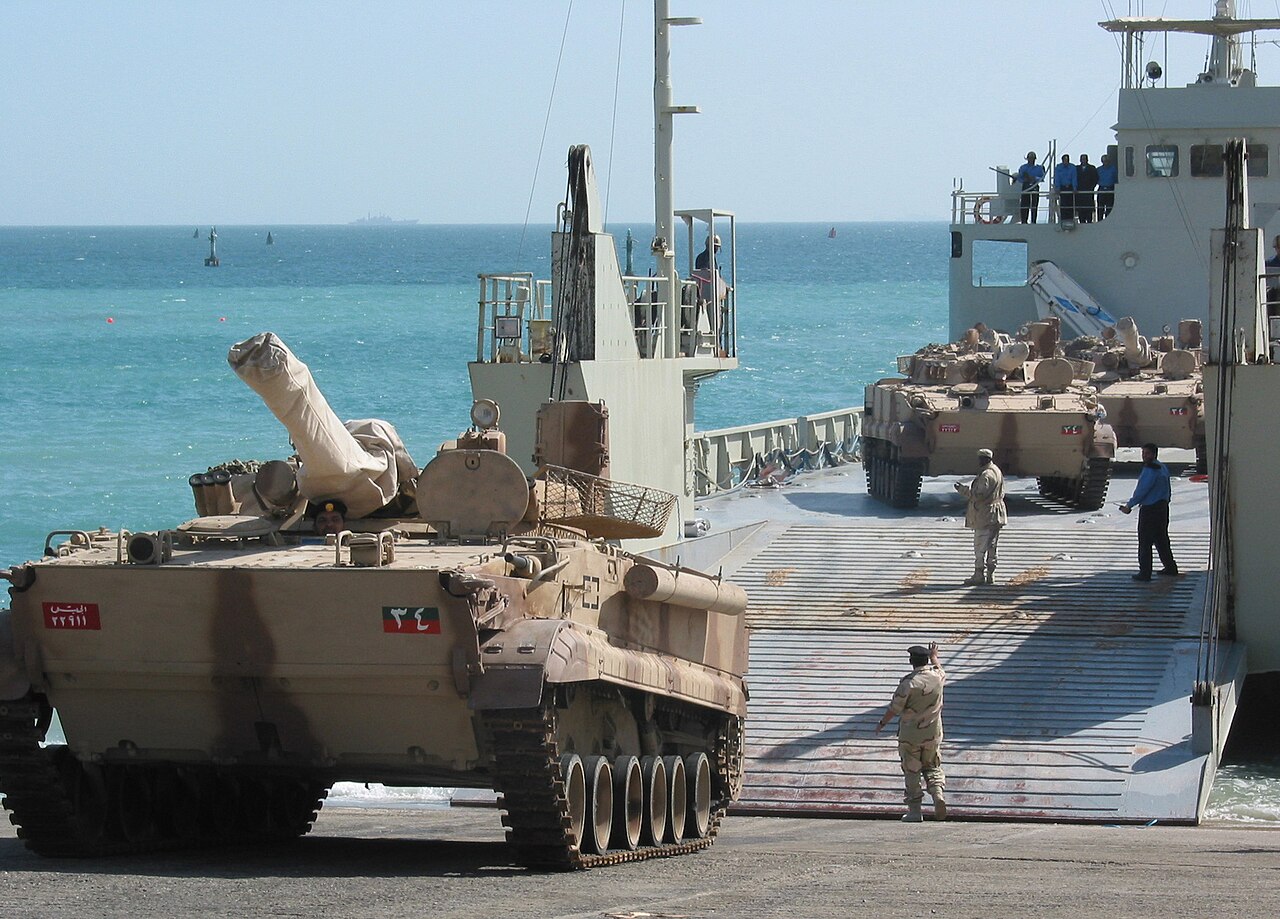
The BMP-3 represents Russia's third-generation infantry fighting vehicle, designed to transport mechanized infantry while providing substantial fire support through its unique dual-cannon armament configuration. Introduced in 1987, the BMP-3 was conceived during the late Soviet era to address the limitations of its predecessors, particularly the need for better amphibious capability and enhanced firepower against both armored and soft targets. The vehicle's most distinctive feature is its armament layout: a 100mm 2A70 semi-automatic rifled gun capable of firing both conventional high-explosive rounds and 9M117 Bastion anti-tank guided missiles, complemented by a coaxial 30mm 2A72 autocannon. This configuration allows the BMP-3 to engage main battle tanks at extended ranges while maintaining rapid-fire capability against lighter targets and infantry. Strategically, the BMP-3 reflects Russian mechanized warfare doctrine emphasizing amphibious operations and combined-arms tactics. Its full amphibious capability with water-jet propulsion enables rapid river crossings and coastal assault operations without engineering support. The vehicle's low silhouette and relatively advanced fire control system for its era made it a significant capability leap over the BMP-1 and BMP-2. In today's threat environment, the BMP-3 faces challenges from modern anti-tank guided missiles and top-attack munitions, particularly given recent combat performance in Ukraine where older Russian IFV designs have shown vulnerability to Western-supplied systems. However, ongoing modernization programs aim to address these deficiencies through improved armor packages, active protection systems, and enhanced situational awareness capabilities. The platform remains relevant as export models continue to see combat use globally, from Middle Eastern conflicts to Southeast Asian militaries.
Deployment Map
Home ports from known hull assignments. Operating areas reflect typical AORs — individual deployments will vary.
Timeline
Specifications
Armament
Fires HE-FRAG and 9M117 Bastion ATGMs
Coaxial mount, 500 rounds
Bow-mounted, operated by driver
SACLOS guidance, 550mm RHA penetration
Operational Patterns
Typical Deployment
Battalion-level formations supporting mechanized infantry, often in combined-arms task forces with tank support
Deployment Length
6 months
Typical Task Group
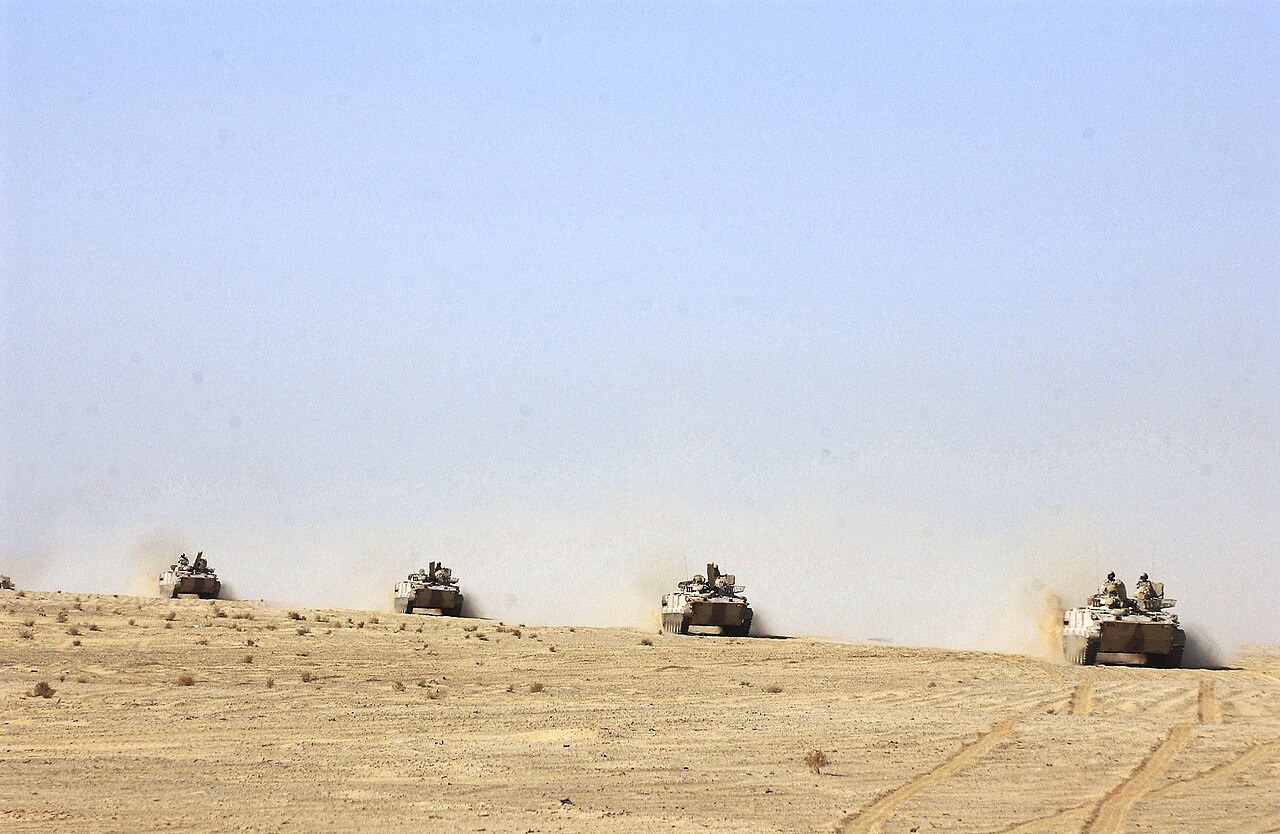
Operates in platoons of 3-4 vehicles within mechanized infantry companies, often supported by T-72/T-80/T-90 tanks
Readiness
Maintenance-intensive platform with significant logistical footprint; amphibious systems require specialized training and support
Key Operating Areas
Peer Comparison Matrix
Bradley emphasizes survivability and advanced optics over raw firepower, lacks amphibious capability but features superior armor protection and crew survivability systems
Video angle: Cold War IFV philosophy comparison - Soviet firepower emphasis vs Western survivability focus
CV90 represents modern Western IFV design with modular armor, advanced FCS, and multiple variants, but lacks amphibious capability and heavy anti-tank firepower of BMP-3
Video angle: Soviet legacy design vs modern modular approach to IFV development
Puma features cutting-edge protection systems, modular design, and advanced C4I, but costs 10x more than BMP-3 and lacks amphibious capability
Video angle: Cost vs capability analysis - mass production Soviet model vs boutique Western engineering
Chinese design influenced by BMP-3 with similar amphibious capability and firepower, but incorporates modern fire control and protection systems
Video angle: Russian technology transfer and Chinese military modernization case study
Shares weapons system with BMP-3 but optimized for airborne operations with lighter armor and air-droppable design
Video angle: Russian unified weapons system approach and role specialization within same design family
Combat History
First operational deployment during Soviet-era exercises, revealing initial mechanical reliability issues and crew training challenges
Identified need for improved crew ergonomics and maintenance procedures
BMP-3s deployed in urban combat operations, suffering losses to RPGs and improvised explosive devices
Demonstrated vulnerability to asymmetric threats and need for urban warfare modifications
Russian BMP-3s participated in the advance into South Ossetia and Abkhazia, primarily in fire support roles
First major interstate conflict deployment, validated amphibious crossing capabilities
Russian BMP-3s deployed with special forces units, used for base security and limited offensive operations
Combat testing of modernized variants in desert environment
Extensive deployment of BMP-3s in Ukrainian theater, suffering significant losses to Javelin, NLAW, and other Western ATGMs
Exposed critical vulnerabilities to modern top-attack munitions and highlighted inadequate active protection systems
Known Vulnerabilities
Top-attack munitions defense
Minimal roof armor (typically 6-10mm) makes BMP-3 extremely vulnerable to modern top-attack ATGMs like Javelin, NLAW, and artillery-delivered submunitions
Context: Ukraine conflict has demonstrated catastrophic vulnerability with numerous confirmed kills by Western-supplied systems
Mitigation: Active protection system integration planned but not yet fielded in significant numbers
Crew survivability
Ammunition storage layout and fuel placement create significant risk of catastrophic explosion when penetrated, with limited crew escape options
Context: Multiple documented cases of total vehicle loss with crew fatalities from single ATGM hits
Mitigation: Some newer variants feature improved ammunition storage but fundamental layout constraints remain
Electronic warfare susceptibility
Older variants lack modern electronic countermeasures and digital communications are vulnerable to jamming and interception
Context: Modern battlefield EW environment significantly degrades coordination and targeting capabilities
Mitigation: Manul upgrade addresses some issues but many vehicles in service lack modern EW protection
Maintenance complexity
Dual-cannon system and amphibious capability create maintenance burden, particularly for water-jet propulsion and complex fire control systems
Context: High operational tempo conflicts reveal reliability issues and extended downtime for repairs
Mitigation: Training improvements and parts availability programs show mixed results
Variants
| Variant | Designation | Years | Count | Status | Key Changes |
|---|---|---|---|---|---|
| BMP-3 (Object 688M) | Original production model | 1987-1990s | 700 | active | Initial production version with basic fire control and armor package |
| BMP-3M | Modernized variant | 2005-present | 400 | active | Improved fire control system, GPS navigation, digital communications, modular armor options |
| BMP-3F | Naval infantry variant | 1990s-present | 200 | active | Enhanced waterproofing, improved amphibious capability, specialized equipment for naval operations |
| BMP-3 Manul | Latest modernization | 2020-present | 50 | building | Digital fire control, thermal imaging, improved armor package, battlefield management system |
Fleet Roster (1)
| Hull | Name | Variant | Commissioned | Home Port | Status |
|---|---|---|---|---|---|
| N/A | Russian Ground Forces BMP-3s | Mixed variants | 1987-present | Various military districts | active |
Modernization Programmes
BMP-3 Manul Upgrade Program
Comprehensive modernization including Sosna-U fire control system, thermal imaging, digital battlefield management, and modular armor packages
Impact: Significantly improves target acquisition and situational awareness in day/night conditions
Active Protection System Integration
Installation of Arena-M or Afghanit active protection systems to counter incoming ATGMs and RPGs
Impact: Addresses critical vulnerability to modern anti-tank weapons demonstrated in Ukraine conflict
Armor Enhancement Package
Retrofit of existing vehicles with explosive reactive armor and composite armor modules for improved survivability
Impact: Increases protection against RPGs and older ATGMs, limited effectiveness against top-attack weapons
Images




Frequently Asked
How many BMP-3 Infantry Fighting Vehicle are in service?
1 BMP-3 Infantry Fighting Vehicle are currently in service with Russian Ground Forces.
When was the first BMP-3 Infantry Fighting Vehicle commissioned?
The first BMP-3 Infantry Fighting Vehicle entered service in 1987.
Who builds the BMP-3 Infantry Fighting Vehicle?
The BMP-3 Infantry Fighting Vehicle is built by Kurganmashzavod.
What variants of the BMP-3 Infantry Fighting Vehicle exist?
Known variants include: BMP-3 (Object 688M), BMP-3M, BMP-3F, BMP-3 Manul.
How much does a BMP-3 Infantry Fighting Vehicle cost?
Unit cost is approximately $3M per hull.
Watch BMP-3 Infantry Fighting Vehicle in Action
Iron Command produces in-depth comparison and analysis videos for military equipment.
Watch on YouTube