
K-300P Bastion-P coastal defence system
Overview
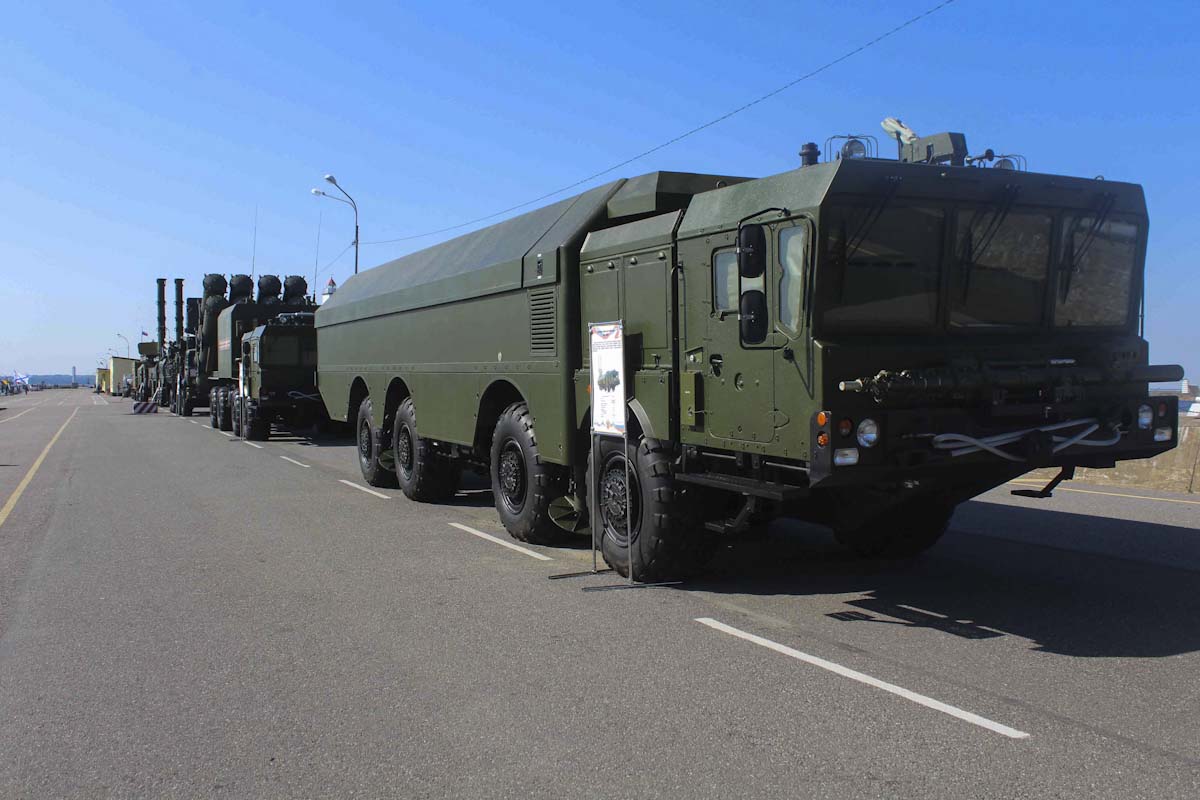
The K-300P Bastion-P is a mobile coastal-defence missile system firing the P-800 Oniks supersonic anti-ship missile — and in the Indo-Pacific it is most significant as the centrepiece of Vietnam's sea-denial strategy in the South China Sea. A road-mobile system designed to defend a coastline against naval task groups, it lets a relatively small power hold large warships at risk from concealed shore-based launchers. Each Bastion-P battery couples truck-mounted launchers with the P-800 Oniks (the missile that is also the parent of the Indo-Russian BrahMos): a ramjet-powered, sea-skimming missile flying at around Mach 2.5 to ranges of roughly 300 km, with a high-low flight profile and active-radar terminal homing. Mobile and concealable, batteries can shoot and relocate, making them hard to find and suppress, and a salvo of supersonic missiles is a serious threat even to a well-defended fleet. For an analyst, the Bastion-P illustrates how anti-access is not just a great-power game. By fielding mobile supersonic coastal missiles, Vietnam — like other regional states — can impose real cost and risk on any navy operating near its shores, complicating Chinese freedom of action in the South China Sea. It is the smaller-power, shore-based analogue to the ship- and air-launched anti-ship missiles that define the maritime contest, and a reminder that coastal-defence missiles are proliferating across the region.
Deployment Map
Home ports from known hull assignments. Operating areas reflect typical AORs — individual deployments will vary.
Timeline
Specifications
Armament
Parent of the Indo-Russian BrahMos
Doctrine & Employment
Role
Mobile coastal-defence missile system for shore-based sea denial against naval task groups.
Design Philosophy
Let a smaller power impose cost and risk on larger navies from concealed mobile launchers.
Employment
Concealed truck launchers fire supersonic P-800 Oniks salvos on over-the-horizon cueing, then relocate.
Threat Context
Centrepiece of Vietnam's South China Sea sea-denial against Chinese naval action.
How to Compare
Read against China's YJ-12, the related BrahMos and the Western NSM/NMESIS.
Operational Patterns
Typical Deployment
Concealed mobile coastal batteries holding warships at risk near a defended coastline.
Typical Task Group
Coastal-defence units with over-the-horizon targeting.
Readiness
Fielded by Vietnam and others; mobile and concealable.
Key Operating Areas
Peer Comparison Matrix
China's coastal supersonic anti-ship missile; the Bastion-P is the system regional states use against Chinese ships.
Video angle: The coastal-missile contest in the South China Sea.
BrahMos derives from the same P-800 Oniks; both are supersonic anti-ship missiles, BrahMos multi-platform.
Video angle: From Oniks to BrahMos to Bastion.
The NSM (on NMESIS) is the Western mobile coastal anti-ship missile; the Bastion is the supersonic Russian equivalent.
Video angle: Coastal anti-ship missiles East vs West.
Combat History
Vietnam fields Bastion-P batteries for South China Sea coastal defence; Russia has used the system in a land-attack role in Syria and Ukraine.
A regional sea-denial capability in ASEAN hands.
Known Vulnerabilities
Targeting reach
Long-range shots need off-board over-the-horizon targeting.
Context: Depends on radar/aircraft/UAV cueing.
Mitigation: Networked coastal surveillance.
Detectable supersonic flight
Supersonic cruise is detectable before terminal sea-skim.
Context: Modern fleet defences may engage.
Mitigation: Sea-skimming terminal, salvo tactics.
Variants
| Variant | Designation | Years | Count | Status | Key Changes |
|---|---|---|---|---|---|
| K-300P Bastion-P | — | 2010– | — | active | Mobile coastal-defence system with P-800 Oniks |
Modernization Programmes
Regional proliferation
Coastal anti-ship missiles spreading among regional states.
Impact: Densifies sea-denial threats around contested waters.
Images



Frequently Asked
When was the first K-300P Bastion-P coastal defence system commissioned?
The first K-300P Bastion-P coastal defence system entered service in 2010.
Who builds the K-300P Bastion-P coastal defence system?
The K-300P Bastion-P coastal defence system is built by NPO Mashinostroyeniya.
Curated Research
recommended
Regional sea-denial context
reference
System and missile
Watch K-300P Bastion-P coastal defence system in Action
Iron Command produces in-depth comparison and analysis videos for military equipment.
Watch on YouTube