
Atago-class destroyer
Overview
The Atago-class destroyer represents Japan's most sophisticated air defense platform, designed as a larger, enhanced variant of the Kongo-class to provide advanced ballistic missile defense (BMD) and area air defense capabilities. Built around the Aegis Combat System with SPY-1D(V) radar, these destroyers serve as cornerstone assets in Japan's layered missile defense architecture, particularly against North Korean ballistic missile threats. Strategically, the Atago-class fills a critical role in Japan's evolving defense posture, operating as independent BMD stations or integrated components of larger task forces. Their enhanced displacement and power generation compared to the Kongo-class allows for future upgrades including potential integration of directed energy weapons and enhanced electronic warfare systems. The class was specifically designed with lessons learned from post-9/11 naval operations and the emerging ballistic missile threat from North Korea. In terms of capability, the Atago-class sits between the smaller Kongo-class and more modern Maya-class destroyers, featuring 96 VLS cells compared to the Kongo's 90. However, unlike newer designs, they lack the integrated mast structures and advanced electronic warfare systems of contemporary platforms. The ships excel in air defense and BMD missions but have limited anti-submarine warfare capabilities compared to specialized ASW platforms. Within the current threat environment, particularly China's expanding A2/AD capabilities and North Korea's advancing ballistic missile program, the Atago-class provides Japan with credible defensive capabilities while supporting alliance operations with the U.S. Navy. Their Aegis interoperability makes them valuable assets in multi-national task forces, though their limited numbers (only two hulls) constrains their strategic impact compared to larger destroyer fleets operated by regional peers.
Deployment Map
Home ports from known hull assignments. Operating areas reflect typical AORs — individual deployments will vary.
Timeline
Specifications
Armament
Primary air defense missile
BMD capability
Point defense SAM
ASW capability
Primary gun system
Last-resort defense
ASW defense
Doctrine & Employment
Role
Ballistic missile defense and area air defense anchor for Japan's integrated missile defense network, providing persistent coverage over critical maritime approaches and population centers against North Korean and regional ballistic missile threats.
Design Philosophy
Prioritized maximum VLS magazine depth (96 cells) and advanced radar capability over speed and traditional anti-surface warfare, accepting reduced helicopter facilities and higher acquisition costs to maximize BMD engagement opportunities. Design emphasizes sustained defensive operations rather than expeditionary strike capabilities, reflecting Japan's constitutional constraints and defensive strategic posture.
Employment
Typically deployed as the flagship of multi-platform task groups including AEGIS-equipped destroyers, conventional destroyers, and support vessels to provide layered defense. Operates in coordination with ground-based PAC-3 systems and US Navy BMD assets through shared datalinks. Primary mission profiles include ballistic missile defense patrols in the Sea of Japan, convoy escort for critical sea lanes, and integrated air defense of fleet formations during power projection operations.
Threat Context
Originally designed to counter North Korean Nodong and Taepodong ballistic missiles in the early 2000s, but threat environment has evolved to include hypersonic glide vehicles, multiple independently targetable warheads, and coordinated saturation attacks from both North Korea and China. Platform now faces challenges from threats that may exceed original engagement envelope assumptions.
How to Compare
Compare primarily on VLS cell count, BMD-capable missile inventory, and radar detection ranges rather than anti-ship or land-attack capabilities, as these platforms prioritize defensive missile capacity over offensive striking power. Secondary comparison factors include datalink interoperability with allied systems and sustained operation endurance for persistent BMD patrols.
Operational Patterns
Typical Deployment
BMD patrol stations in Sea of Japan and Pacific approaches, alliance exercises with U.S. Navy
Deployment Length
3 months
Typical Task Group
Operates independently for BMD missions or integrated with JMSDF escort flotillas and U.S. Navy CSGs
Readiness
High operational tempo due to limited numbers strains maintenance cycles, particularly during North Korean missile test periods
Key Operating Areas
Peer Comparison Matrix
Similar Aegis baseline and VLS capacity, but Burke has superior ASW capability with towed array sonar and dedicated ASW helicopter facilities. Atago has slightly larger displacement but less advanced electronic warfare systems.
Video angle: Alliance interoperability and capability gaps - when Japan needs U.S. ASW support
Type 052D has 64 VLS cells versus Atago's 96, but features newer AESA radar and more advanced electronic warfare systems. Atago has proven BMD capability while Type 052D BMD capability remains unclear.
Video angle: Pacific air defense competition - quality vs quantity in destroyer capabilities
Korean variant has 128 VLS cells and more comprehensive armament including land-attack cruise missiles. Atago focuses more narrowly on BMD mission with proven operational experience.
Video angle: Alliance burden-sharing and capability specialization in Northeast Asian security
Type 45 uses different air defense system (PAAMS/Aster) and lacks BMD capability entirely. Superior in anti-air warfare against aircraft but cannot engage ballistic missiles.
Video angle: Air defense philosophy comparison - Aegis vs PAAMS in modern threat environment
Combat History
JS Atago collided with fishing vessel Seitoku-maru off Chiba Prefecture, resulting in two fatalities. Collision occurred during routine training operations.
Highlighted command and control issues during peacetime operations, led to enhanced bridge procedures and watchstanding protocols across JMSDF
Both Atago-class destroyers deployed to Sea of Japan for BMD coverage during North Korean Unha-3 rocket launch, first operational BMD deployment
Demonstrated operational BMD capability and integration with U.S. Pacific Command missile warning systems
Multiple deployments to western Pacific for BMD overwatch during escalated North Korean ICBM and intermediate-range missile testing
Validated sustained BMD operations and highlighted need for additional BMD-capable platforms
Known Vulnerabilities
Limited magazine depth
96 VLS cells provide substantial firepower but can be rapidly depleted in high-intensity BMD scenarios, with no underway replenishment capability for VLS missiles
Context: Against North Korean saturation attacks or Chinese missile raids, magazine depth becomes critical limiting factor
Mitigation: Developing distributed BMD architecture with ground-based systems and considering VLS expansion in future modernization
Anti-submarine warfare capability
Limited ASW sensors and weapons compared to dedicated ASW platforms, with aging sonar systems and minimal ASW helicopter integration
Context: Chinese submarine threat requires enhanced ASW capability for survivability in contested waters
Mitigation: Enhanced cooperation with dedicated ASW platforms and potential sonar upgrades in future modernization cycles
Electronic warfare vulnerability
Current EW systems lag behind advanced jamming and deception capabilities deployed by peer competitors, particularly in dense electronic attack environments
Context: Chinese and potentially North Korean advanced EW capabilities could degrade Aegis effectiveness
Mitigation: Ongoing EW suite upgrades and enhanced training in electronic warfare environments
Limited numbers
Only two hulls cannot provide continuous BMD coverage or sustained high-intensity operations without significant maintenance and crew rotation challenges
Context: Geographic requirements for Japan BMD and alliance operations exceed capacity of two platforms
Mitigation: Maya-class construction and potential future destroyer programs to increase BMD-capable hull count
Variants
| Variant | Designation | Years | Count | Status | Key Changes |
|---|---|---|---|---|---|
| Atago-class | DDG-177 to DDG-178 | 2007-2008 | 2 | active | Enhanced Kongo design with improved Aegis Baseline 7.1, larger displacement, enhanced power generation, integrated BMD capability from commissioning |
Fleet Roster (2)
| Hull | Name | Variant | Commissioned | Home Port | Status |
|---|---|---|---|---|---|
| DDG-177 | JS Atago | Atago-class | 2007-03-15 | Yokosuka | active |
| DDG-178 | JS Ashigara | Atago-class | 2008-03-13 | Sasebo | active |
Modernization Programmes
SM-3 Block IIA Integration
Integration of advanced SM-3 Block IIA interceptors with enhanced range and discrimination capability against more sophisticated ballistic missile threats
Impact: Significantly enhanced BMD envelope and capability against IRBM/ICBM class targets
Aegis Baseline 9 Upgrade
Major combat system upgrade to Aegis Baseline 9 for enhanced BMD discrimination, multi-mission capability, and integration with newer sensor systems
Impact: Will extend service life and maintain relevance against evolving hypersonic and maneuvering threats
Enhanced Electronic Warfare Suite
Upgrade to electronic warfare systems to counter advanced electronic attack and provide enhanced situational awareness in contested environments
Impact: Improved survivability against advanced electronic warfare threats from peer competitors
Images


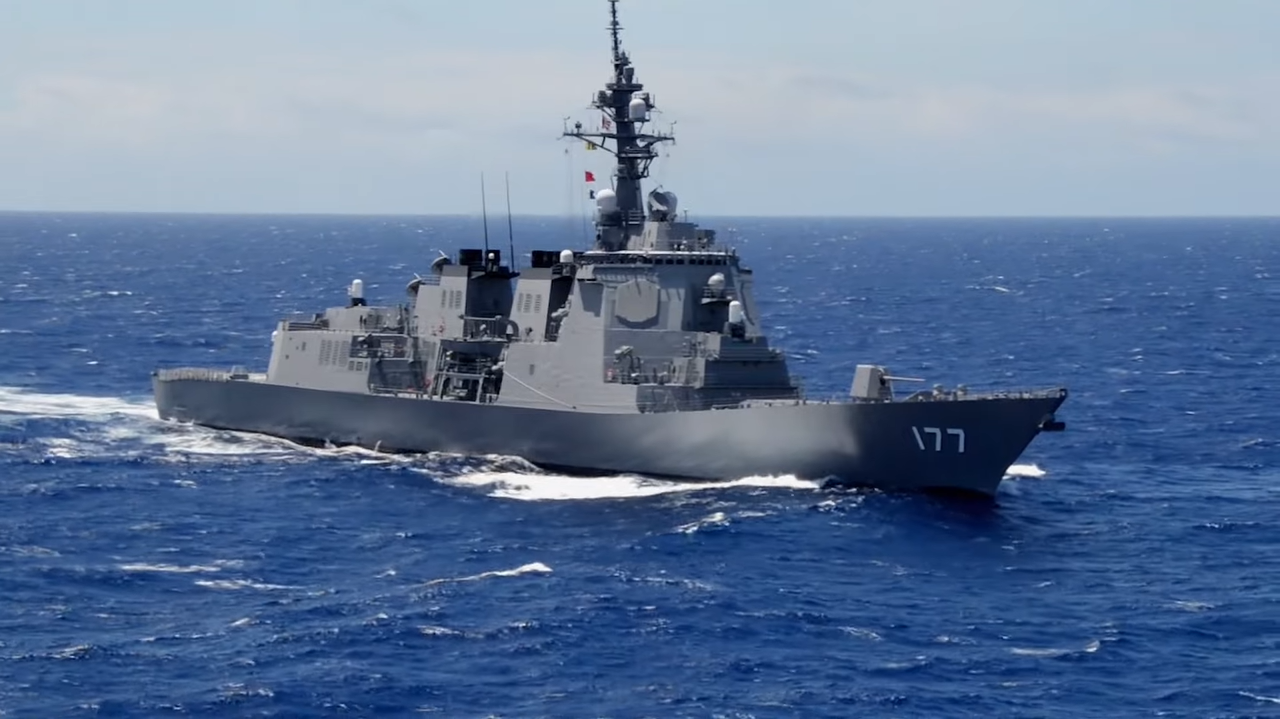


Recent News
Frequently Asked
How many Atago-class destroyer are in service?
2 Atago-class destroyer are currently in service with Japan Maritime Self-Defense Force (JMSDF).
When was the first Atago-class destroyer commissioned?
The first Atago-class destroyer entered service in 2007-03-15.
Who builds the Atago-class destroyer?
The Atago-class destroyer is built by Mitsubishi Heavy Industries.
How much does a Atago-class destroyer cost?
Unit cost is approximately $1.5B per hull.
Curated Research
essential
Provides strategic context for Atago-class role within broader U.S.-Japan integrated missile defense architecture.
Detailed analysis of regional BMD architecture and specific capabilities of Japanese BMD-capable platforms.
recommended
Authoritative source on JMSDF doctrine and the strategic rationale behind major platform acquisitions including Atago-class development.
Consistent coverage of JMSDF developments including Atago-class modifications and operational deployments.
Regular analysis of missile defense systems and naval platform effectiveness including Japanese capabilities.
reference
Comprehensive technical specifications and modification history for comparative analysis.
Historical context for understanding Japanese naval design philosophy and strategic culture influencing modern platform development.
Watch Atago in Action
Iron Command produces in-depth comparison and analysis videos for military equipment.
Watch on YouTube