
Albion-class Landing Platform Dock
Compare with
Overview
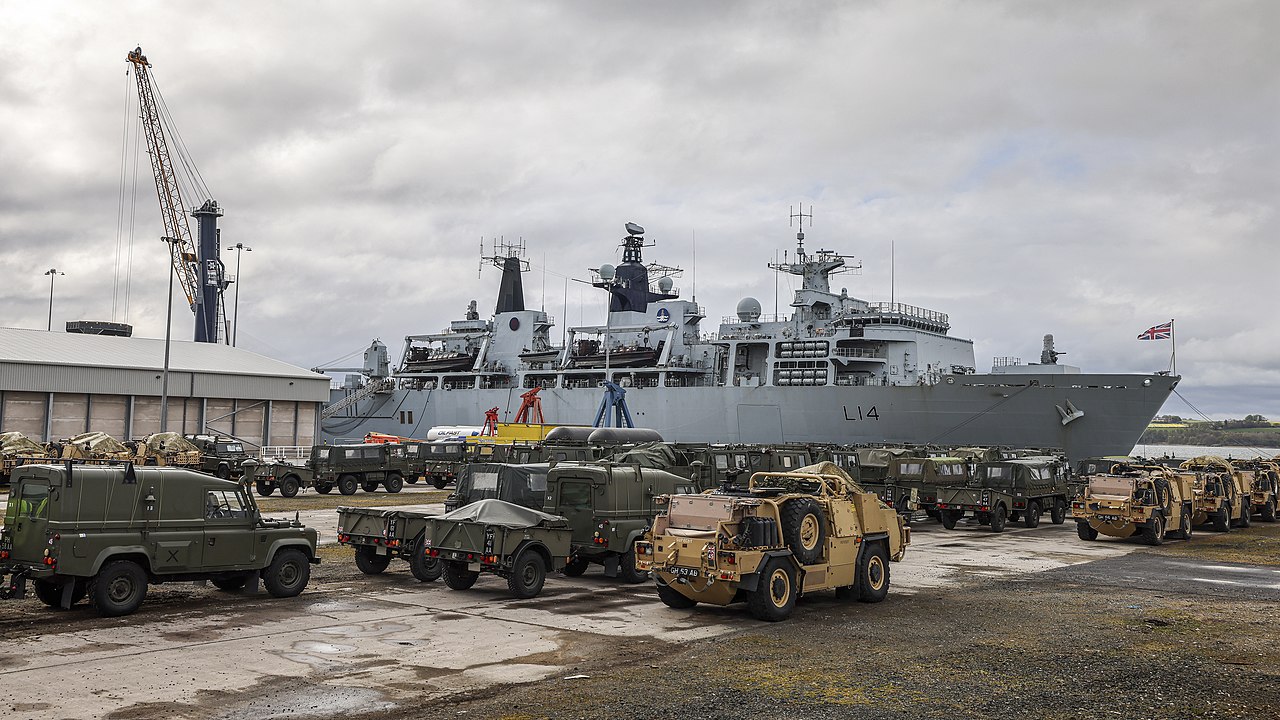
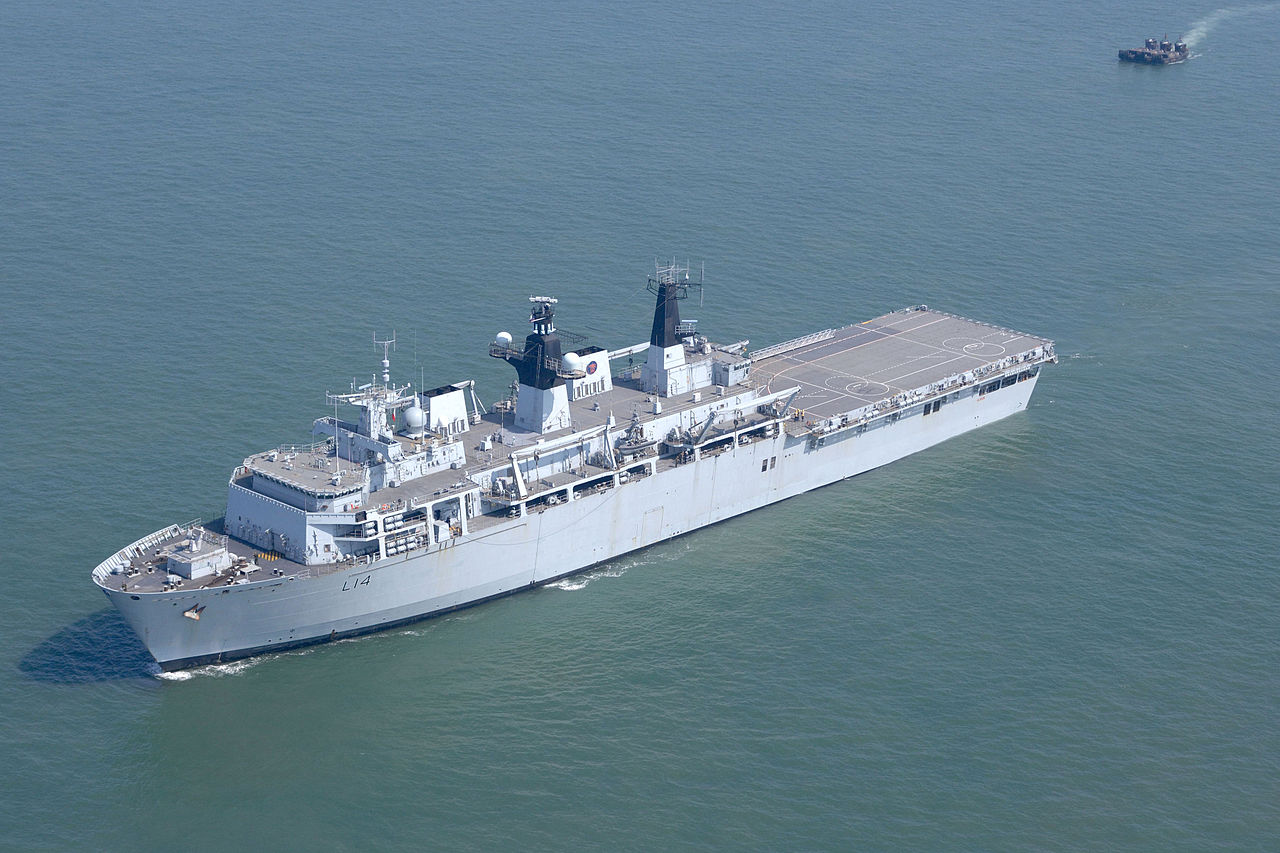
The Albion-class Landing Platform Dock represents the Royal Navy's primary amphibious assault capability, designed to project British power ashore in contested environments. Built around a dock well concept similar to US Navy LPDs, these ships can simultaneously deploy landing craft, helicopters, and troops in complex amphibious operations. The class embodies Britain's post-Cold War shift toward expeditionary warfare, designed for rapid deployment to global hotspots rather than European land battles. Strategically, the Albion class fills a critical gap in NATO's amphibious capability, providing one of Europe's few credible forced-entry options. The ships feature a sophisticated command and control suite that allows them to serve as amphibious task group flagships, coordinating multi-national operations. Their ability to embark a full Royal Marine Commando unit (up to 710 troops) with vehicles and helicopters makes them essential for Britain's 'Global Britain' strategy. The design philosophy emphasizes flexibility over specialization. Unlike purpose-built assault ships, the Albions can rapidly reconfigure for humanitarian operations, disaster relief, or high-end combat. The spacious flight deck can handle multiple Chinook operations simultaneously, while the dock well accommodates various landing craft combinations. However, this flexibility comes at the cost of reduced capacity compared to larger US amphibious ships. In the current threat environment, the Albion class faces significant challenges. Their limited self-defense systems make them vulnerable to modern anti-ship missiles, requiring substantial escort forces. The small class size (only two hulls) creates availability issues, with typically only one ship operationally ready. Compared to peers like the US San Antonio class or France's Mistral class, the Albions offer superior command facilities but reduced aviation capacity and more limited self-defense systems.
Deployment Map
Home ports from known hull assignments. Operating areas reflect typical AORs — individual deployments will vary.
Timeline
Specifications
Armament
Anti-missile and anti-surface
Anti-surface and anti-air
Embarked when required
Small boat defense
Doctrine & Employment
Role
Enables power projection and intervention operations by delivering Royal Marine Commandos and their equipment to contested littorals, serving as the cornerstone of Britain's ability to conduct unilateral military interventions outside NATO's Article 5 framework.
Design Philosophy
Prioritised strategic mobility and operational flexibility over tactical survivability, accepting reduced self-defence capabilities and armour protection to maximise global reach and multi-role adaptability. The design emphasises efficient movement of large numbers of troops and vehicles rather than survival in high-intensity combat, reflecting Britain's expeditionary focus on medium-scale interventions rather than major power conflict.
Employment
Typically operates as flagship of the Littoral Response Group alongside escorts, support ships, and embarked Commando Force elements. Primary mission profiles include crisis response, non-combatant evacuation operations, and contested amphibious landings supporting 'upstream engagement' before conflicts escalate. Often deployed for extended periods to maintain persistent presence in key regions like the Indo-Pacific, with the ship serving as both transport and command platform for multinational amphibious task groups.
Threat Context
Designed during the 1990s for operations against regional powers with limited anti-access capabilities, anticipating scenarios similar to Sierra Leone rather than peer conflict. The threat environment has since evolved to include sophisticated missile systems, submarines, and electronic warfare capabilities that challenge the platform's survivability assumptions, particularly in contested environments like the South China Sea or Eastern Mediterranean.
How to Compare
Compare primarily on strategic mobility (range, endurance, global deployability) and operational flexibility (multi-role capability, command facilities) rather than tactical metrics like defensive armament or survivability features. Dock well capacity and aviation facilities matter more than protection levels, as these platforms prioritise getting forces ashore quickly rather than surviving prolonged combat.
Operational Patterns
Typical Deployment
Amphibious Ready Group flagship with Royal Marines embarked, or independent humanitarian/diplomatic missions
Deployment Length
6 months
Typical Task Group
With Type 45 destroyer, Type 23/26 frigate, RFA support ships, and Royal Marines
Readiness
Chronic availability issues due to small fleet size and complex maintenance requirements
Key Operating Areas
Peer Comparison Matrix
US ships are larger with better self-defense (RAM missiles, ECM) and greater capacity but less sophisticated command facilities. Albion class has superior flaghip capabilities for multinational ops.
Video angle: David vs Goliath - how Britain's boutique amphibious capability compares to America's mass production approach
French ships emphasize aviation with large flight deck and hangar, while Albions focus on dock well operations. Mistrals have better self-defense but worse command facilities.
Video angle: Tale of two European approaches - helicopter assault vs traditional landing craft operations
Chinese ships are similar in concept but larger, with better air defense (HQ-10 SAMs) and greater capacity. Albions have more sophisticated C4I systems and better crew training standards.
Video angle: Quality vs quantity - Western technology and training against Chinese mass production
Spanish design combines amphibious dock with aircraft carrier capability, offering greater aviation capacity but less dock well space than Albions. Similar self-defense limitations.
Video angle: Specialization vs flexibility - pure amphibious assault ship vs multi-role aviation platform
Russian ships are smaller and less capable, with limited command facilities and older technology. Albions significantly superior in C4I and operational flexibility.
Video angle: East vs West amphibious philosophy - Soviet-era thinking vs modern expeditionary warfare
Combat History
HMS Albion deployed to Mediterranean during Libya intervention, conducted humanitarian evacuation of civilians from Benghazi and provided command platform for coalition forces
First major combat deployment demonstrating command ship capabilities in multi-national operations
HMS Bulwark deployed to Eastern Mediterranean as part of UK response to ISIS, conducted humanitarian missions and provided staging for special operations
Showed adaptability for counter-terrorism support missions beyond traditional amphibious assault
HMS Bulwark deployed to Caribbean for disaster relief, embarked Royal Marines and aid supplies, conducted helicopter operations to isolated islands
Demonstrated humanitarian capability and rapid global deployment ability
HMS Albion transited Taiwan Strait in freedom of navigation operation, drawing strong Chinese diplomatic protest
Highlighted political utility of amphibious ships in great power competition
Known Vulnerabilities
Air Defense
Extremely limited air defense capability with only short-range CIWS and MANPADS, no area air defense missiles
Context: Vulnerable to modern anti-ship missiles, drones, and aircraft - requires constant escort protection
Mitigation: Relies entirely on escort ships (Type 45 destroyers) and RAF air cover when available
Force Structure
Only two hulls with typically one in extended refit, limiting operational availability to 50% at best
Context: Cannot maintain continuous global presence or handle multiple simultaneous operations
Mitigation: No current plans to increase fleet size; relying on ally cooperation
Aviation Capacity
Limited hangar space can only accommodate 2x medium helicopters, restricting air mobility compared to larger amphibious ships
Context: Reduces operational flexibility in distributed operations and limits casualty evacuation capability
Mitigation: Coordination with helicopter carriers like HMS Prince of Wales when available
Electronic Warfare
Limited electronic warfare and cyber defense capabilities compared to modern threats
Context: Vulnerable to GPS jamming, communications disruption, and cyber attacks on ship systems
Mitigation: Ongoing upgrades to communications and navigation systems
Variants
| Variant | Designation | Years | Count | Status | Key Changes |
|---|---|---|---|---|---|
| Albion-class Baseline | L14, L18 | 2003-2004 | 2 | active | Original design with DNA(2) combat system, Type 996 radar, full amphibious capability |
Fleet Roster (2)
| Hull | Name | Variant | Commissioned | Home Port | Status |
|---|---|---|---|---|---|
| L14 | HMS Albion | Baseline | 2003-06-19 | Plymouth | active |
| L18 | HMS Bulwark | Baseline | 2004-12-10 | Plymouth | active |
Modernization Programmes
Life Extension Programme
Major refit including propulsion system overhaul, accommodation upgrades, and combat system updates for both ships
Impact: Extended service life to approximately 2033-2035
Future Commando Force Integration
Modifications to support Royal Marines Commando Force redesign, including enhanced C4ISR capabilities and support for autonomous systems
Impact: Better integration with distributed operations concept and unmanned systems
Defensive Aids Suite Upgrade
Installation of improved electronic warfare systems and soft-kill decoy systems to counter modern missile threats
Impact: Marginal improvement in survivability against anti-ship missiles
Images





Recent News
Frequently Asked
How many Albion-class Landing Platform Dock are in service?
2 Albion-class Landing Platform Dock are currently in service with Royal Navy.
When was the first Albion-class Landing Platform Dock commissioned?
The first Albion-class Landing Platform Dock entered service in 2003-06-19.
Who builds the Albion-class Landing Platform Dock?
The Albion-class Landing Platform Dock is built by BAE Systems Marine (Govan).
How much does a Albion-class Landing Platform Dock cost?
Unit cost is approximately $650M per hull.
Curated Research
essential
Official Royal Navy doctrine explaining the strategic rationale for amphibious operations and expeditionary warfare concepts that drive Albion-class employment.
Leading UK defence think tank providing ongoing analysis of Royal Navy amphibious capabilities and their role in contemporary British defence policy.
Definitive technical and operational analysis of British amphibious warfare vessels including detailed coverage of Albion-class design decisions and capabilities.
recommended
Provides historical context for the evolution of Royal Navy amphibious warfare capabilities from World War II through the post-Cold War transformation that produced the Albion class.
Parliamentary oversight reports examining the strategic utility and cost-effectiveness of UK amphibious forces in contemporary threat environments.
Analysis of contemporary amphibious operations and their implications for platform design and employment concepts in contested littoral environments.
reference
Comprehensive technical specifications and systems integration details for the Albion-class platform and its operational equipment.
Current fleet status, modernisation programmes, and operational deployments of Albion-class vessels within broader Royal Navy force structure.
Watch Albion in Action
Iron Command produces in-depth comparison and analysis videos for military equipment.
Watch on YouTubeSources